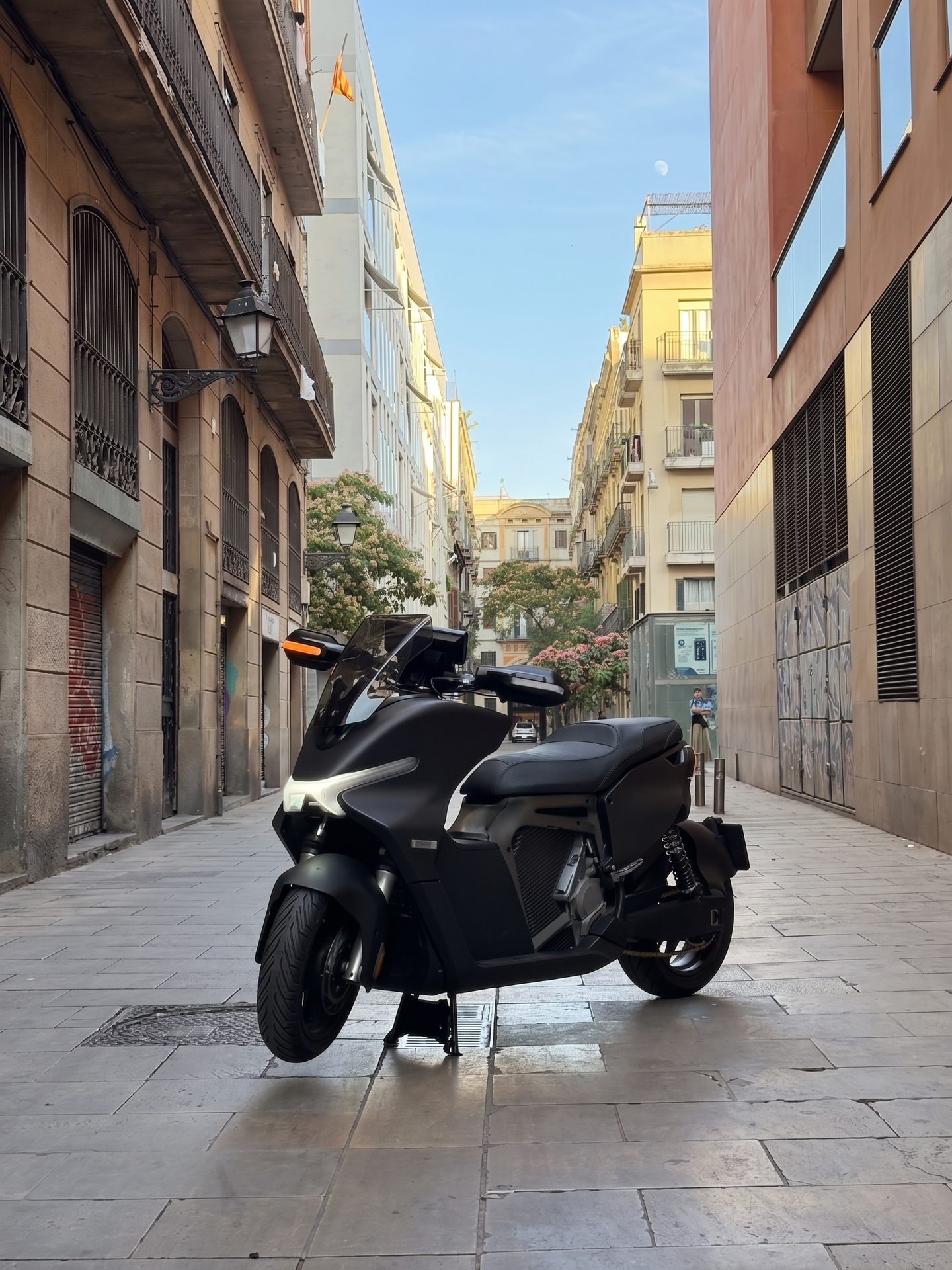
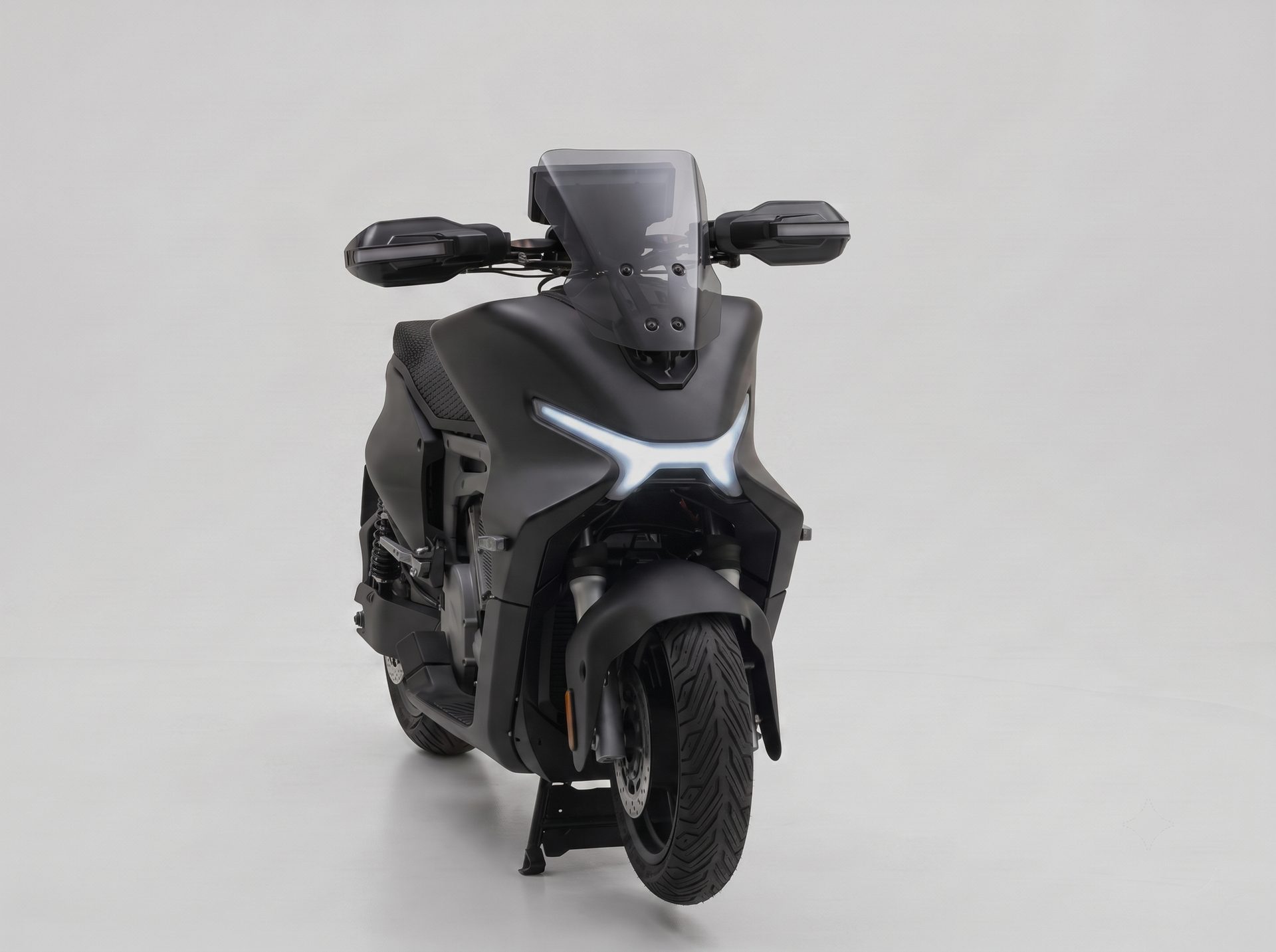
Hexia Evo
Engineered to outperform: the most powerful electric maxi-scooter on the market.
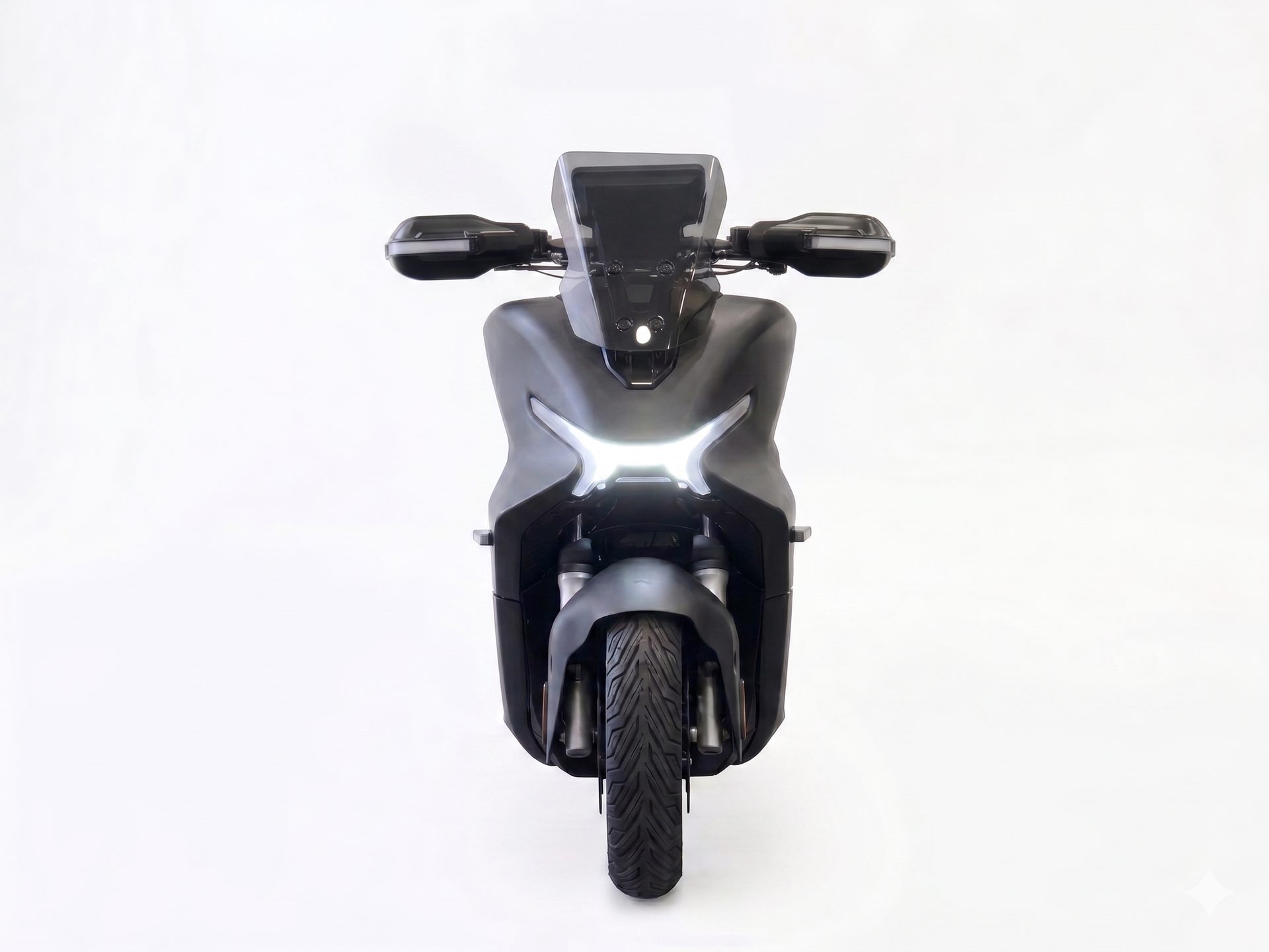
Hexia Evo is the evolution of the Hexia One (a non-functional concept of the most powerful electric maxi-scooter on the market).
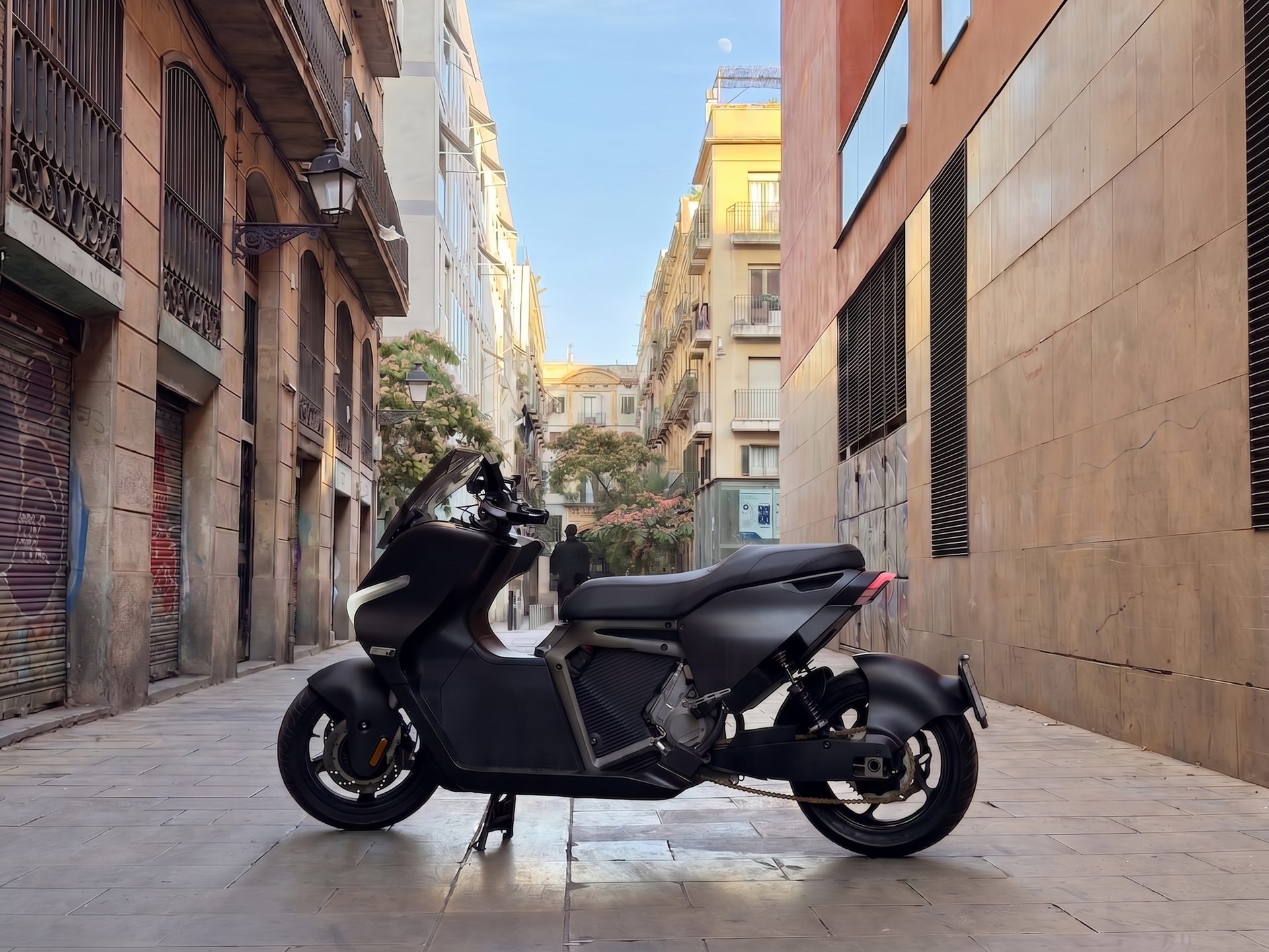
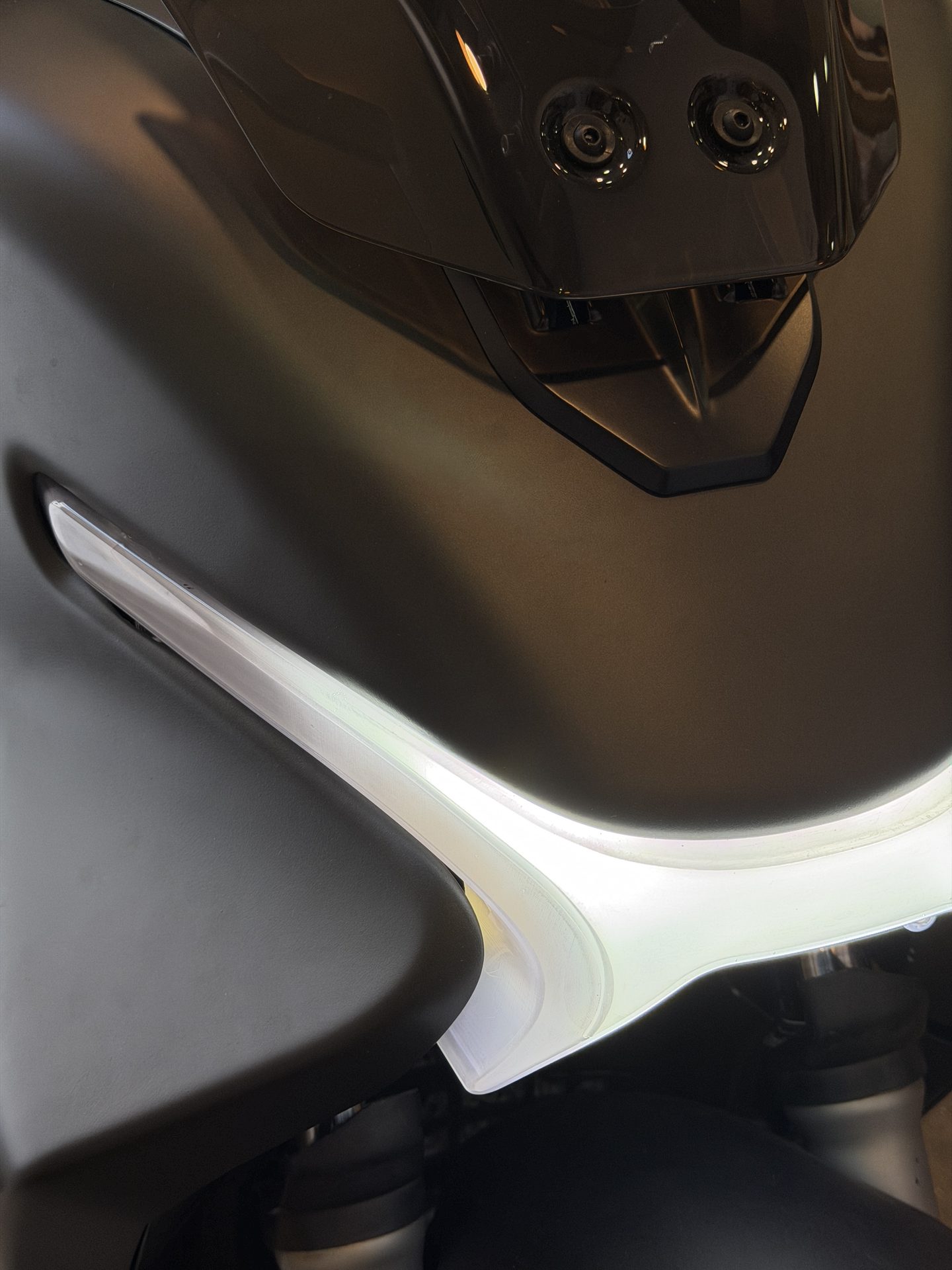
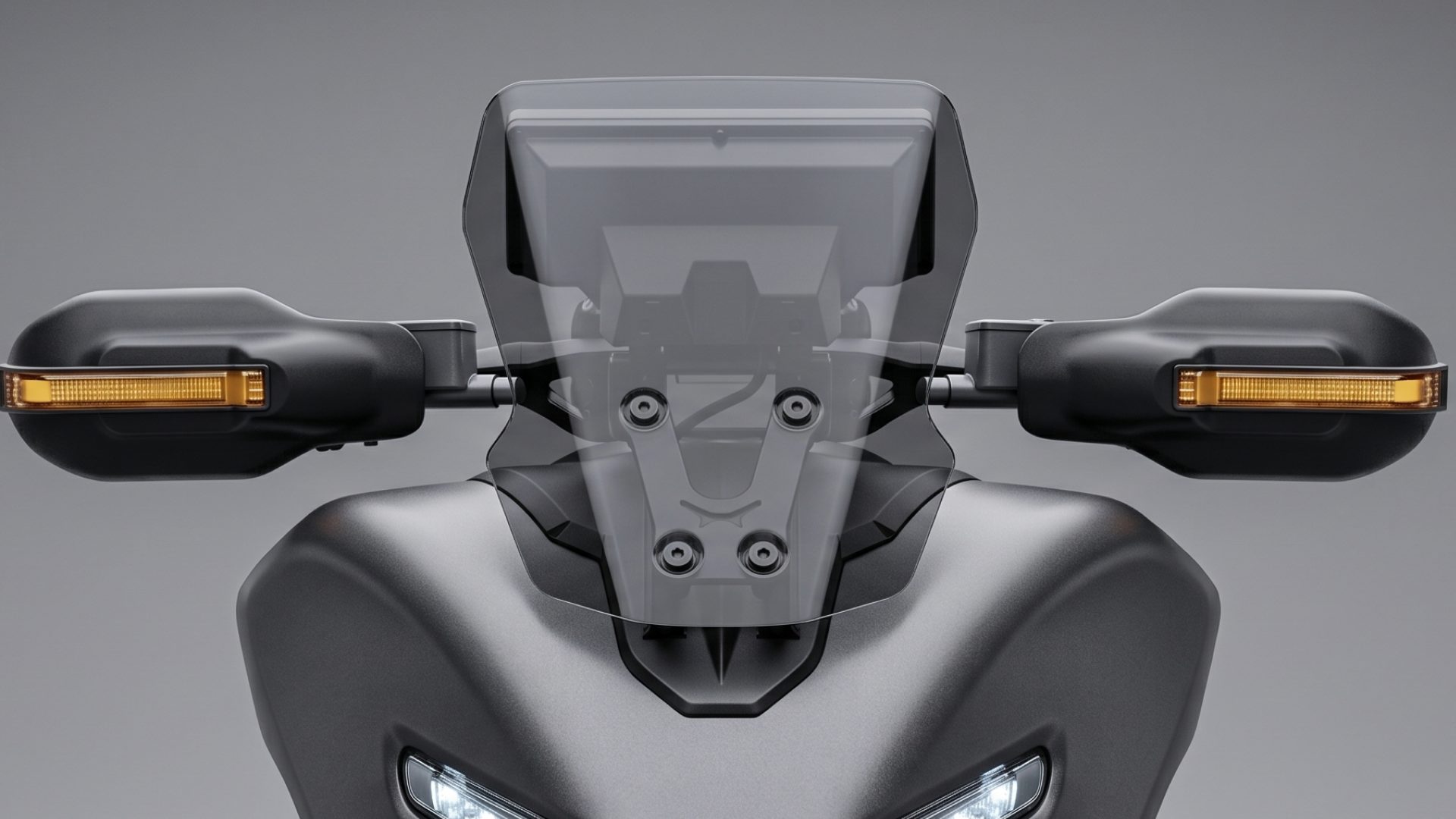
Beyond re-engineering it structurally to make it actually run, we took it to the next level for the premium segment: a complete suite of peripheral electronics, an adjustable windshield, integrated cameras with cockpit display screens replacing the mirrors (a first ever on a motorcycle), an automatic main stand, and a seat built on an optimized lattice structure.
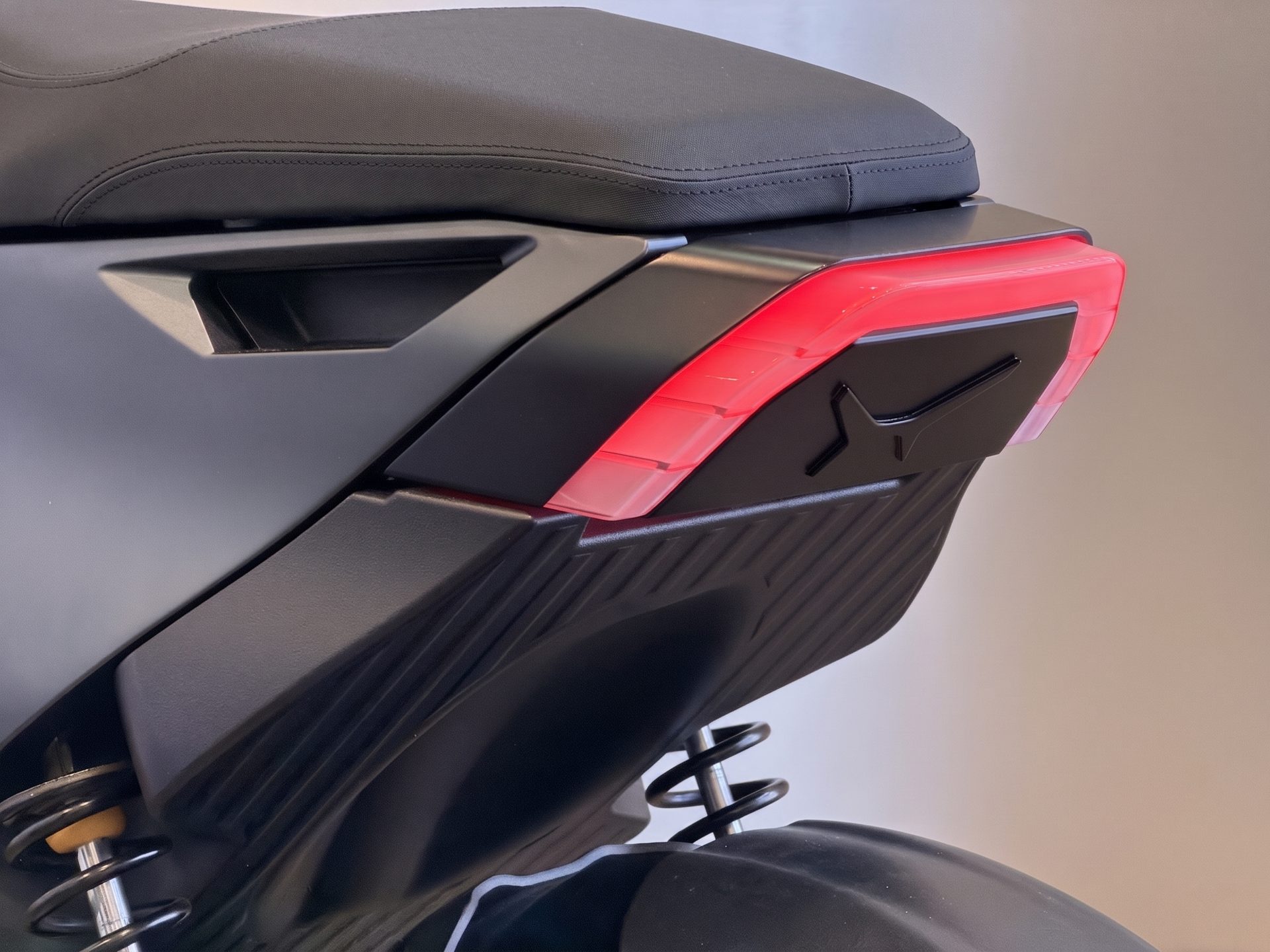
The rear is defined by a subframe that is at once structural and sculptural, removing the need for any plastic body panels.
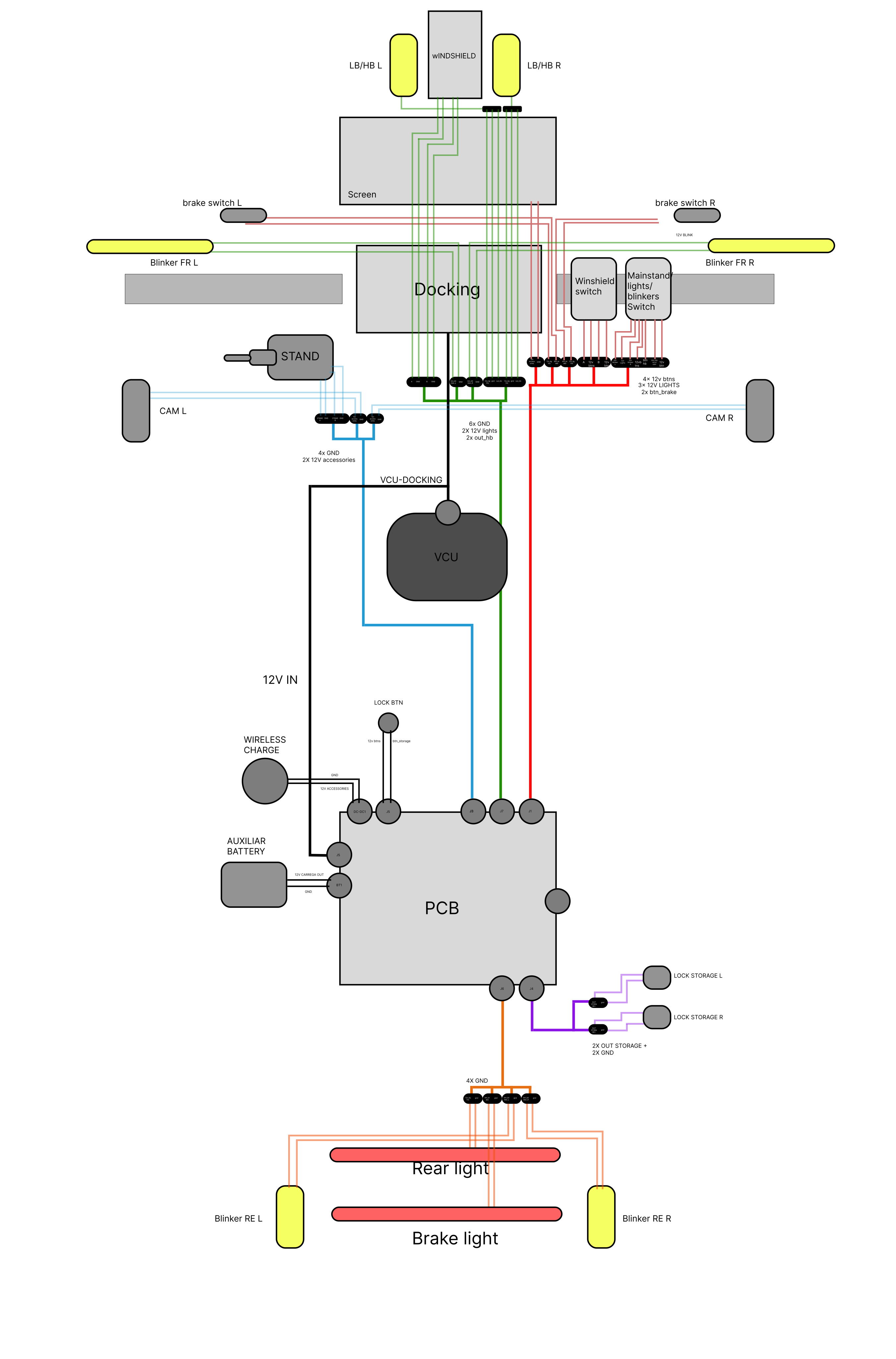
Systems architecture
Designing a robust peripheral control system while avoiding the complexity, weight and failure points of traditional point-to-point motorcycle wiring.
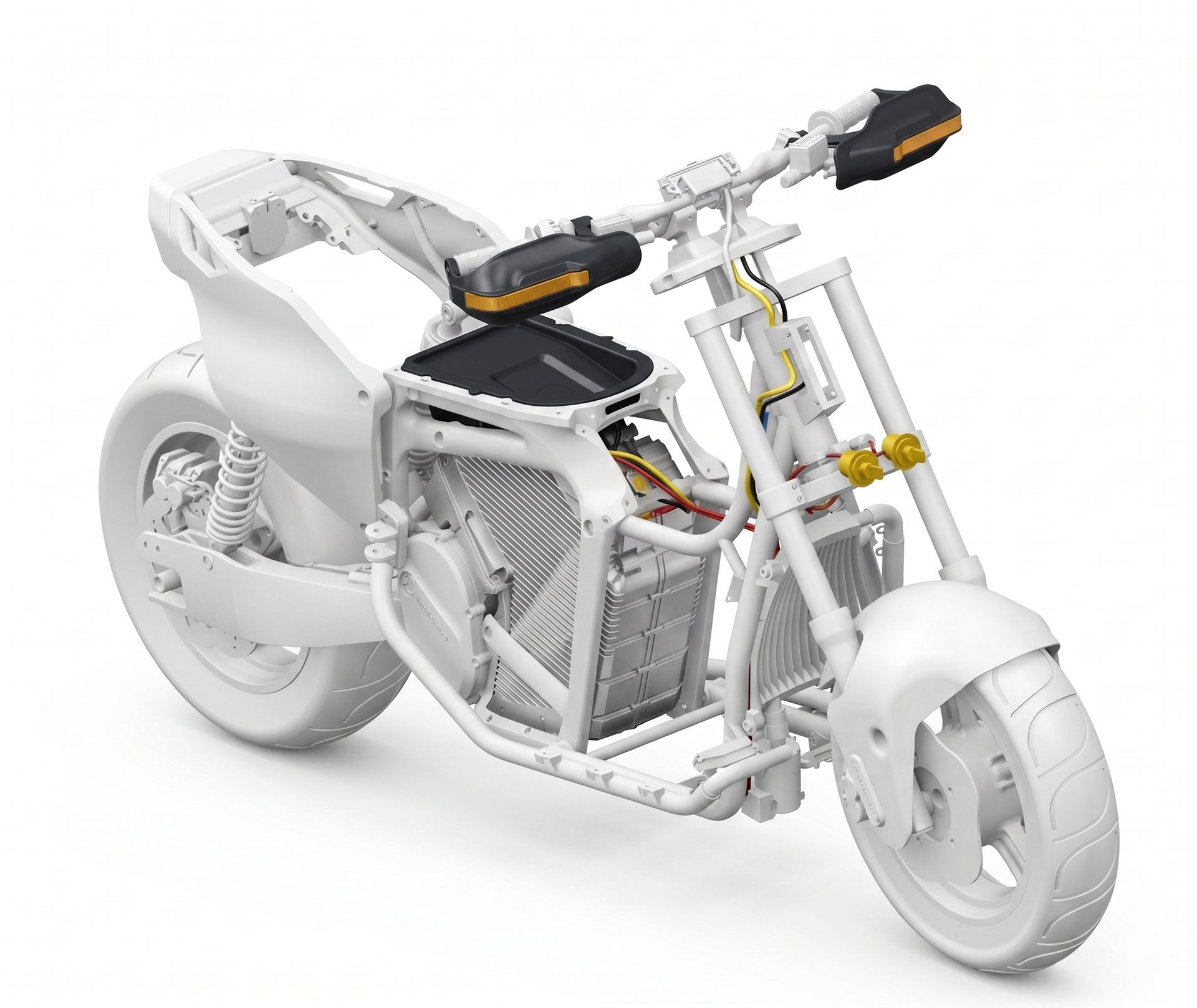
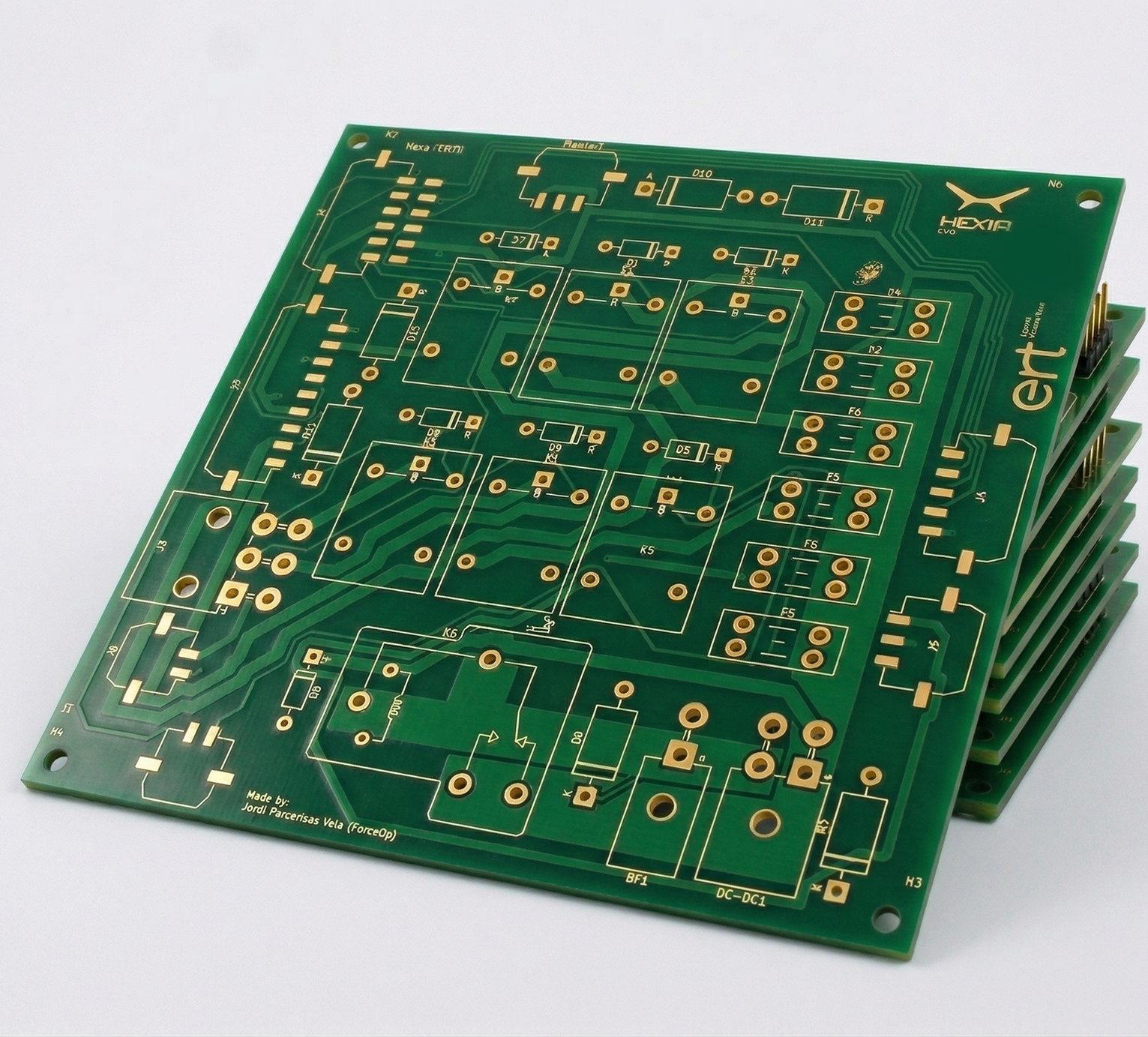
Centralized single-hub topology. I led the electrical architecture, centralizing every peripheral control into a single Power Distribution Unit (PDU) PCB. It acts as the main hub, executing all power distribution outward from one point.
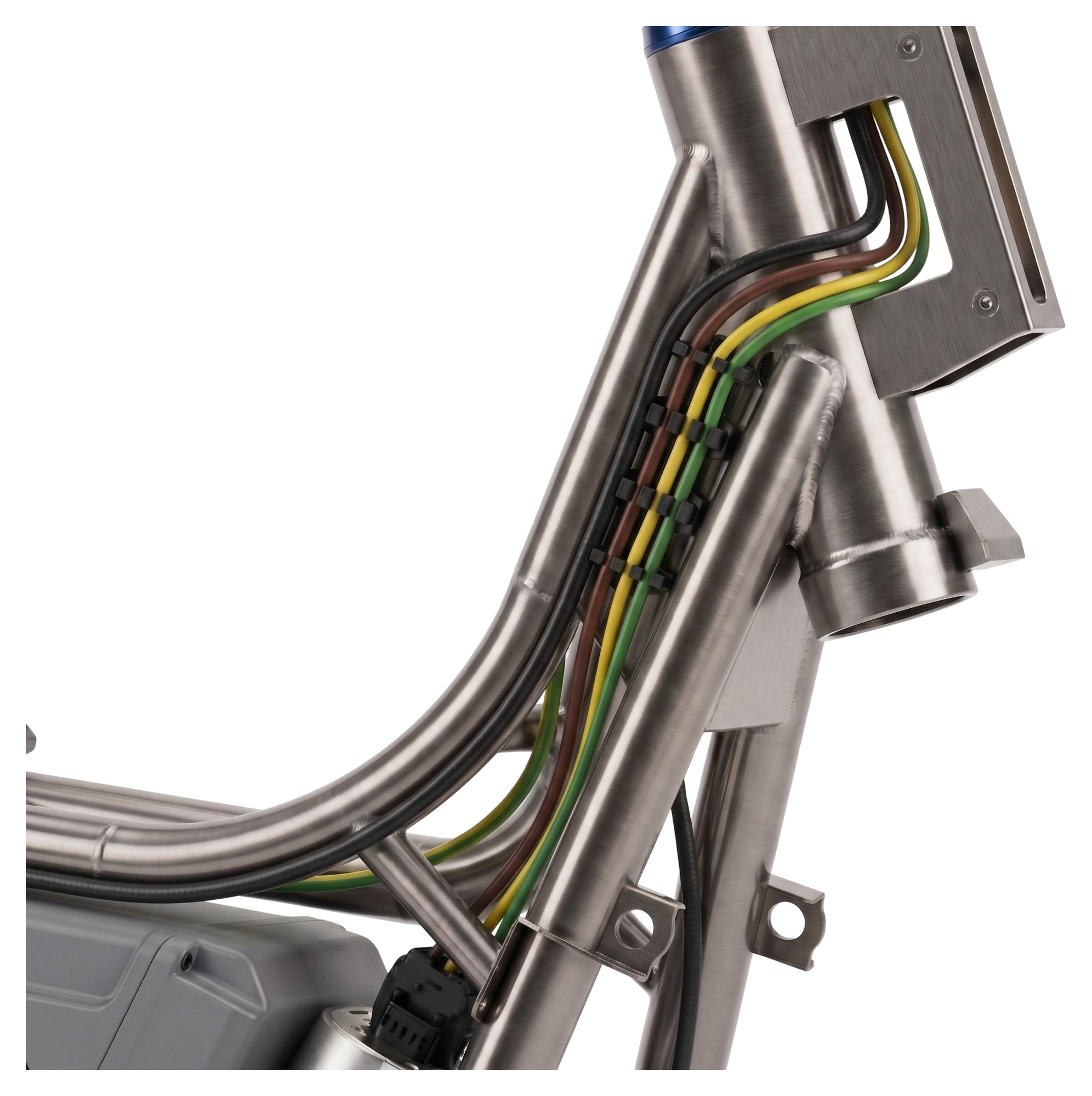
Harness simplification. The wiring was strategically engineered into just 4 main routing trunks — front, mid, lower and rear. That drastic simplification streamlines assembly-line operations and minimizes the risk of wires crossing or being pinched inside the frame.
Harsh environment readiness. Peripheral connections use waterproof JST JWPF Superseal connectors (IP67) to guarantee durability and stable power delivery in demanding, high-vibration conditions.
Mechatronic packaging
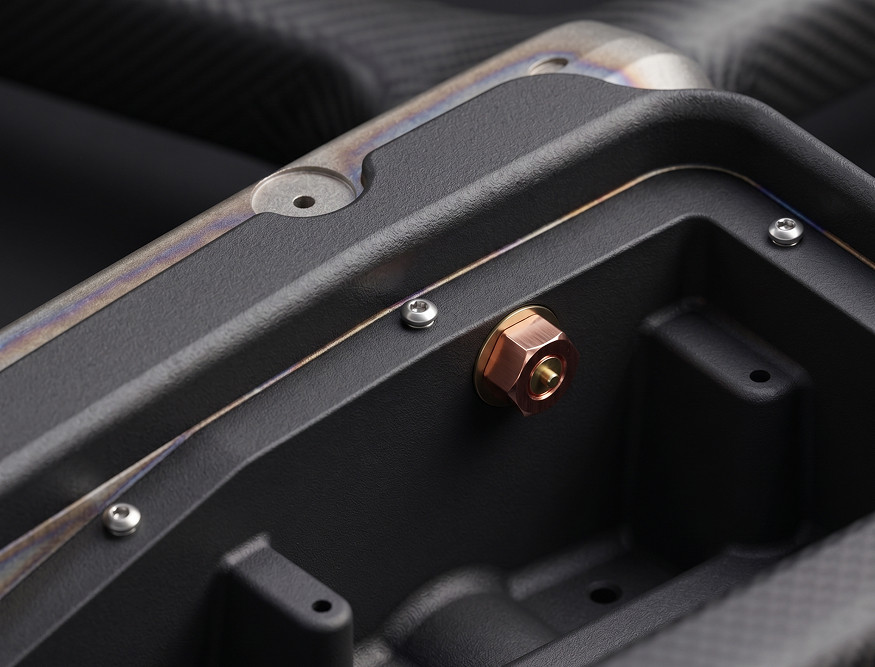
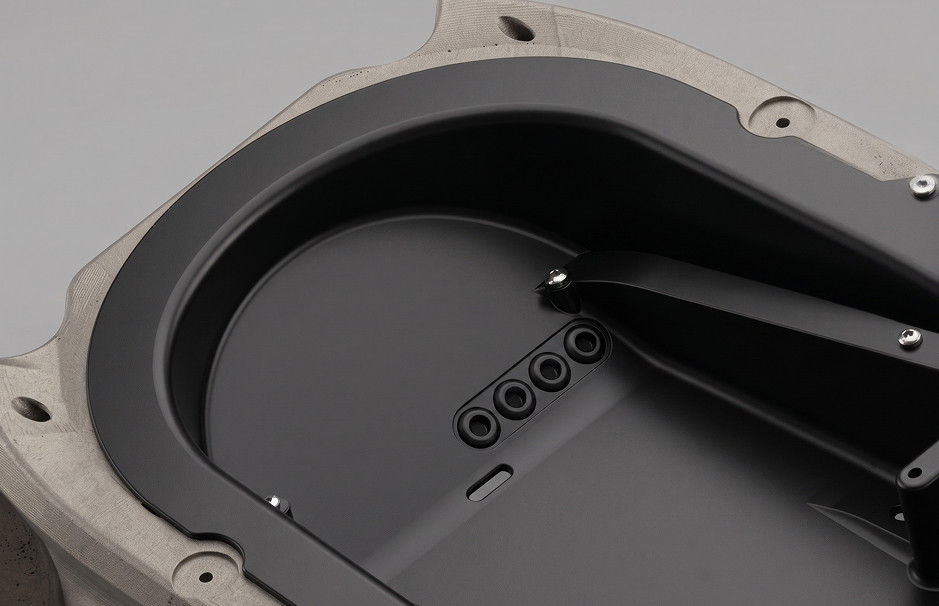
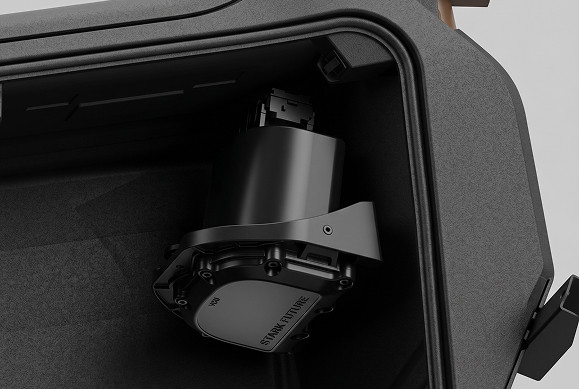
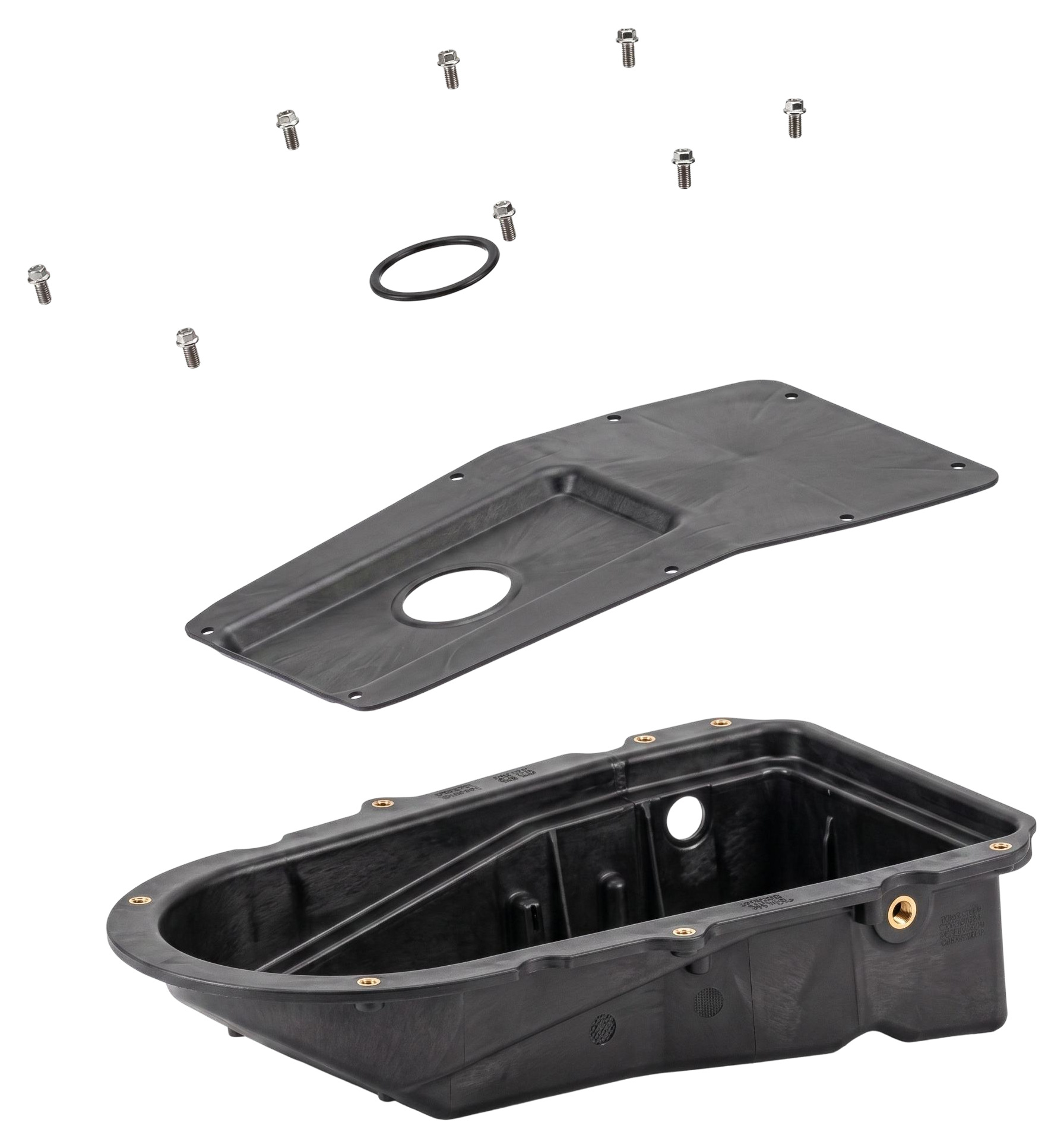
Integrating the custom PDU into an extremely tight space inside the chassis — the glovebox — while ensuring environmental sealing, manufacturability and thermal stability without active cooling.
Design for manufacturing. The PCB enclosure and glovebox cover were modelled in PTC Creo Parametric, with the geometry fully optimized for plastic injection molding: draft angles and uniform wall thicknesses applied throughout to guarantee mass-production viability.
Mechanical layout trade-offs. The PCB routing was heavily driven by the enclosure’s mechanical constraints — every connector was forced to the board perimeter. That mechanical-first decision keeps wires from crossing over internal components, allowing a clean enclosure seal and quick plug-and-play assembly.
Thermal validation. An analytical Joule-effect heat dissipation calculation under a peak load scenario of 210 W (17.5 A) confirmed a peak power density of just 0.081 W/cm², validating passive natural convection and saving the weight, space and failure risk of an active cooling fan.
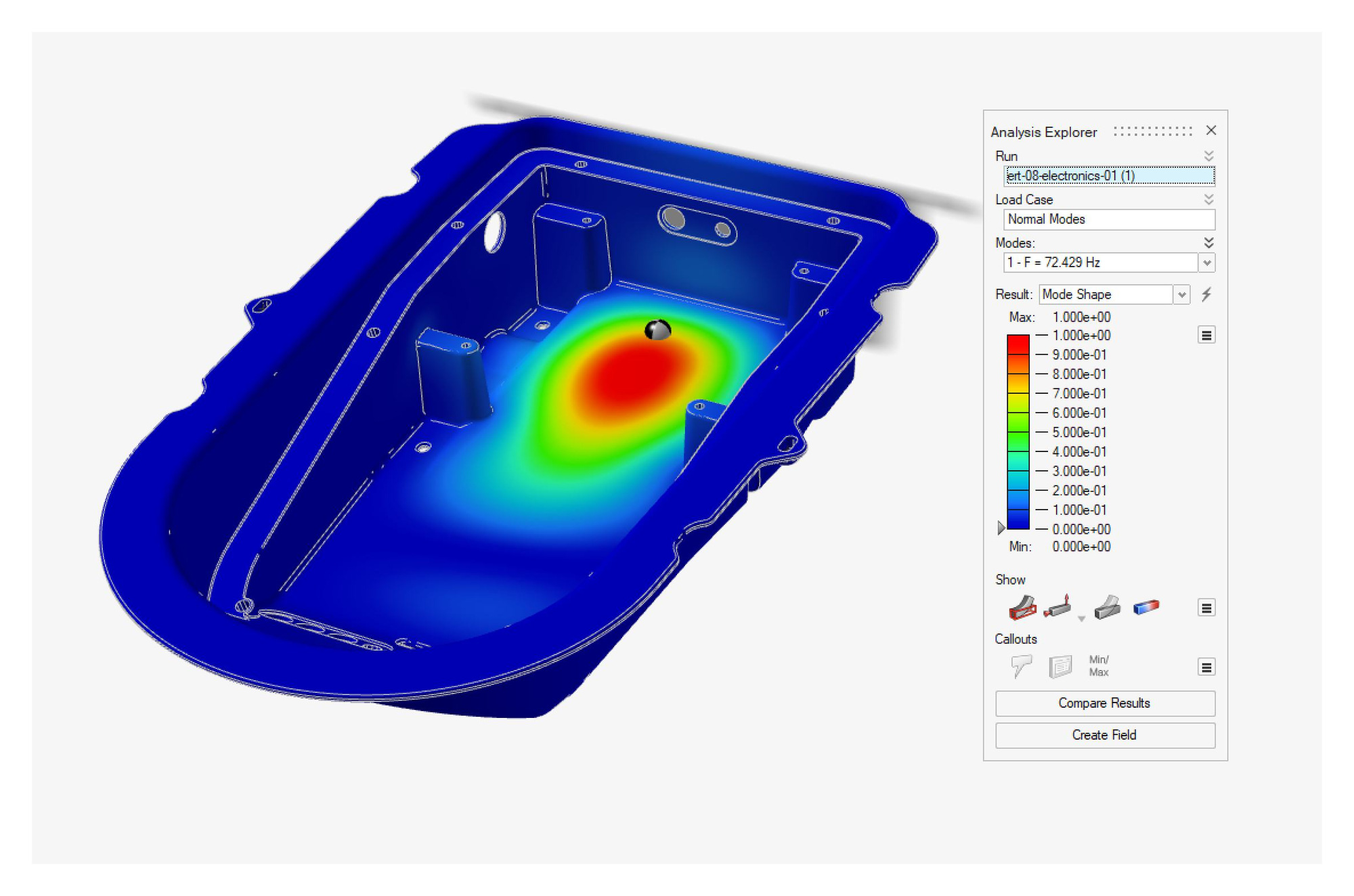
Dynamic rigidity. A modal analysis of the ABS enclosure confirmed a first natural frequency of 72 Hz, reached through orthogonal mounting points (vertical and horizontal), leaving the internal PDU highly isolated from low-frequency chassis vibrations.
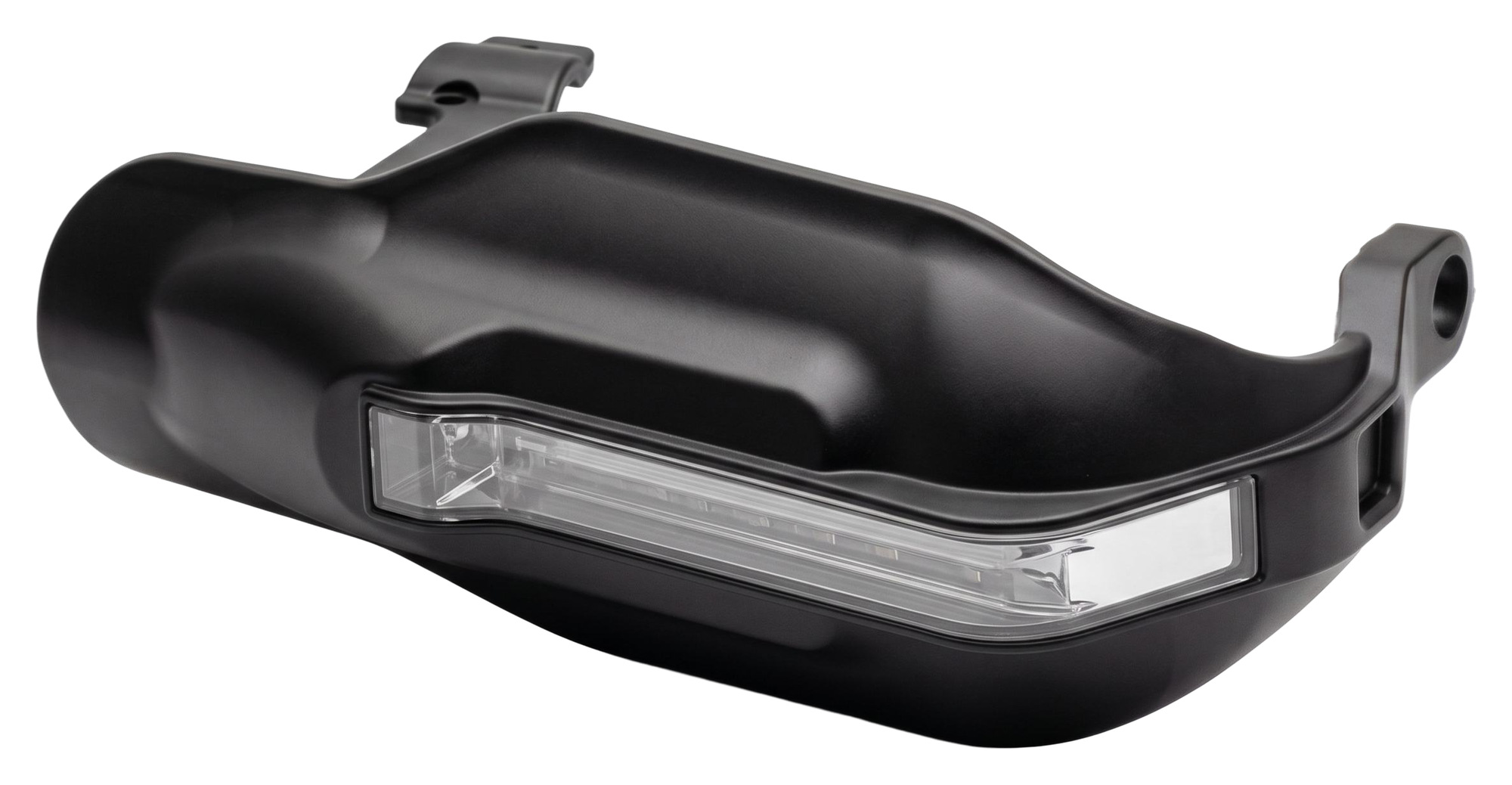
Intelligent handguards
Integrating sequential LED signalling inside a structural crash-protection component, while minimizing aerodynamic drag, managing chassis vibrations and keeping the part manufacturable.
Aerodynamic optimization. The traditional trade-off between rider protection and aerodynamic efficiency was broken. Across four stages of iterative design, the final geometry (V04) increased the frontal hand-protection area by 3.59% while cutting drag force by 42.98% against the initial baseline.
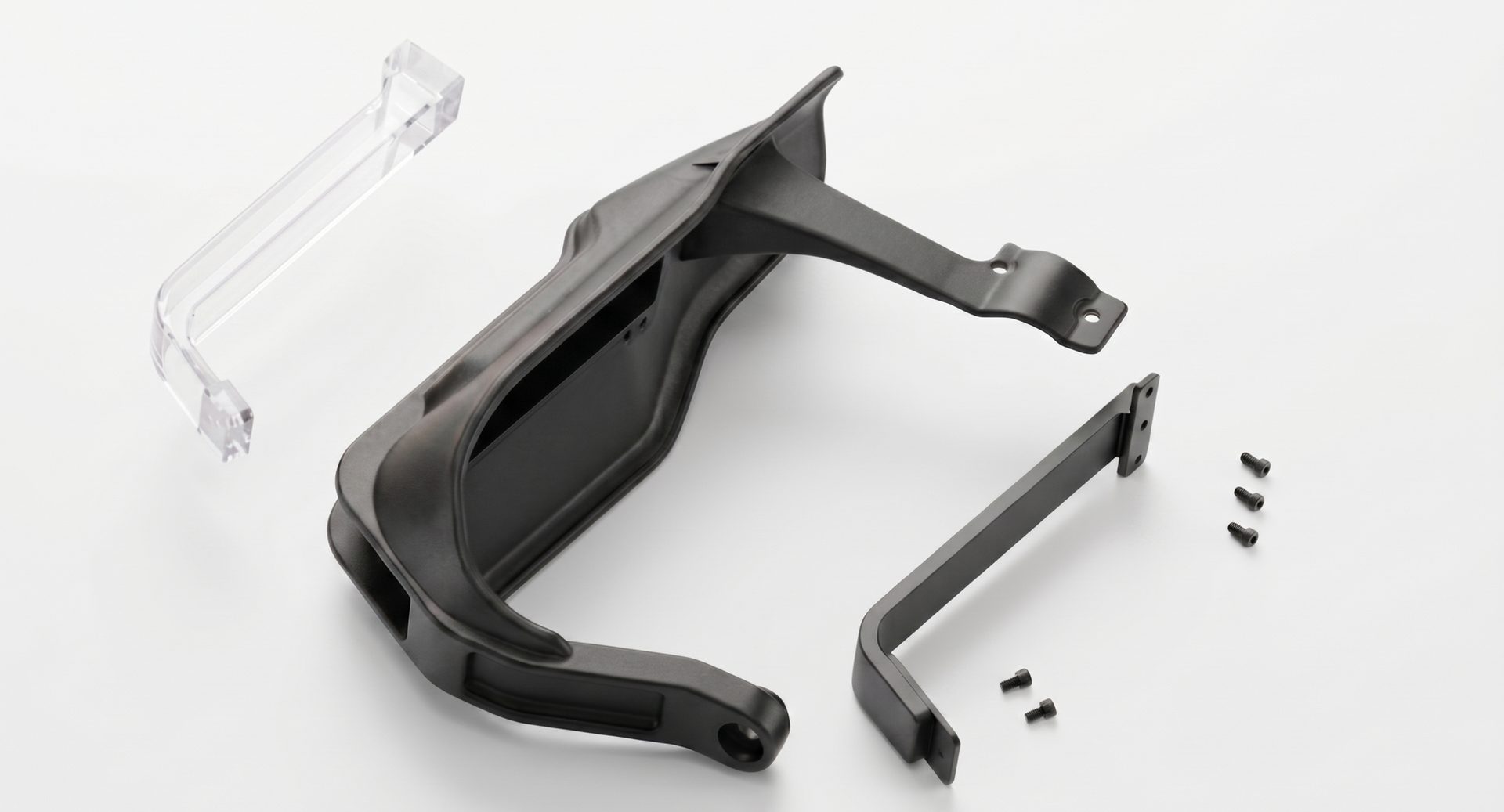
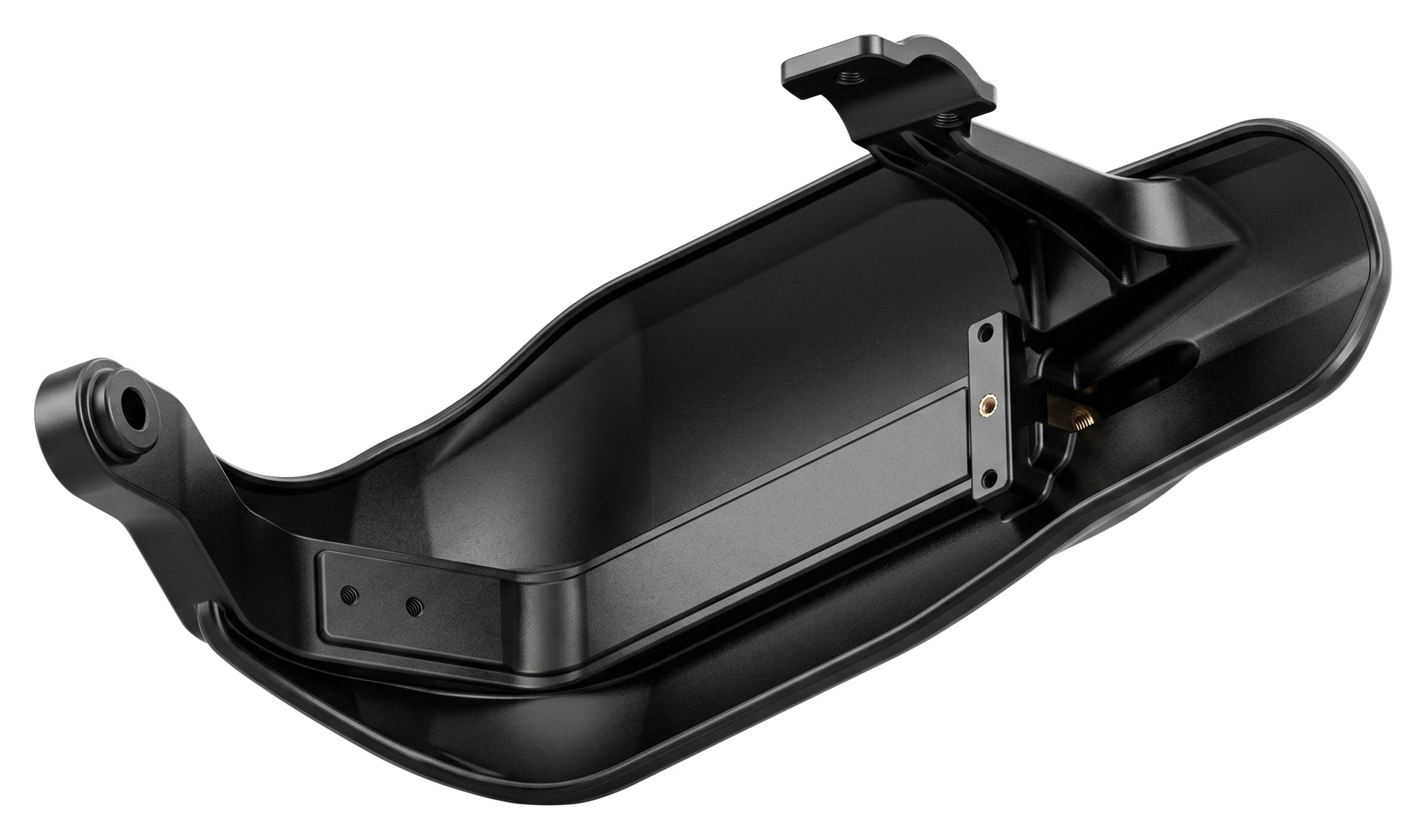
Design for manufacturing. The main body was designed for PA12 SLS manufacturing, with brass threaded inserts for reliable, repeatable assembly. Structural reinforcing ribs were repositioned to Class-B (non-visible) surfaces to keep premium Class-A aesthetics without compromising mechanical strength. The integrated LED module sits behind a custom SLA translucent resin lens.
Structural & NVH validation. Modal analysis recorded a first natural frequency of 34 Hz, safely clear of the critical 20 Hz threshold of typical motorcycle chassis excitation — guaranteeing structural integrity and preventing vibratory fatigue of the internal LED module during nominal operation.
Brackets & wire routing
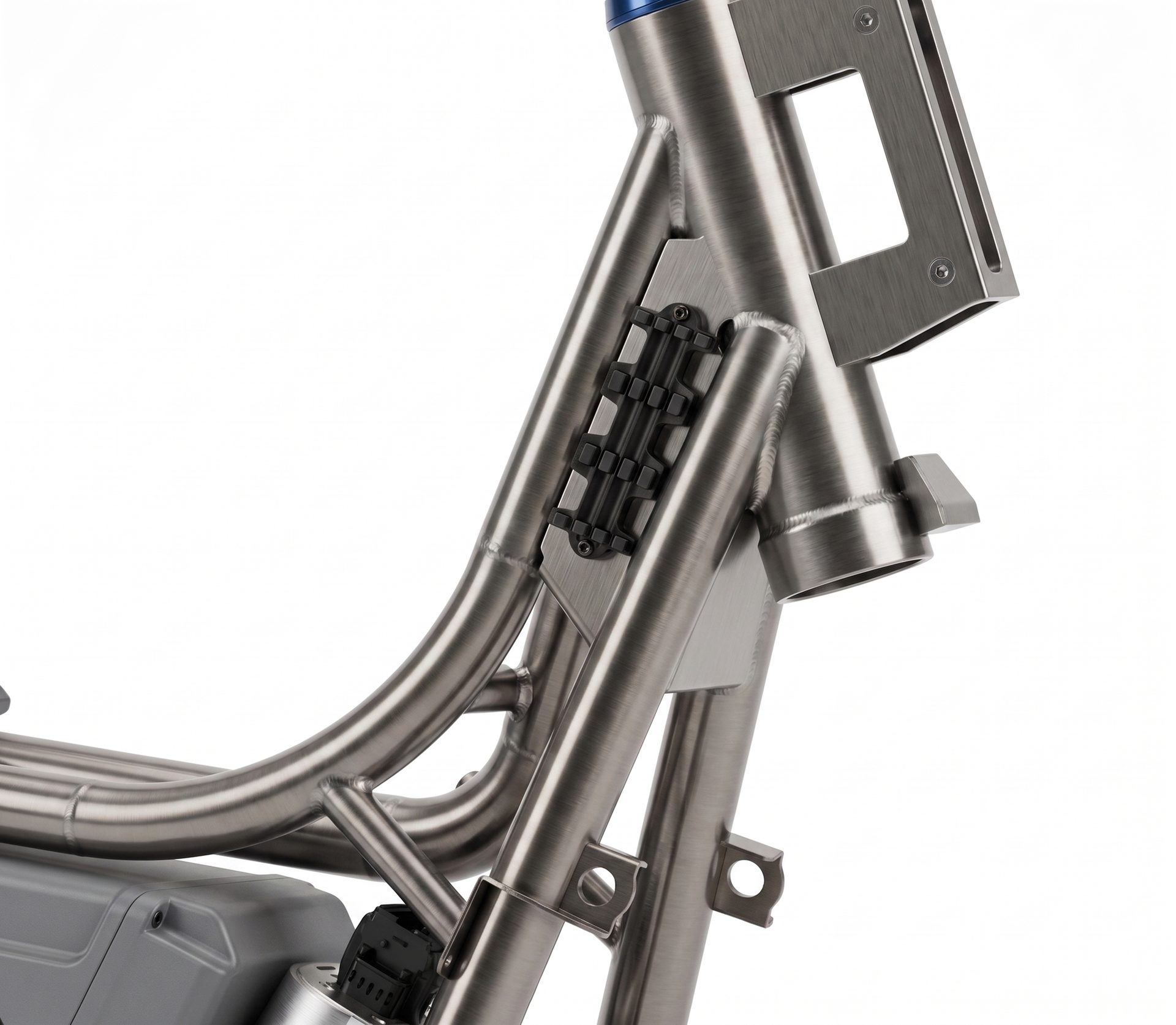
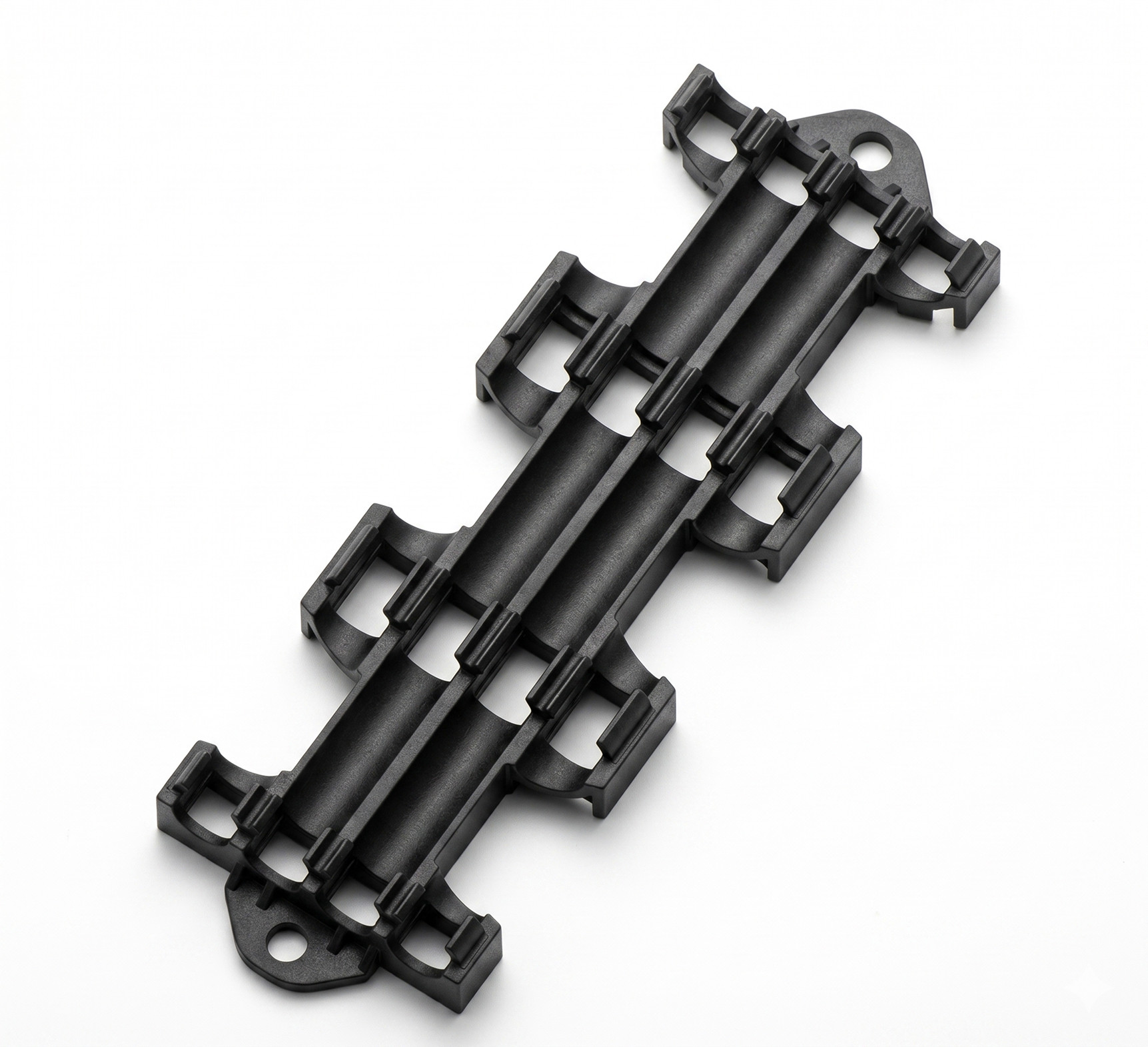
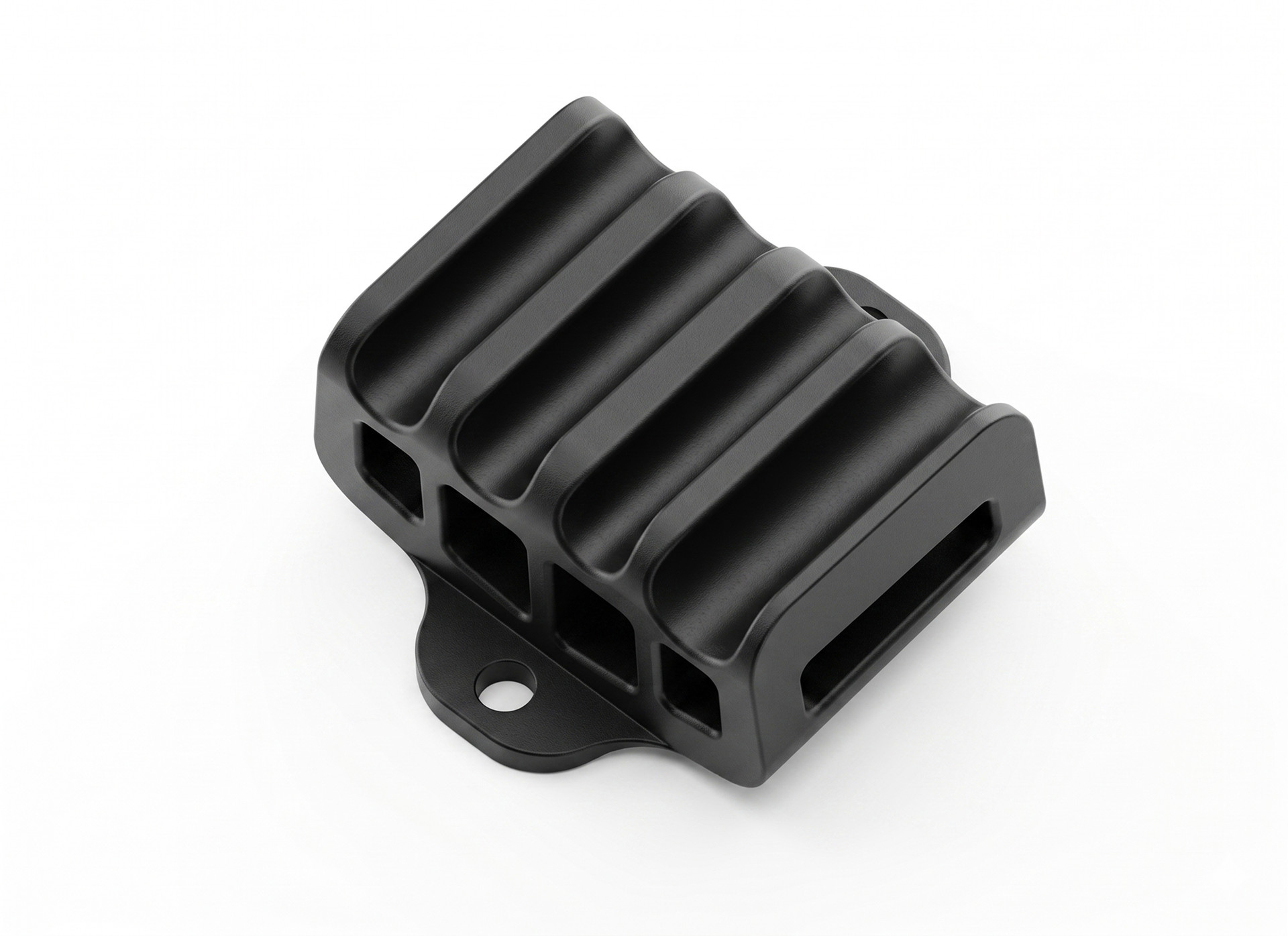
Clearance & routing solutions. Dedicated ABS injection-molded routing guides were designed for the front frame and the fork. They secure the wiring harness, keeping proper clearance and preventing wire pinching or fatigue at maximum steering lock.
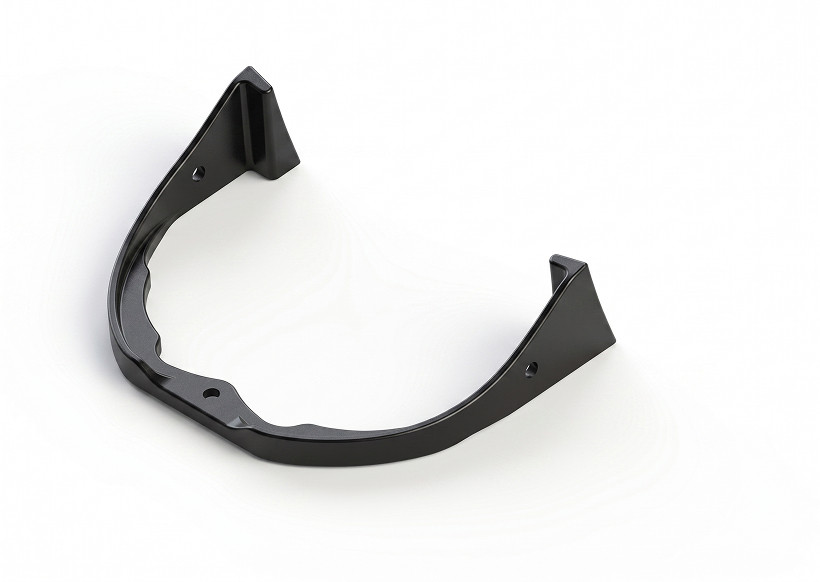
VCU mounting & engineering trade-offs. A robust mounting bracket integrates the primary Vehicle Control Unit (VCU) into the front frame. Static structural analysis yielded a Factor of Safety above 6. Exceptionally high, but topology optimization was intentionally bypassed: the negligible mass reduction did not justify compromising the maximum reliability the powertrain’s core hardware needs under unpredictable loads. A modal analysis confirmed a 404 Hz natural frequency, guaranteeing zero resonance issues.
Built with industry
Hexia Evo is far more than a university project. It was developed professionally, hand-in-hand with the companies that made the bike possible, engineering and manufacturing real, production-grade parts together with each of them.
That collaboration is what turned an ambitious concept into a fully built, functioning machine, and pushed every component to a genuinely premium standard.