Kyte
Maximum strength, minimum weight: an FPV drone shaped by the algorithm.
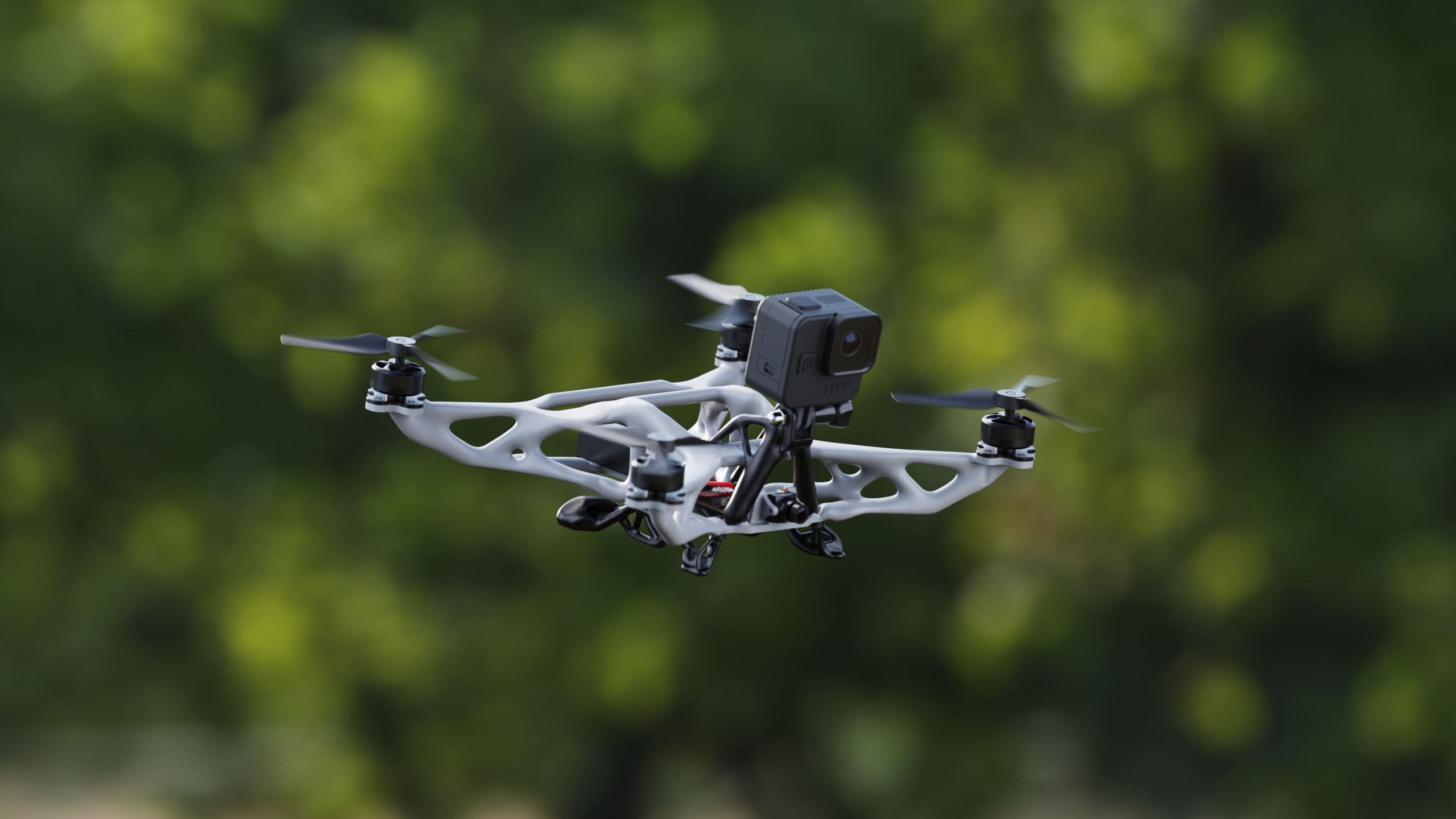
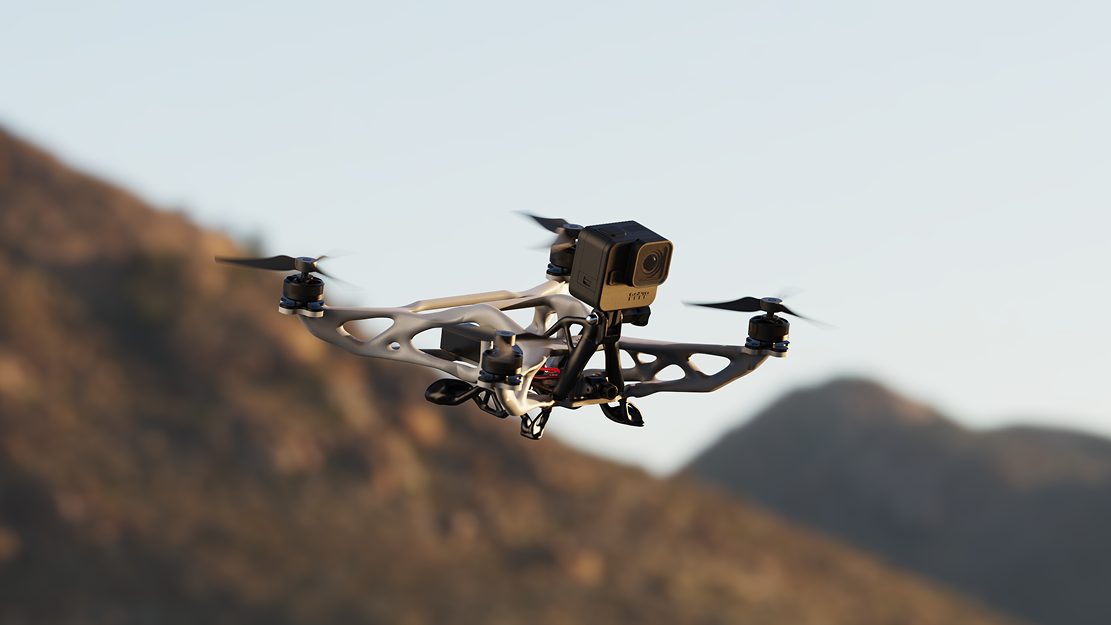
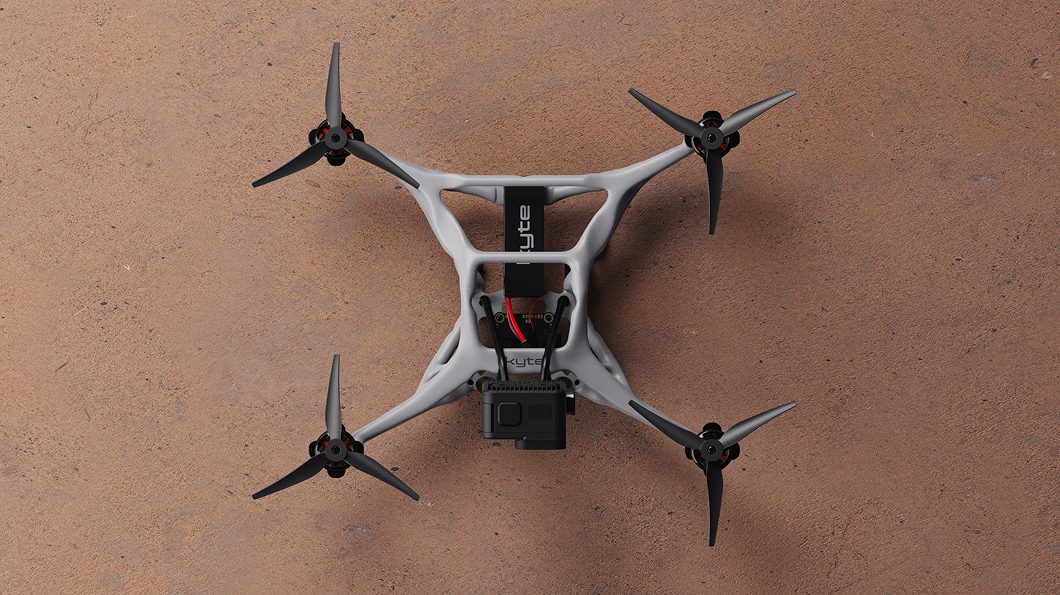
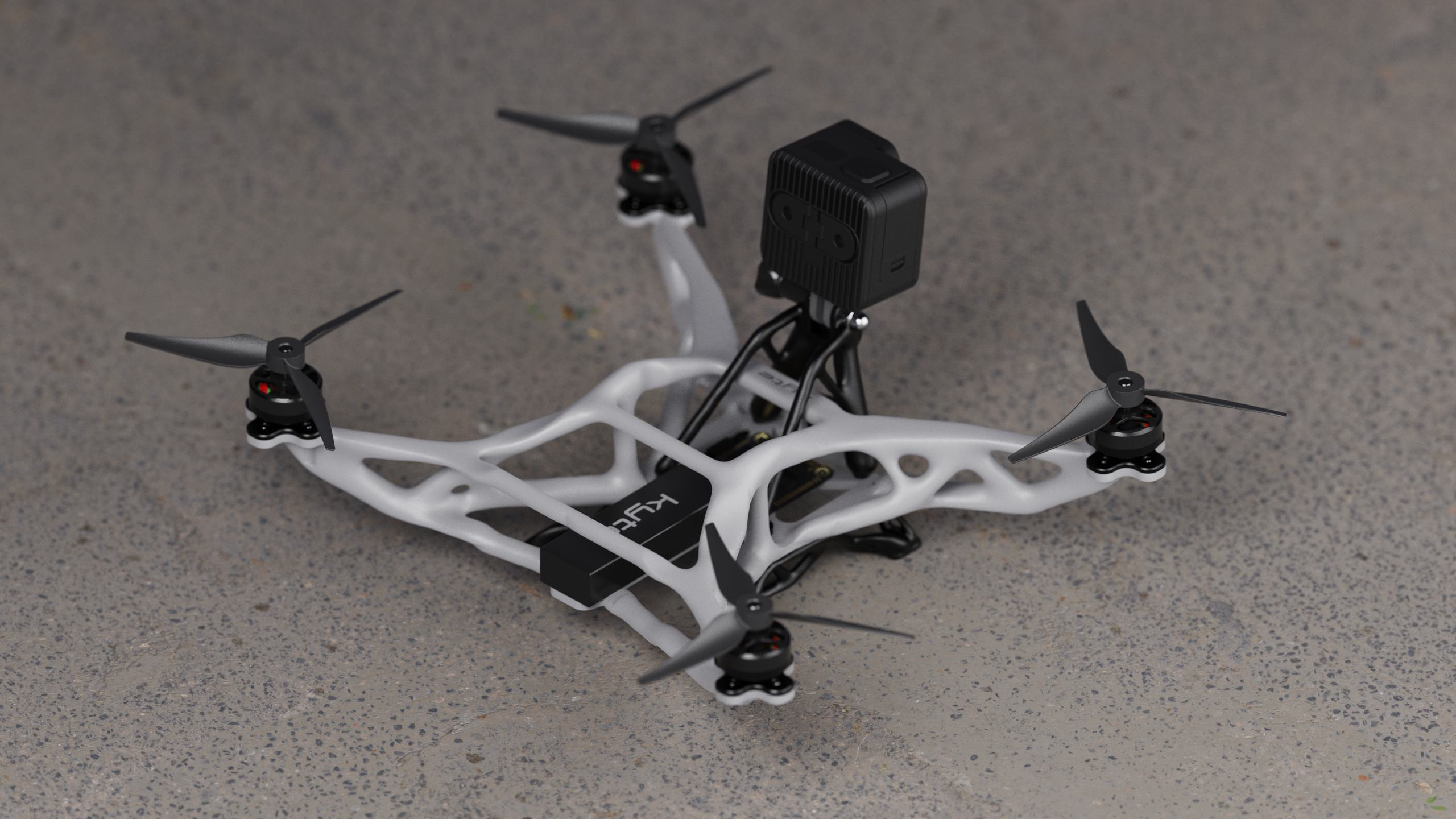
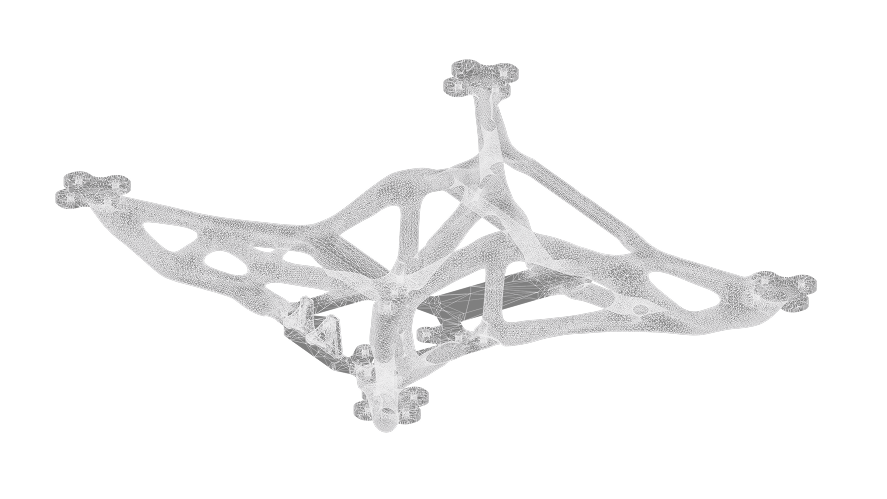
Kyte is an FPV racing drone frame designed to carry as much speed as possible with as little material as possible.
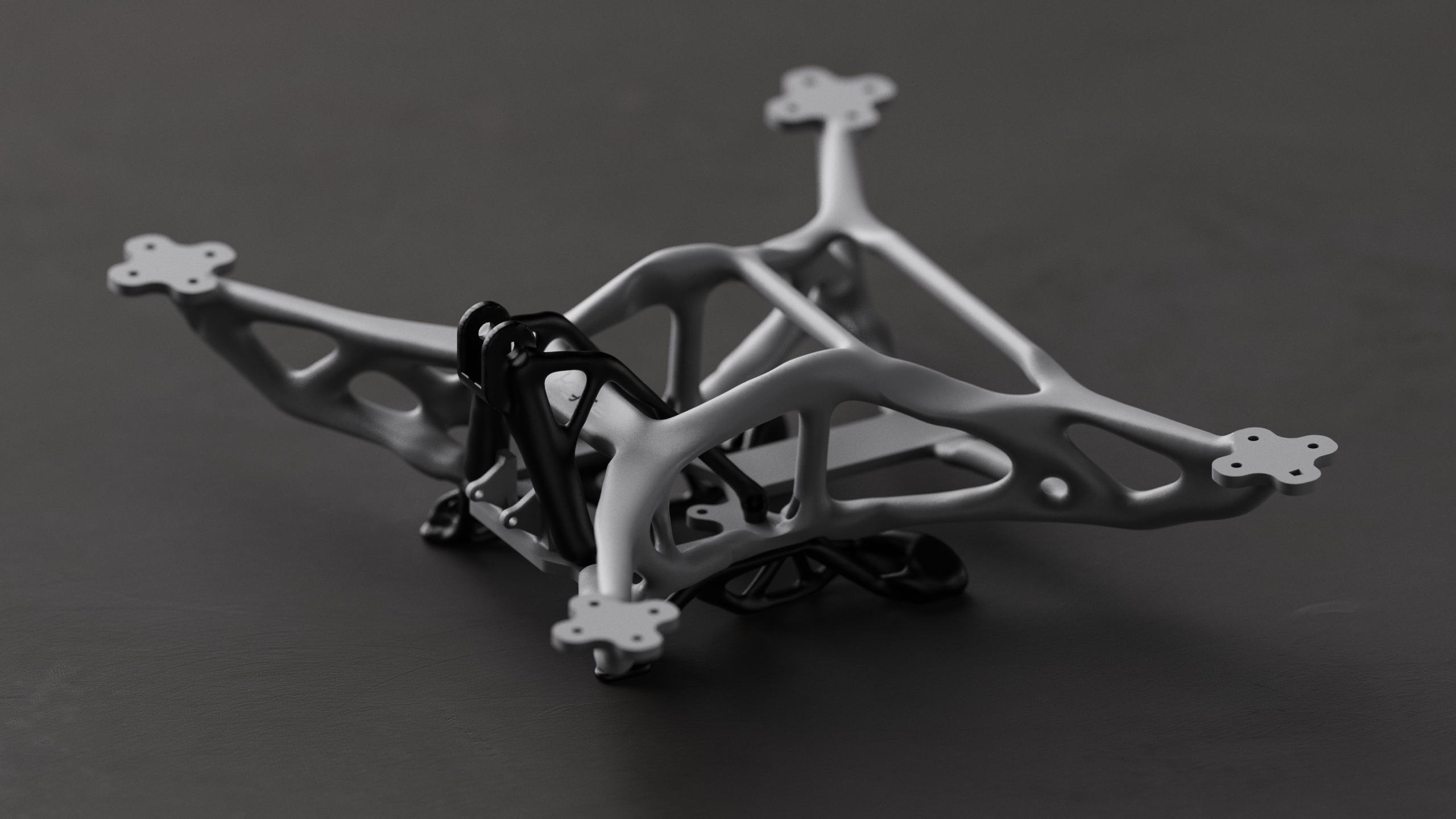
The frame and integrated GoPro mount were developed through topology optimization: loads and constraints feed a generative process that strips every gram of material that isn't doing structural work, leaving an organic, performance-driven geometry.
The result balances structural engineering, materials selection and performance testing into a single, lightweight 3D-modelled part ready for flight.
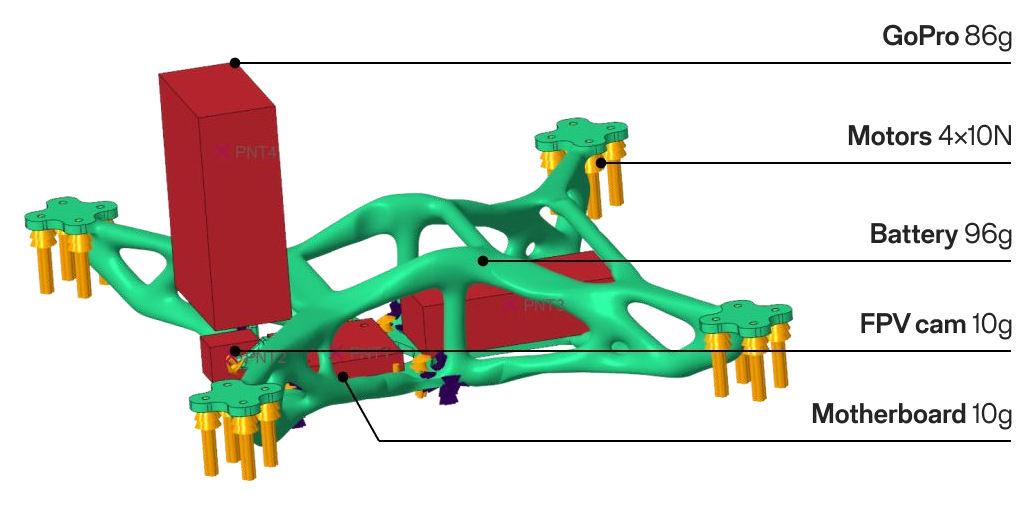
Boundary conditions & load cases
An extreme-load static scenario was defined to mimic peak motor thrust.
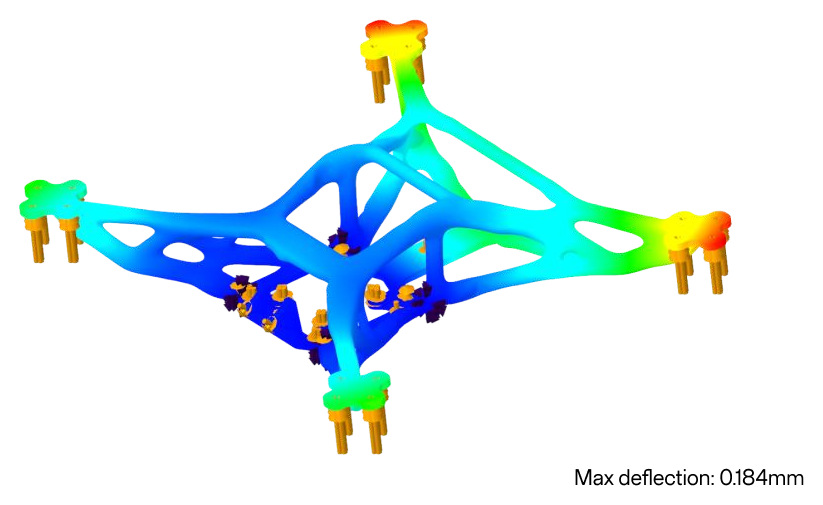
The simulation anchored the drone frame while applying a maximum upward force of 40 N — 4 × 10 N, one per motor — against the distributed payload weights of the GoPro, battery, PCB and FPV camera, each acting at its exact centre of mass.
Algorithmic mass reduction
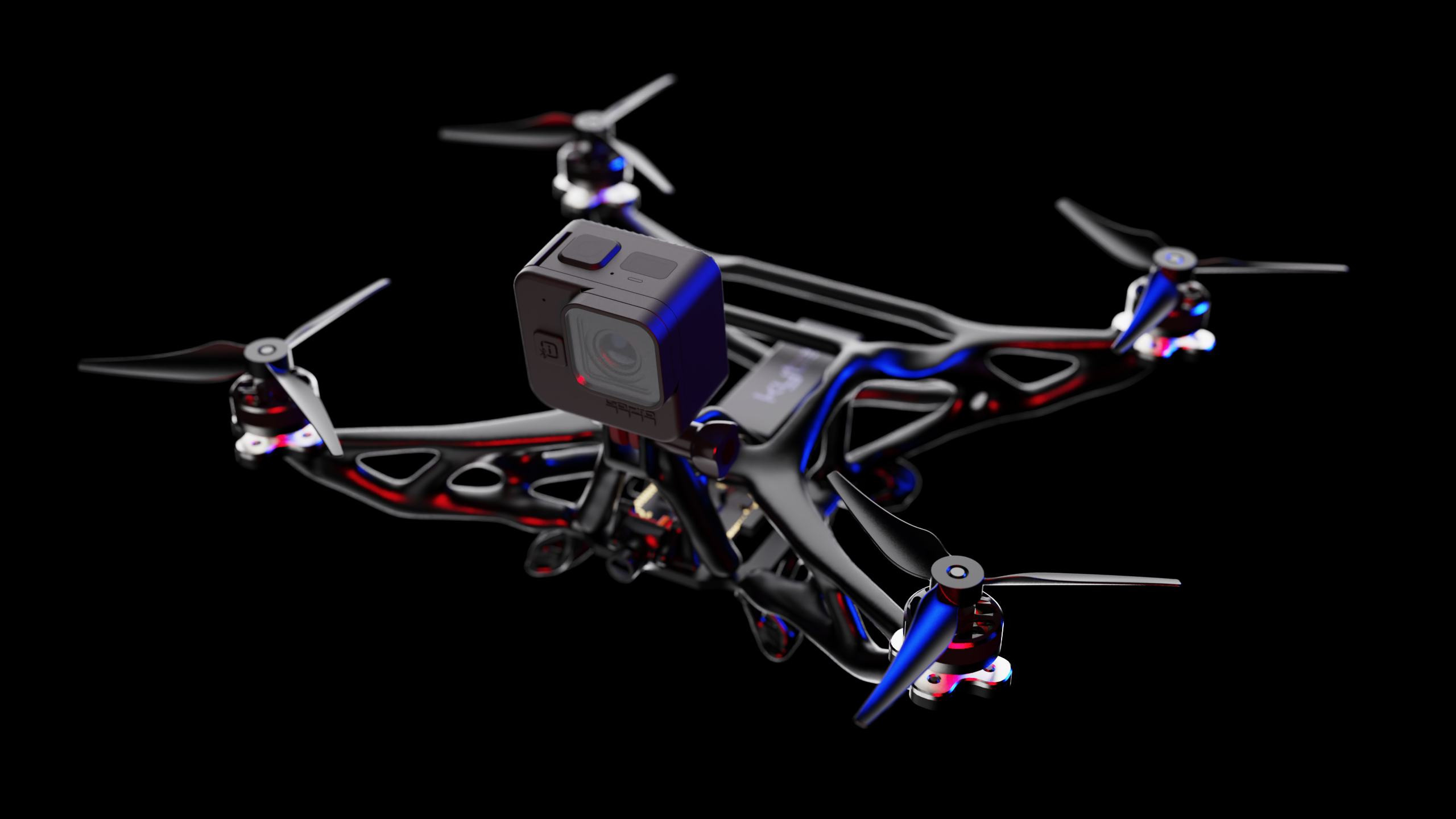
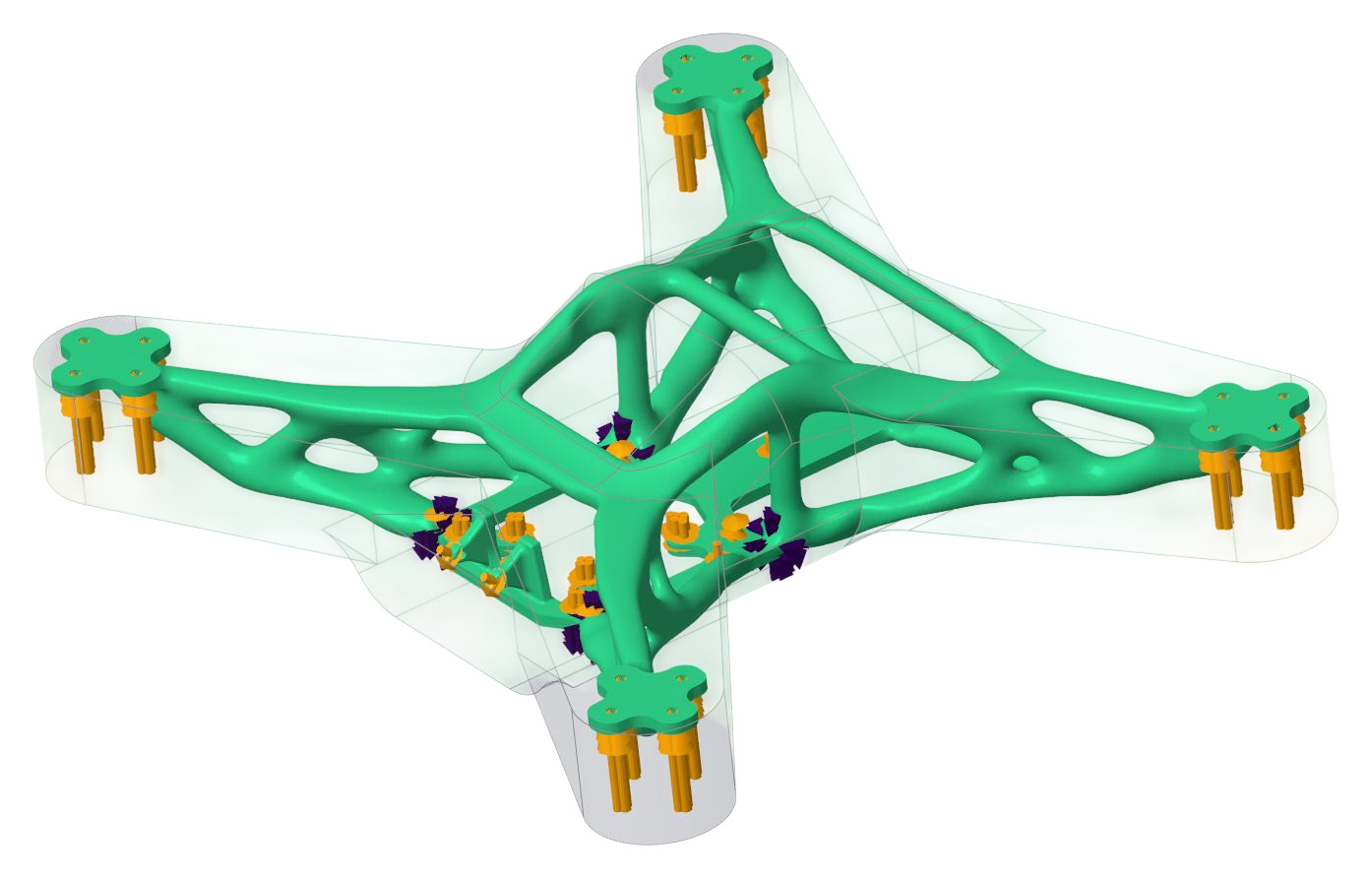
The topological solver was configured with strict geometric and manufacturing constraints, preventing component collisions and guaranteeing 3D-printability.
From there the algorithm was driven to extreme material reduction targets through a precise design-space configuration: the final volume limited to 12% of the initial bounding geometry, a 75% element separation enforced, and a strict 3 mm minimum member size held to guarantee structural integrity through PLA manufacturing.
Stiffness-driven FEA validation
Unlike traditional components, FPV drone frames are driven by stiffness — what keeps the flight controller stable — rather than by pure yield strength.
The final 180 g frame achieved exceptional rigidity: a maximum deflection of just 0.184 mm under full 40 N peak thrust, at a negligible peak Von Mises stress of 1 MPa.
That margin is what guarantees zero in-flight frame resonance.