← Selected Work VOD-2025 · Metal AM · Generative Design

Void

The world’s lightest stunt scooter, engineered with metal additive manufacturing.
RoleDesign & Optimization
Year2025
DisciplineMetal AM · Lattices
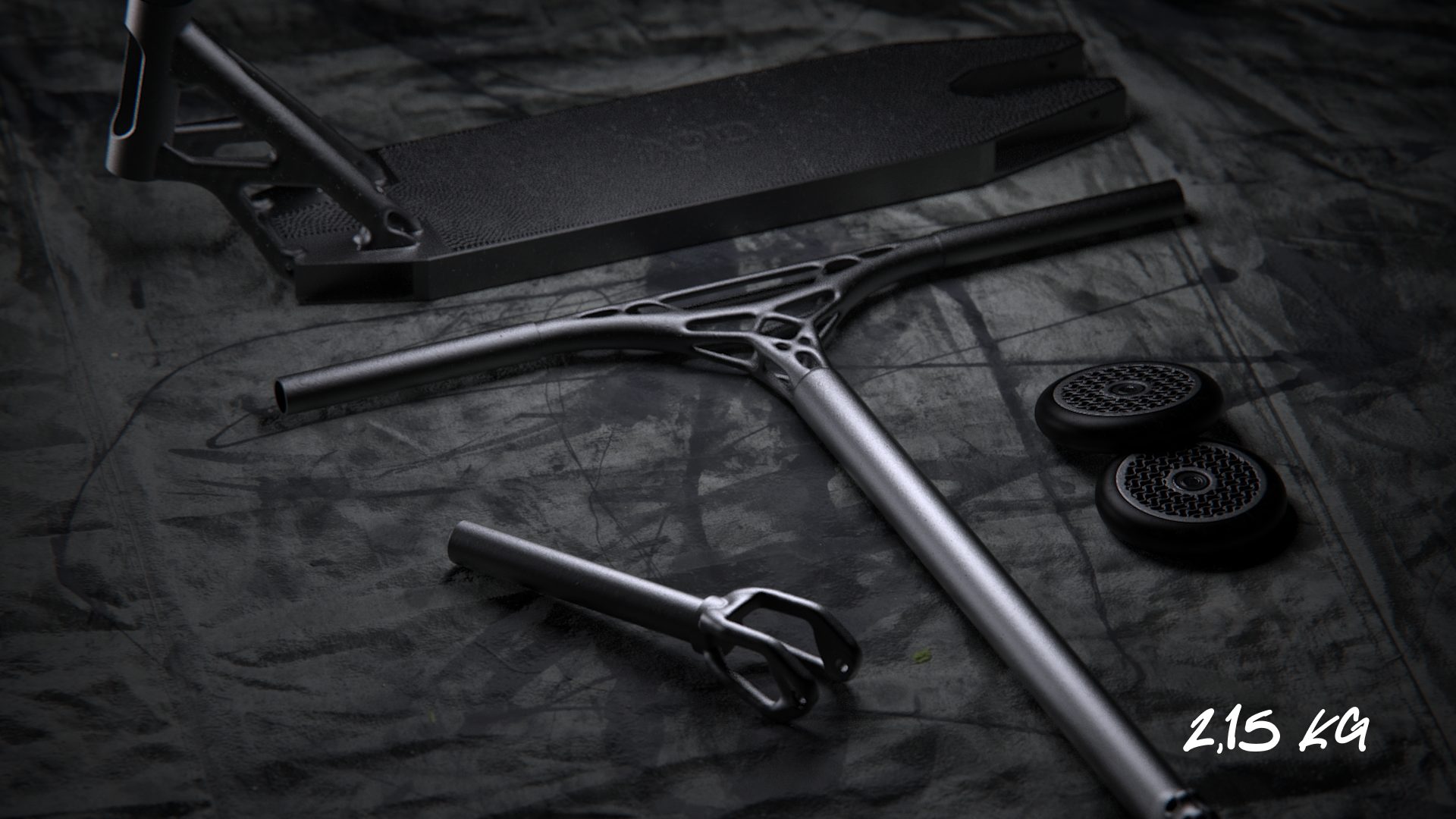
Total mass2.21 kg
Void — ride the void, the opening lockup

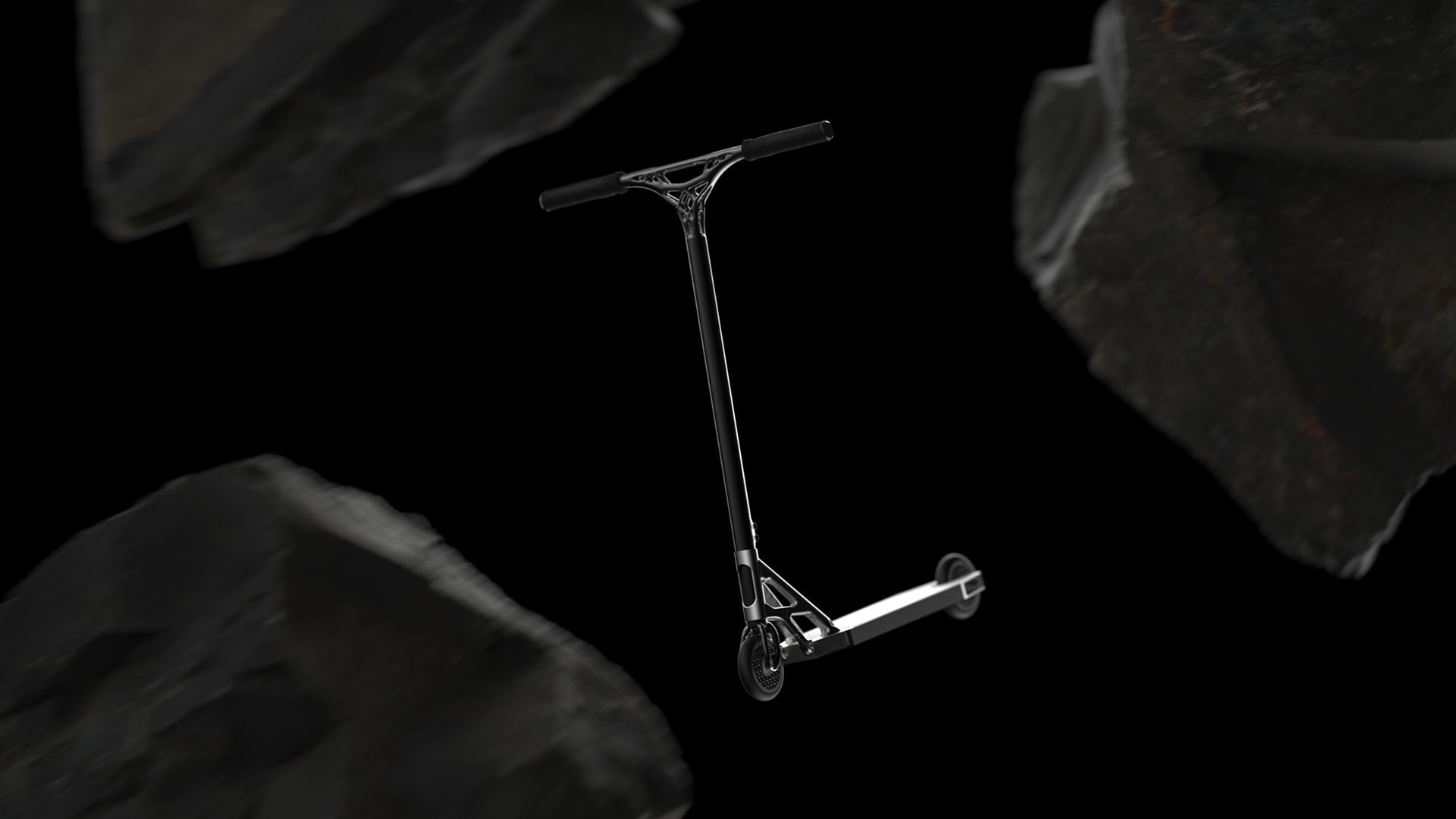
THE WORLD’S LIGHTEST SCOOTER

The Void stunt scooter

Challenge

High-Performance
Stunt Scooter

Built for stunt riding, where every part must stay responsive and reliable under repeated impacts.

Extreme
Lightness

Push mass reduction far enough to compete with the lightest scooters on the market.
Structural
Strength

Never trade integrity or durability for lightness.

Innovation Through
Additive Manufacturing

Metal AM and generative design for organic forms and lattices that traditional manufacturing cannot make.
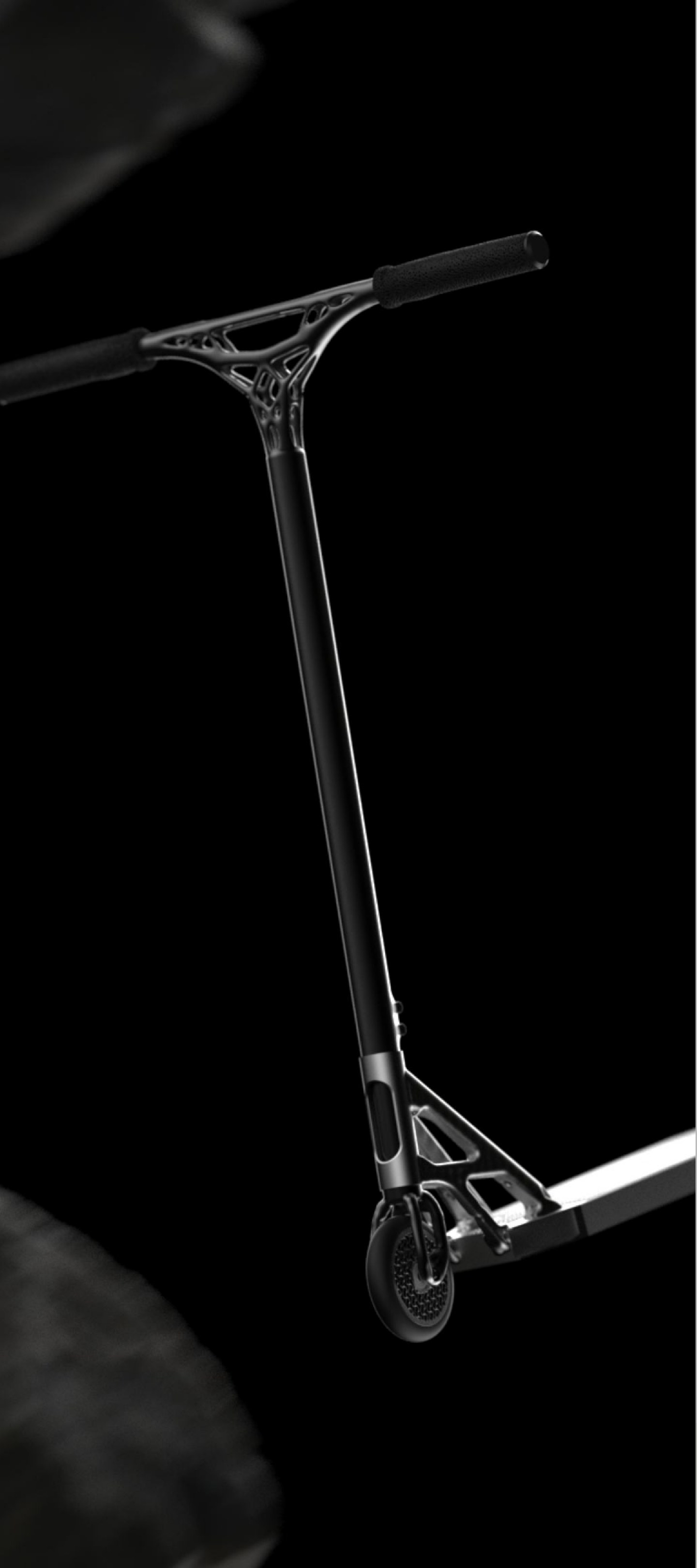
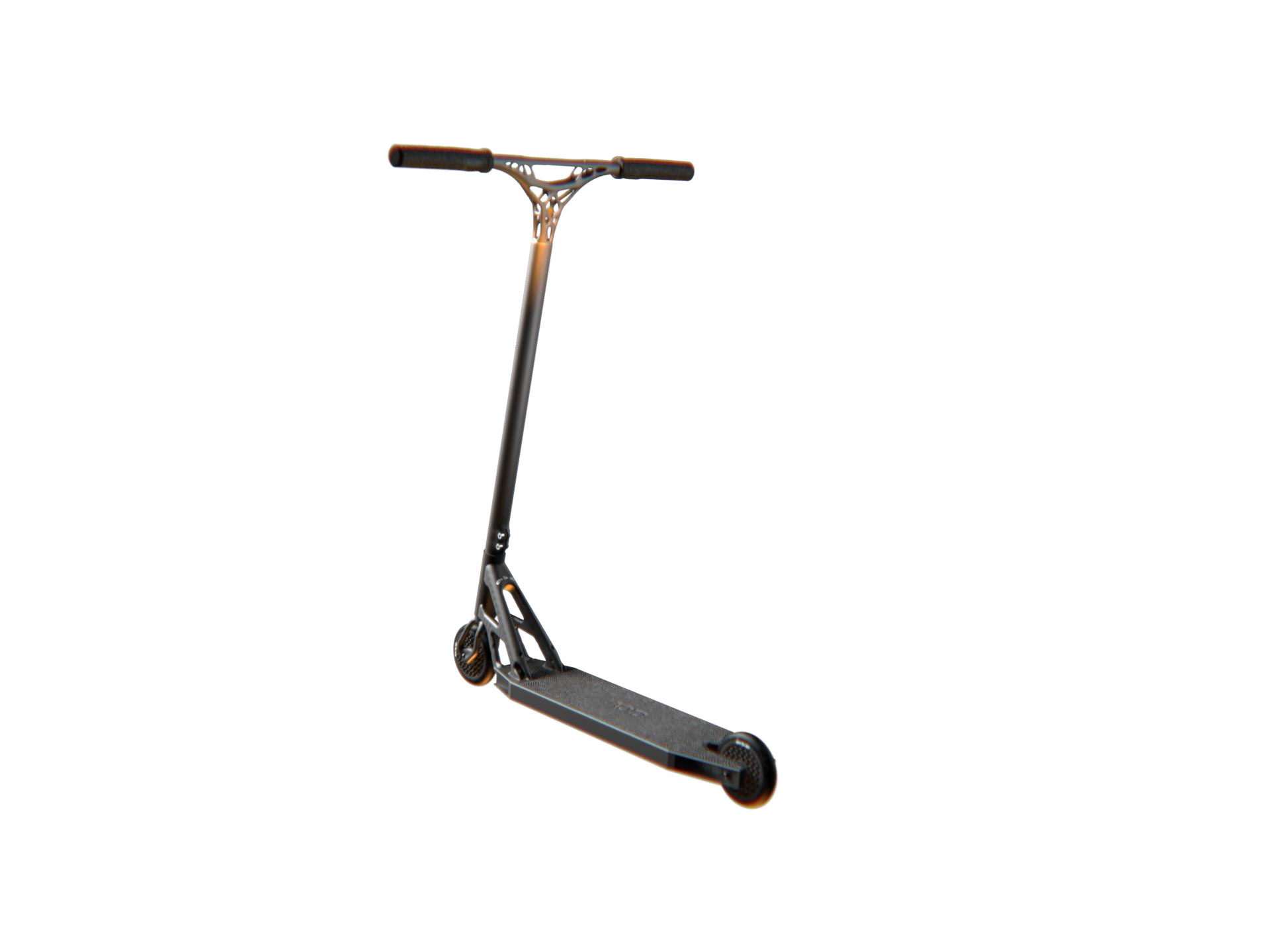
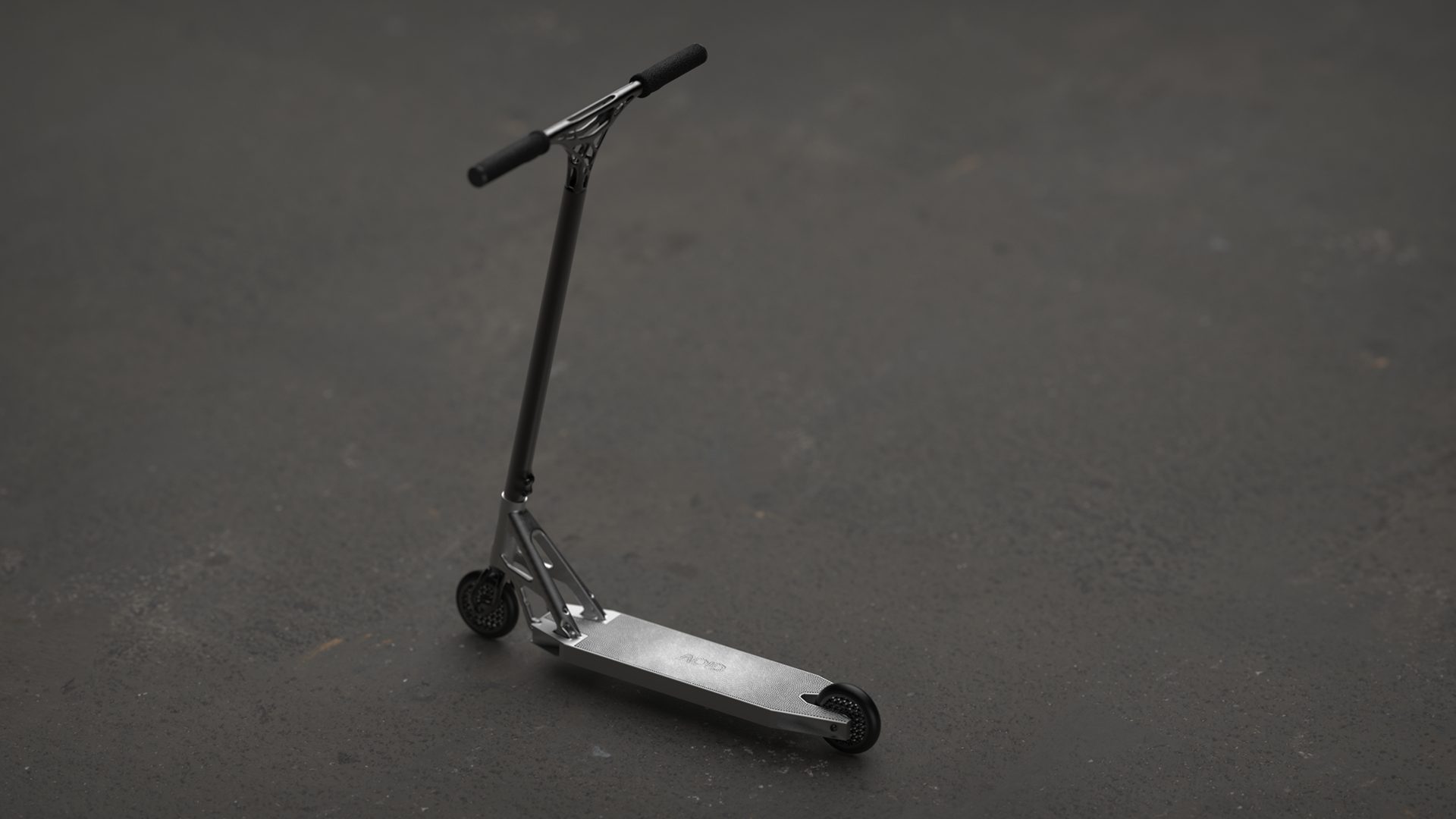
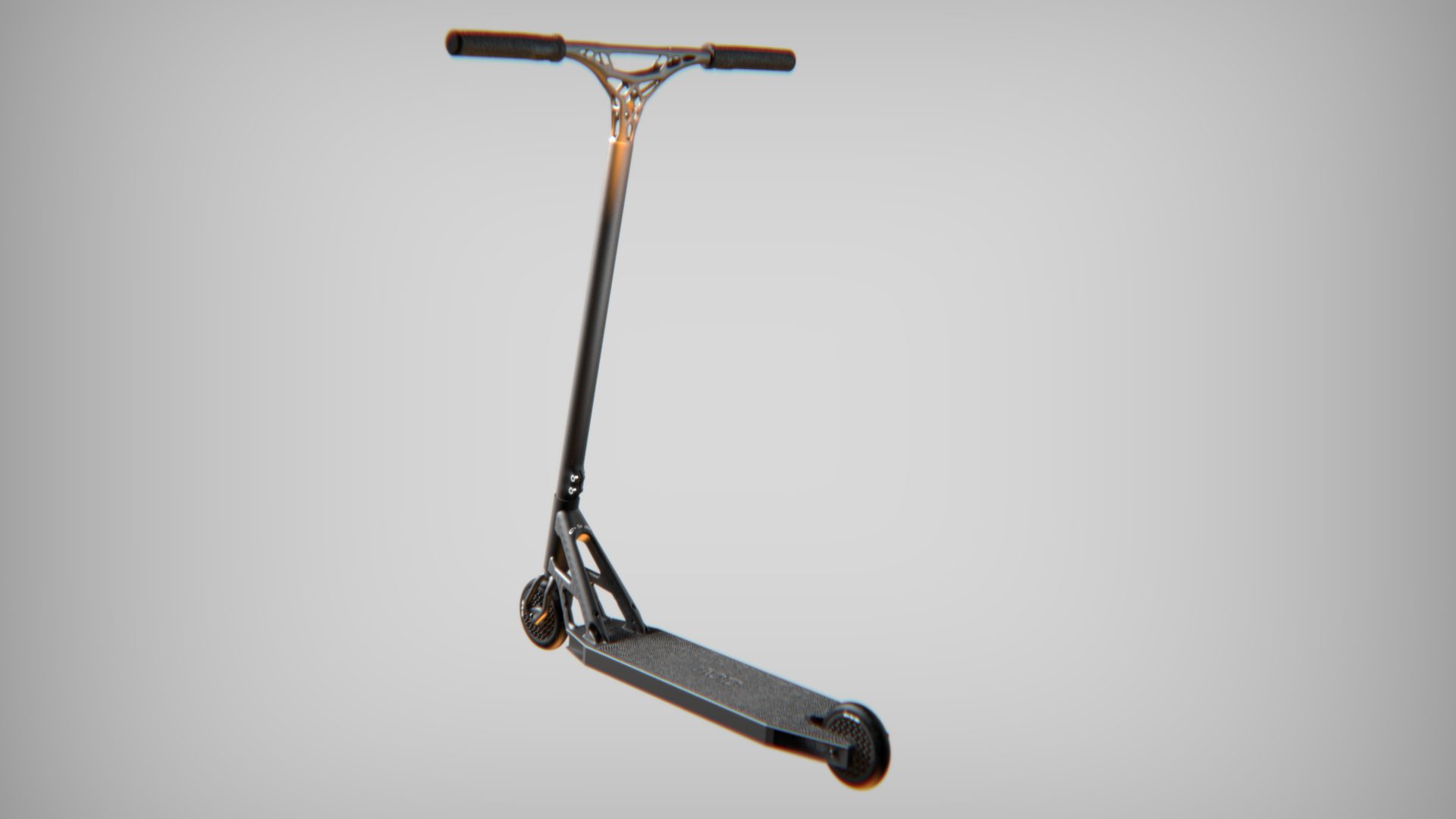
The Void scooter, full view

Ultra-lightweight performance (< 2.5 kg)

Under 2.5 kg, with exceptional stunt durability
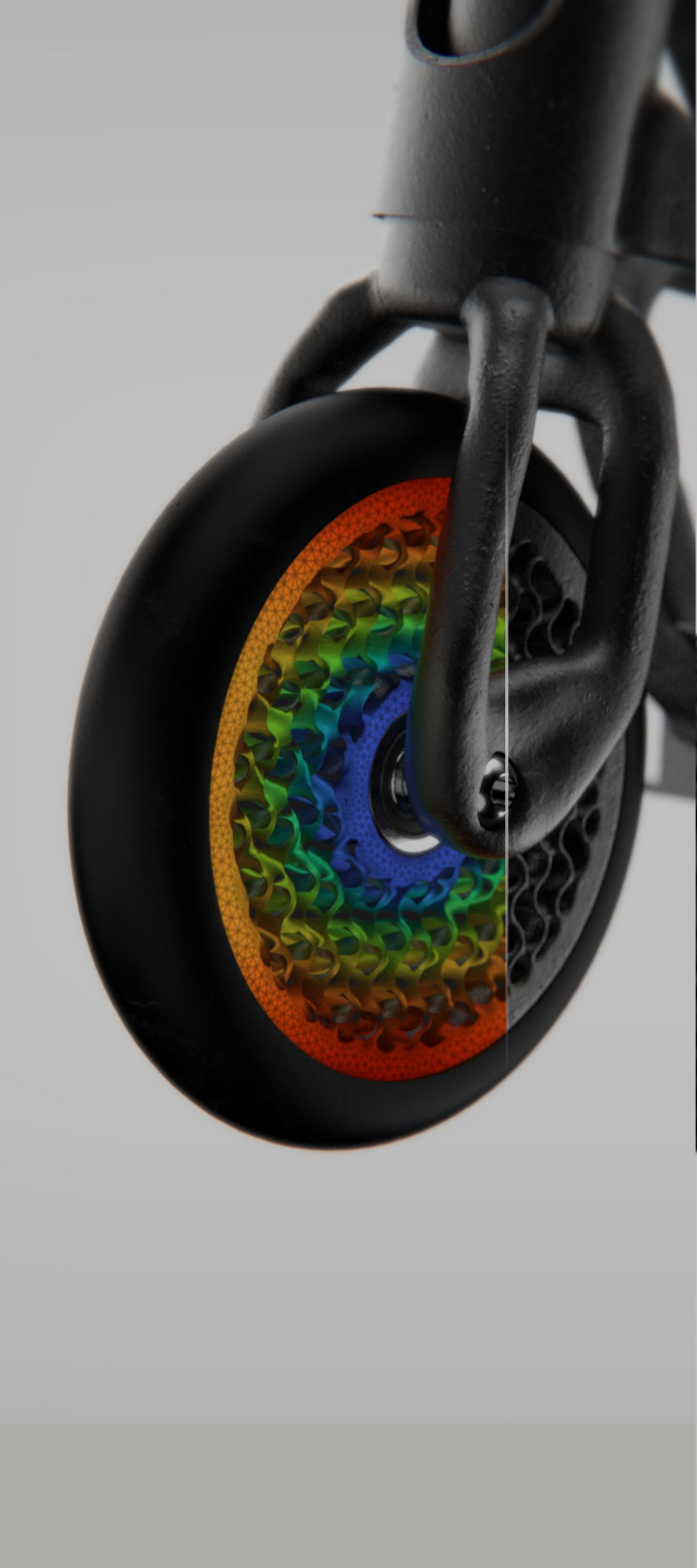
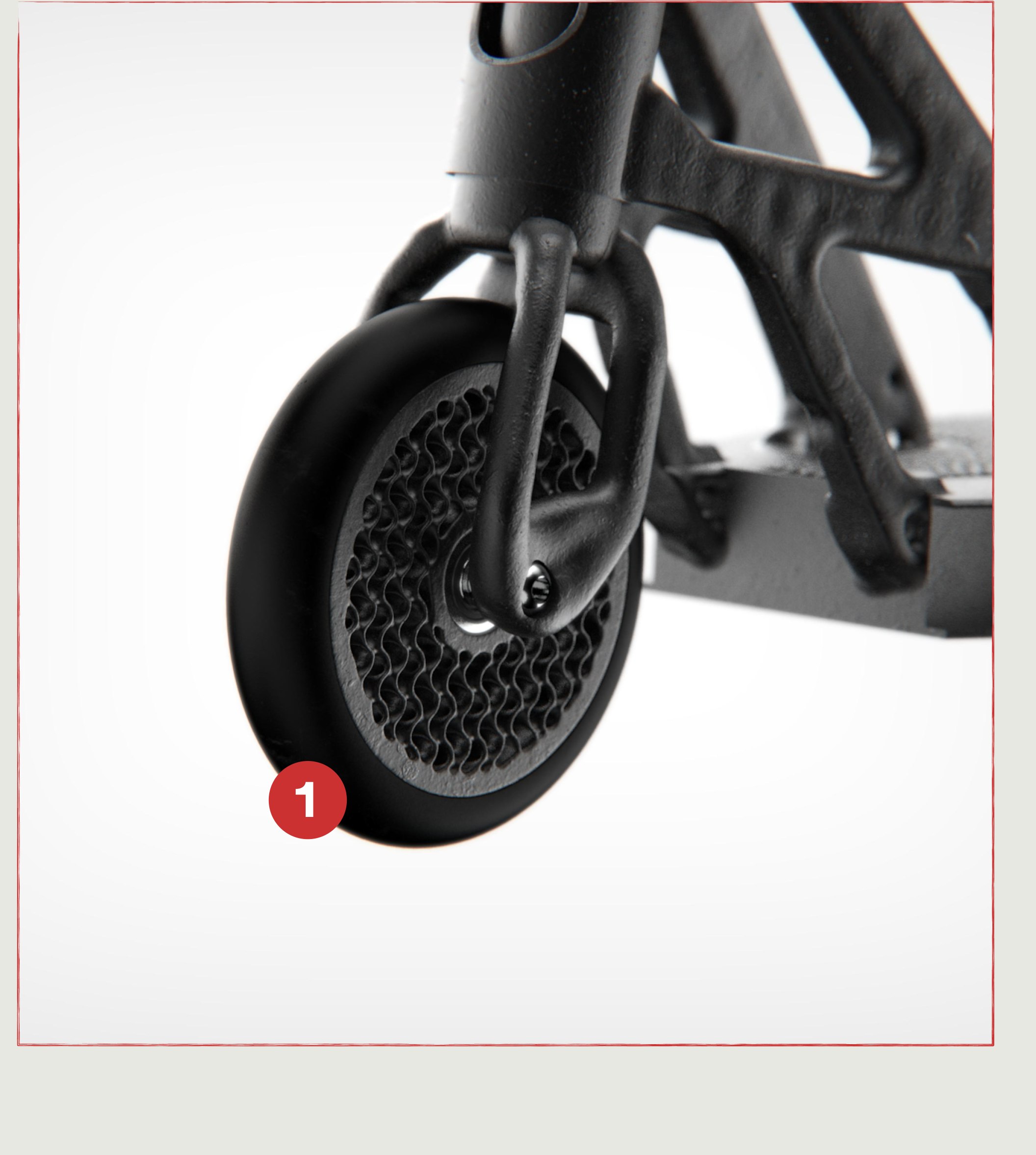
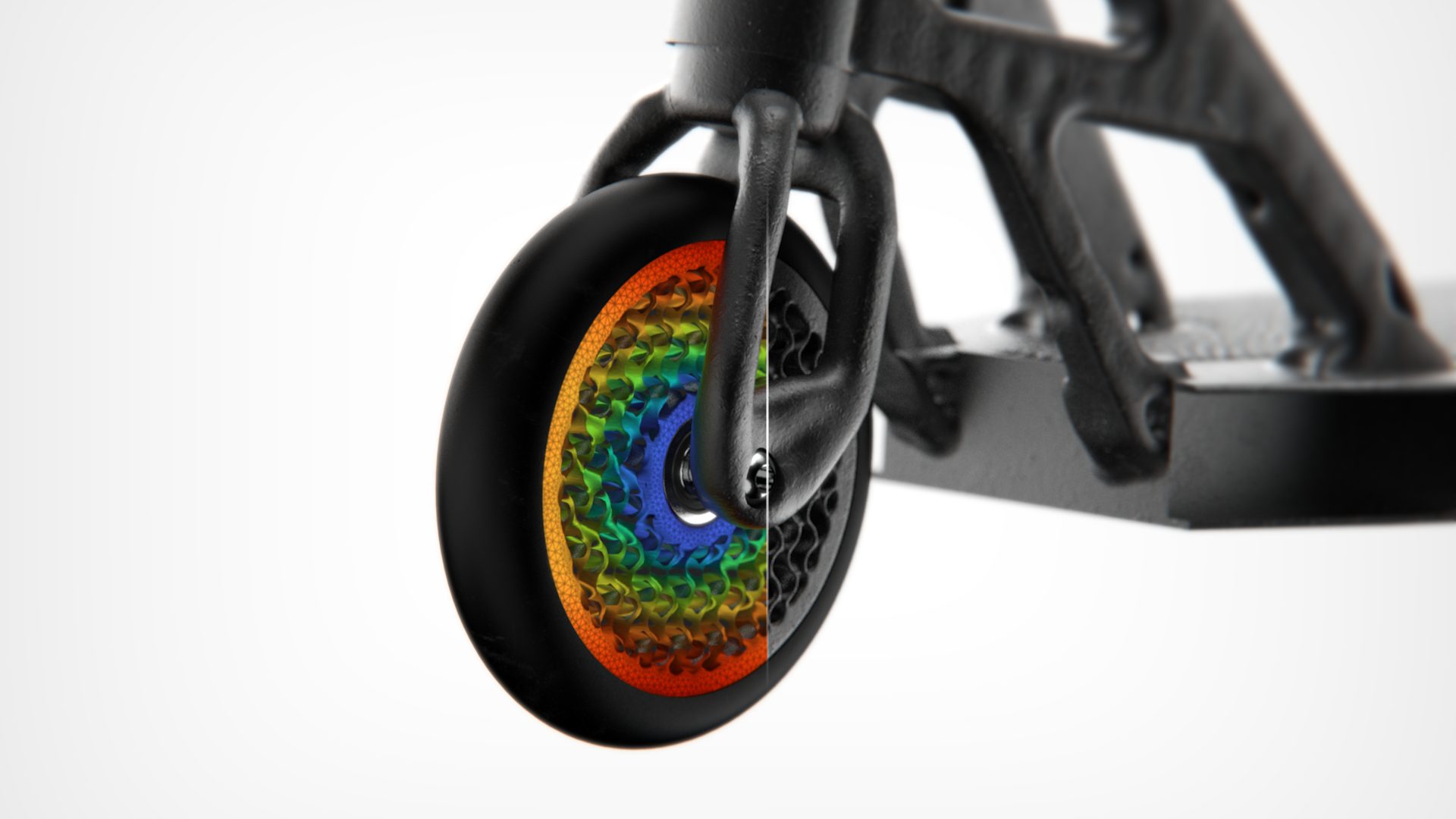
Topology-optimized wheel with its internal lattice

Topology optimization & lattices

Topology optimization for the macrostructure and internal lattices, for weight and functional comfort.
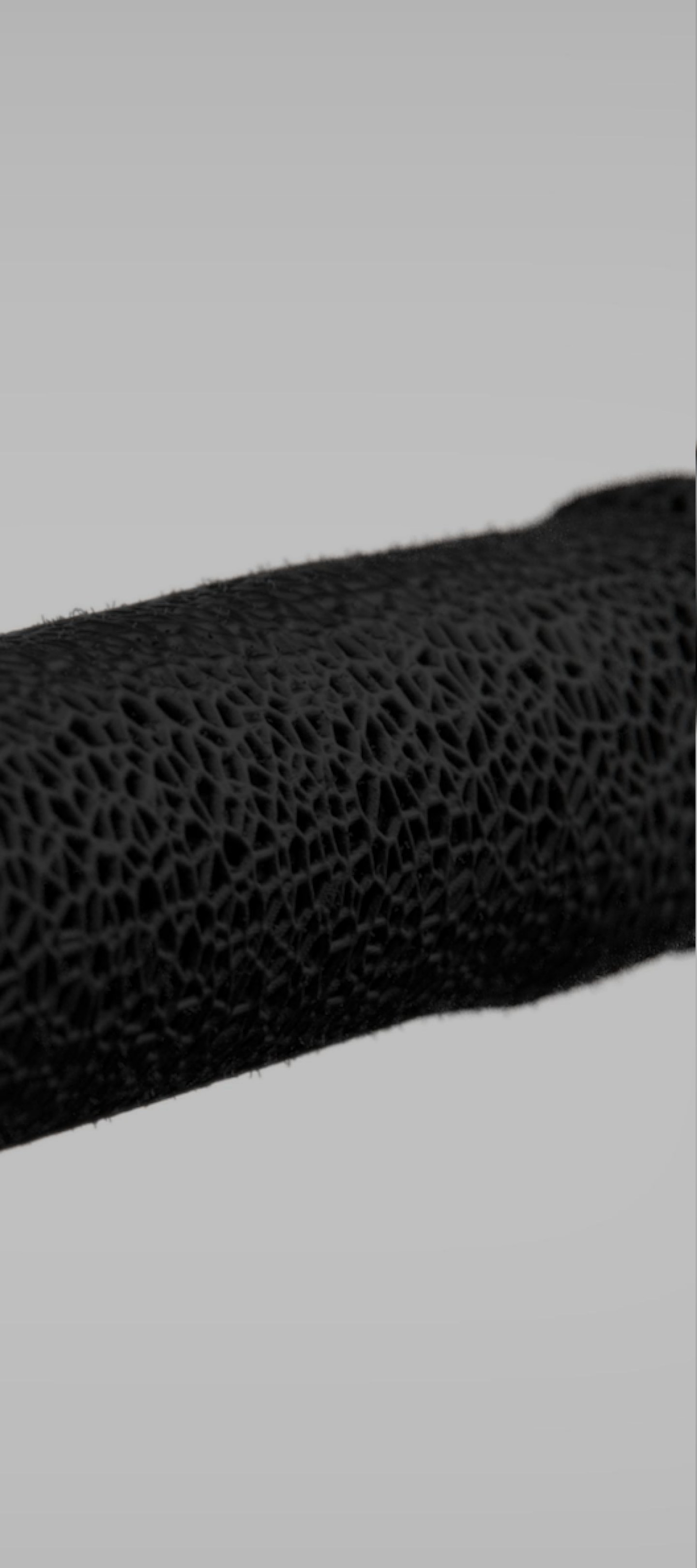
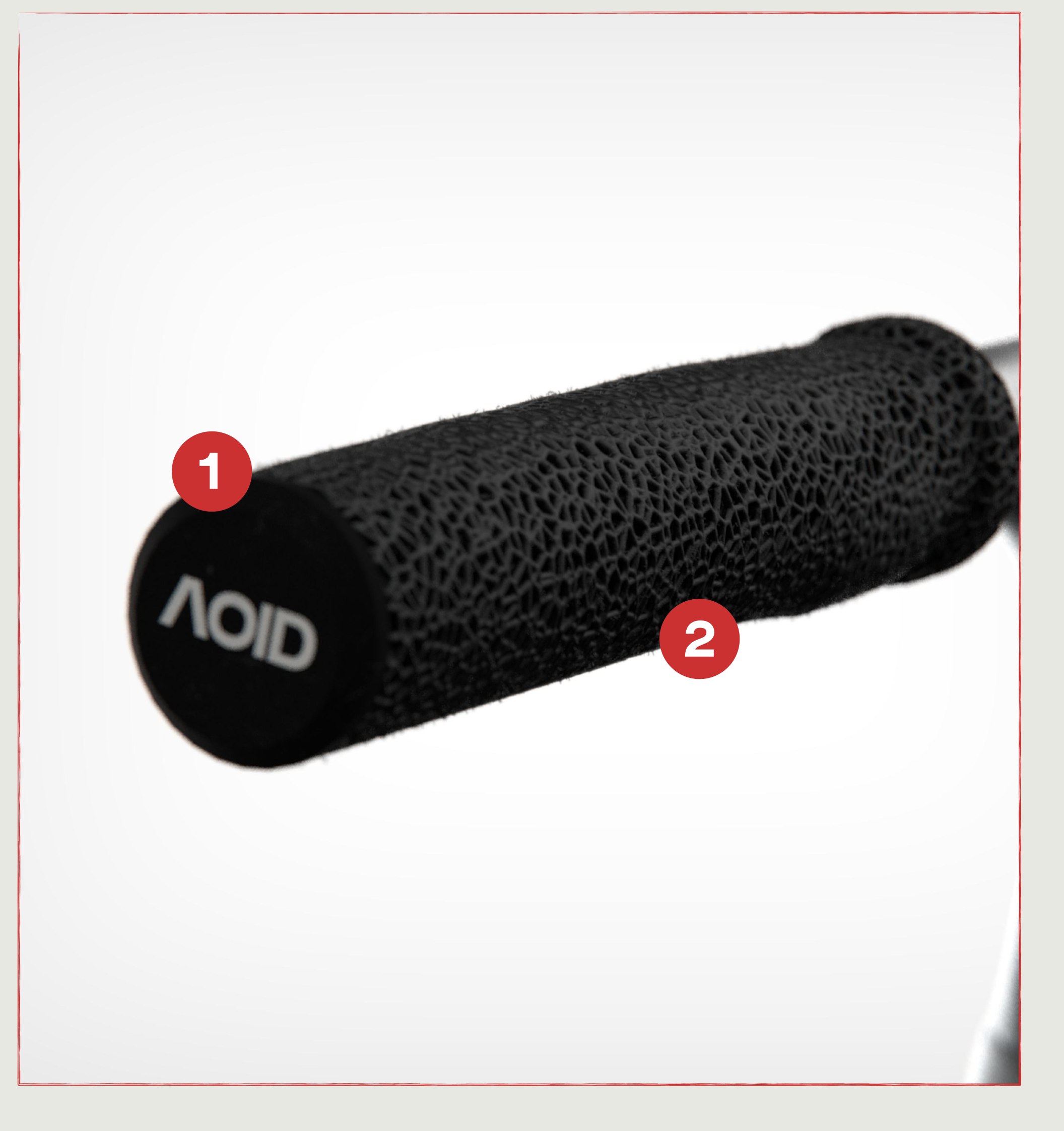
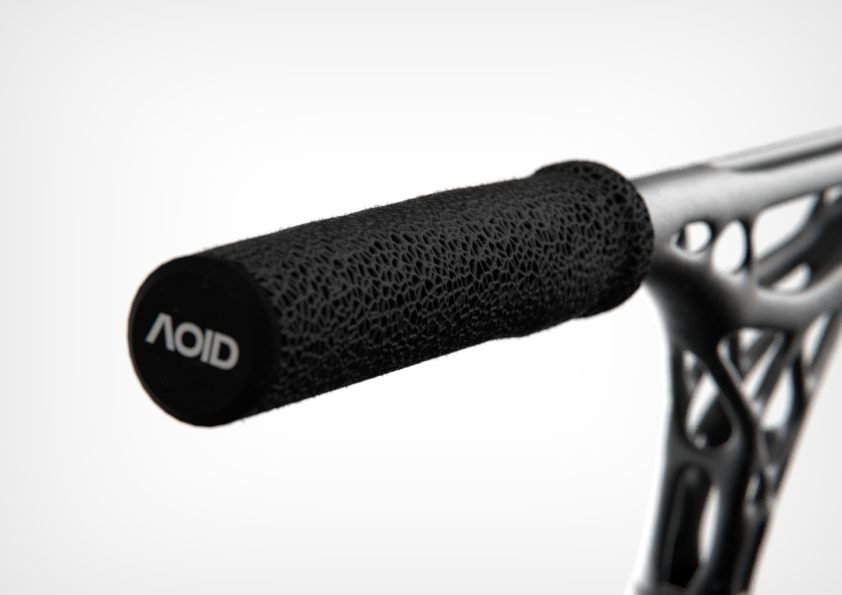
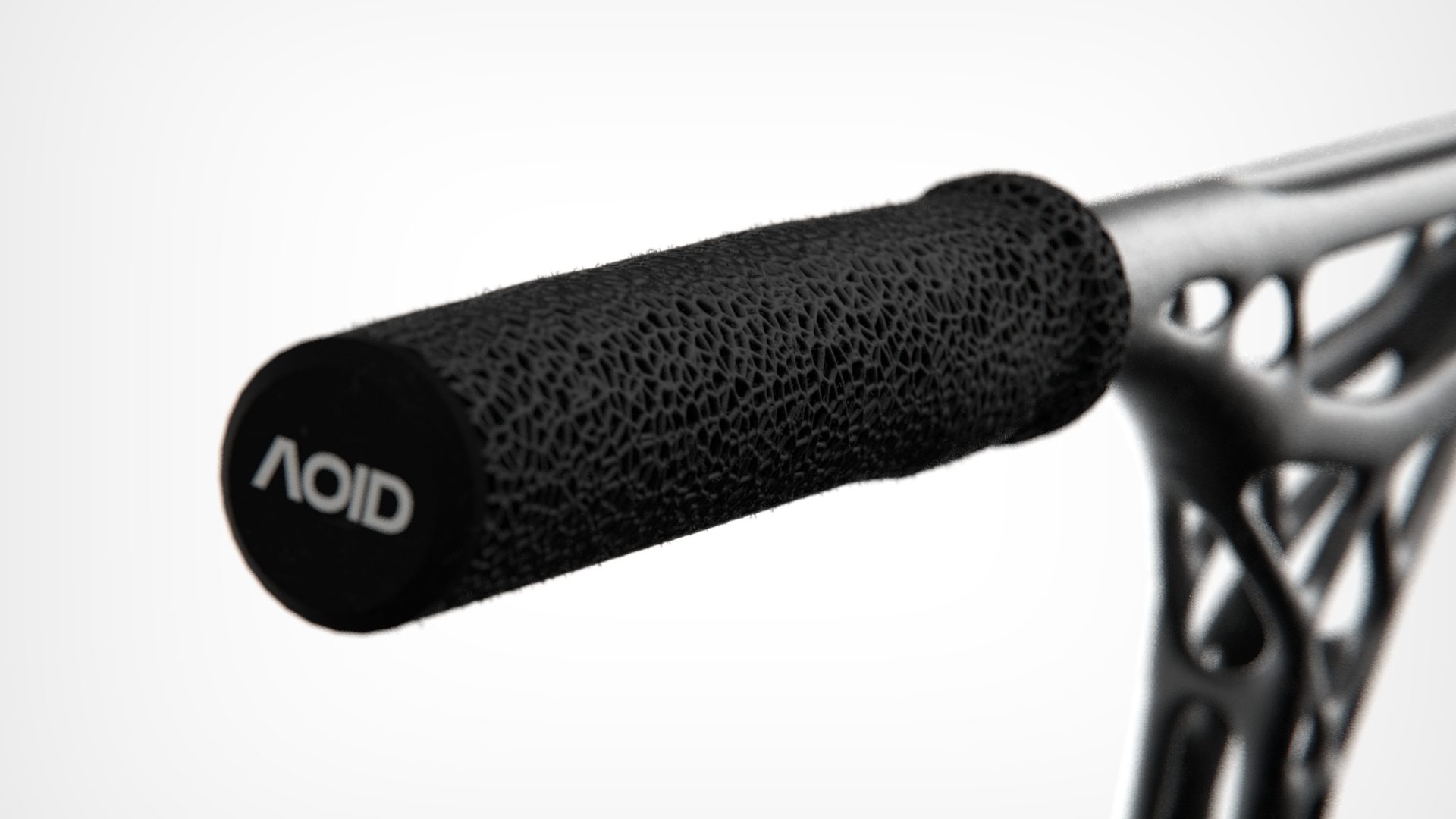
Voronoi lattice surface on the handlebar grip

Advanced AM

Metal additive manufacturing for complex, optimized geometries
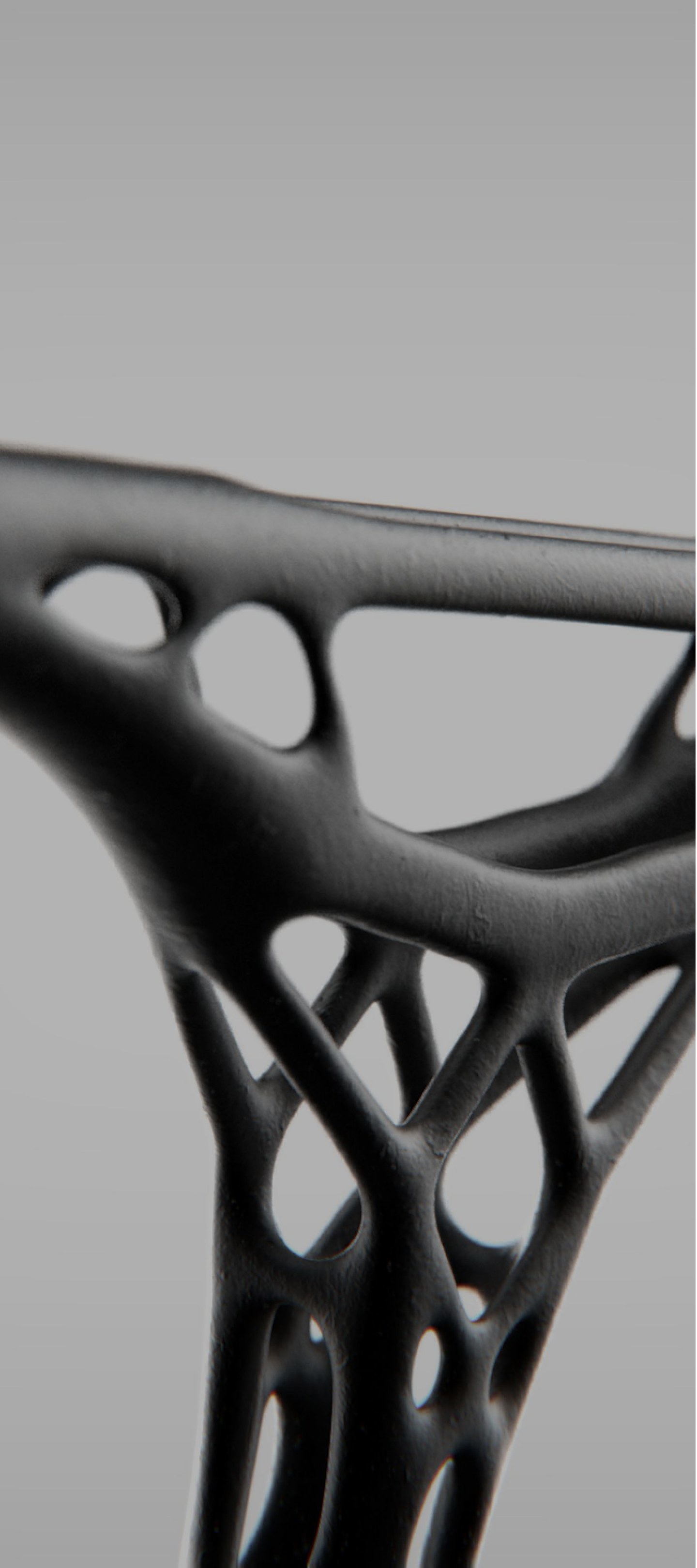
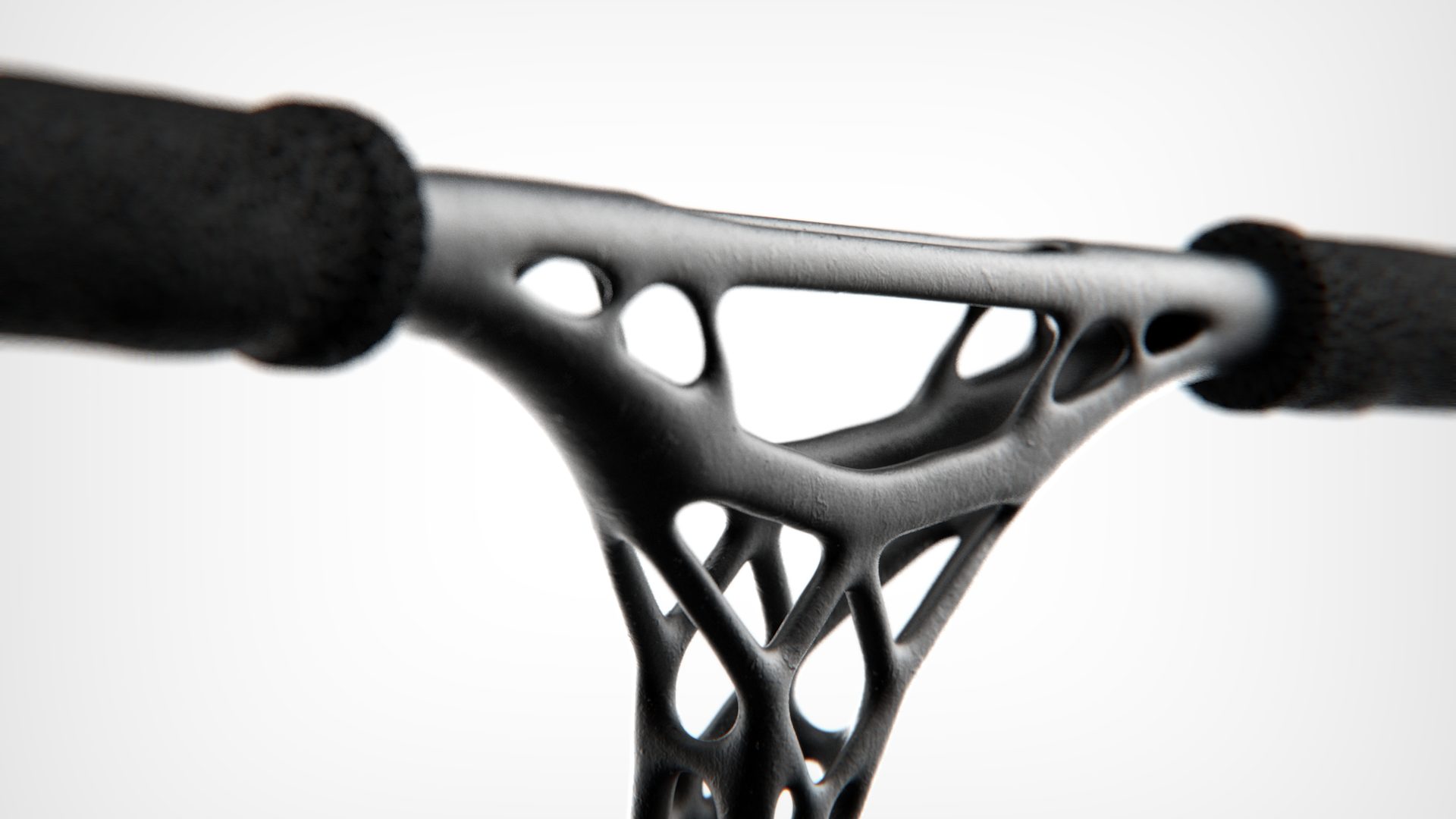
Organic printed structure of the handlebar

Distinctive "Engineered Raw" aesthetic

"Engineered Raw" visual identity: organic aesthetics derived directly from the optimization and from AM technology.
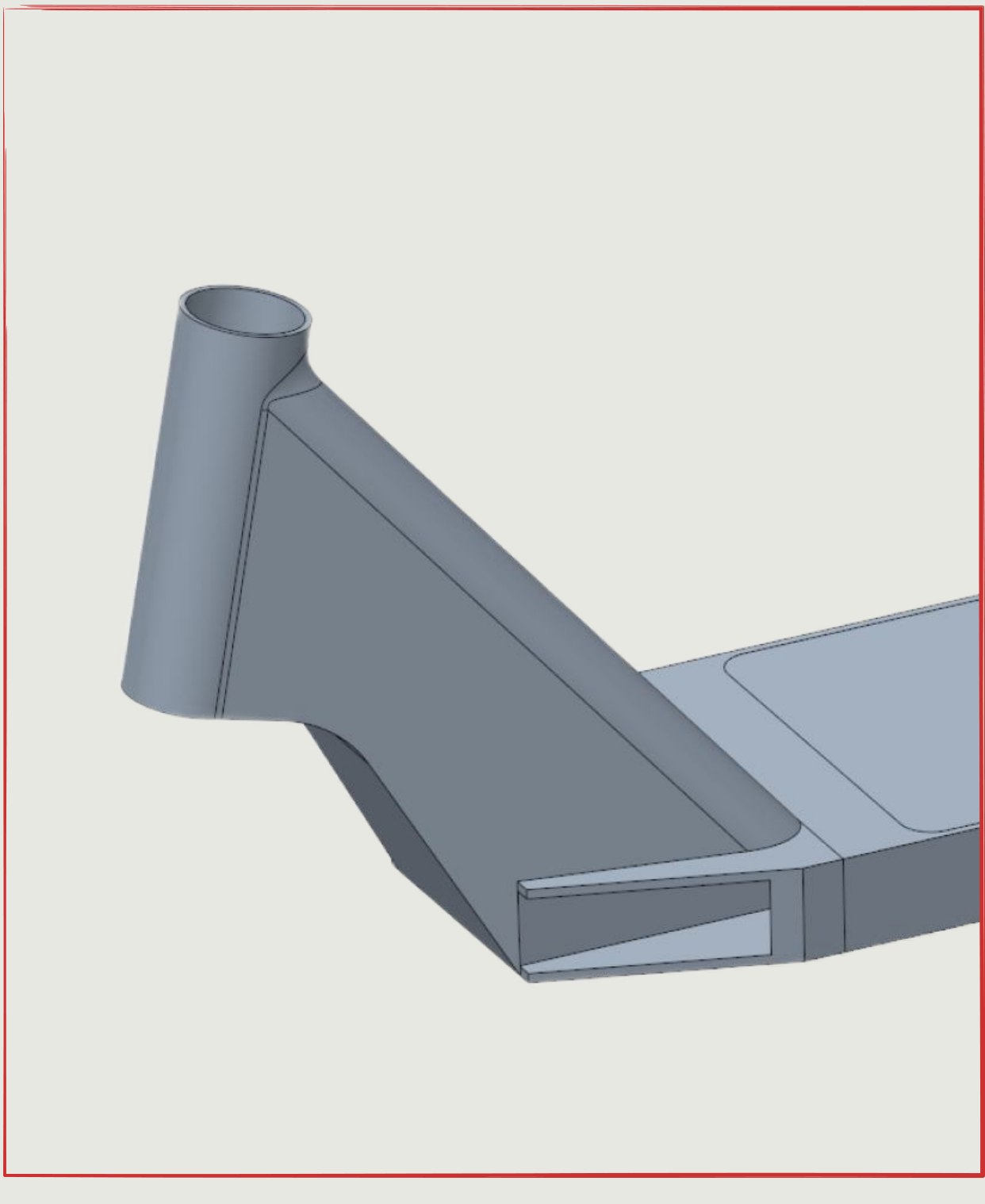
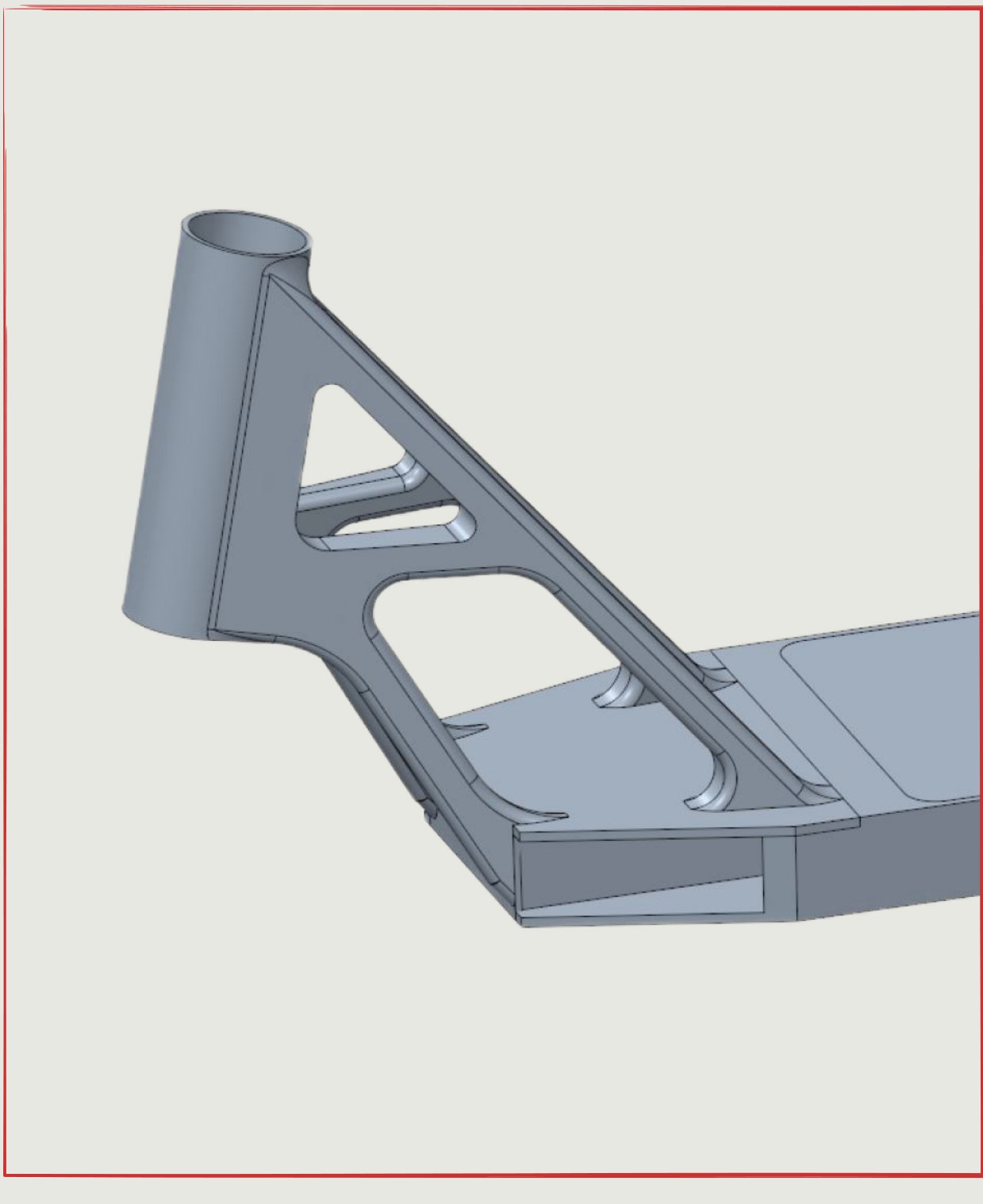
Methodology

Initial modelling

Methodology step: initial modelling
Starting volumes for deck, fork and handlebar, built in Creo Parametric to the sector’s standard interfaces.

Load conditions
(deck)

Methodology step: load conditions, deck
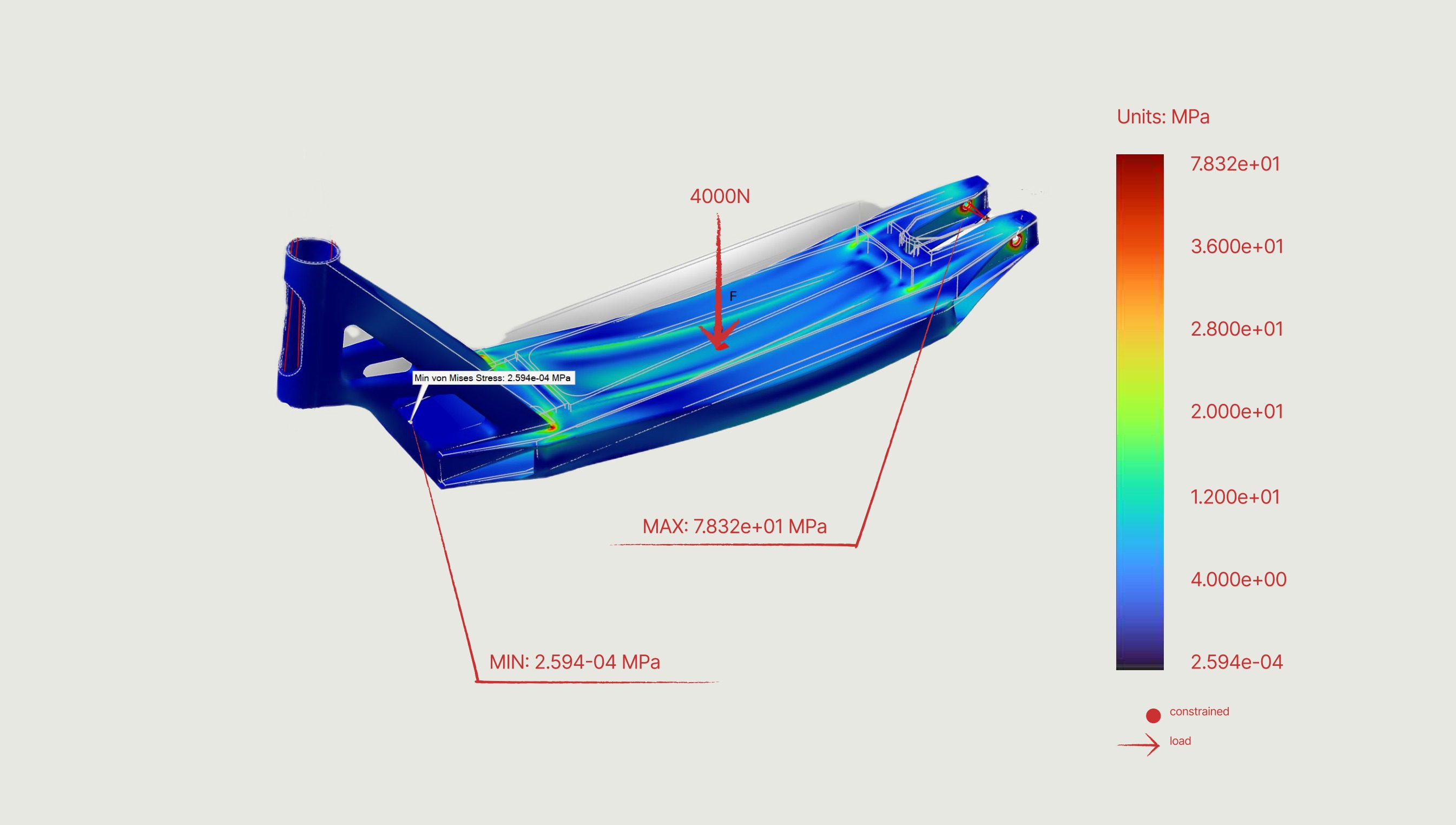
4000 N at the centre, wheel areas fixed.

Load conditions
(fork)

Methodology step: load conditions, fork
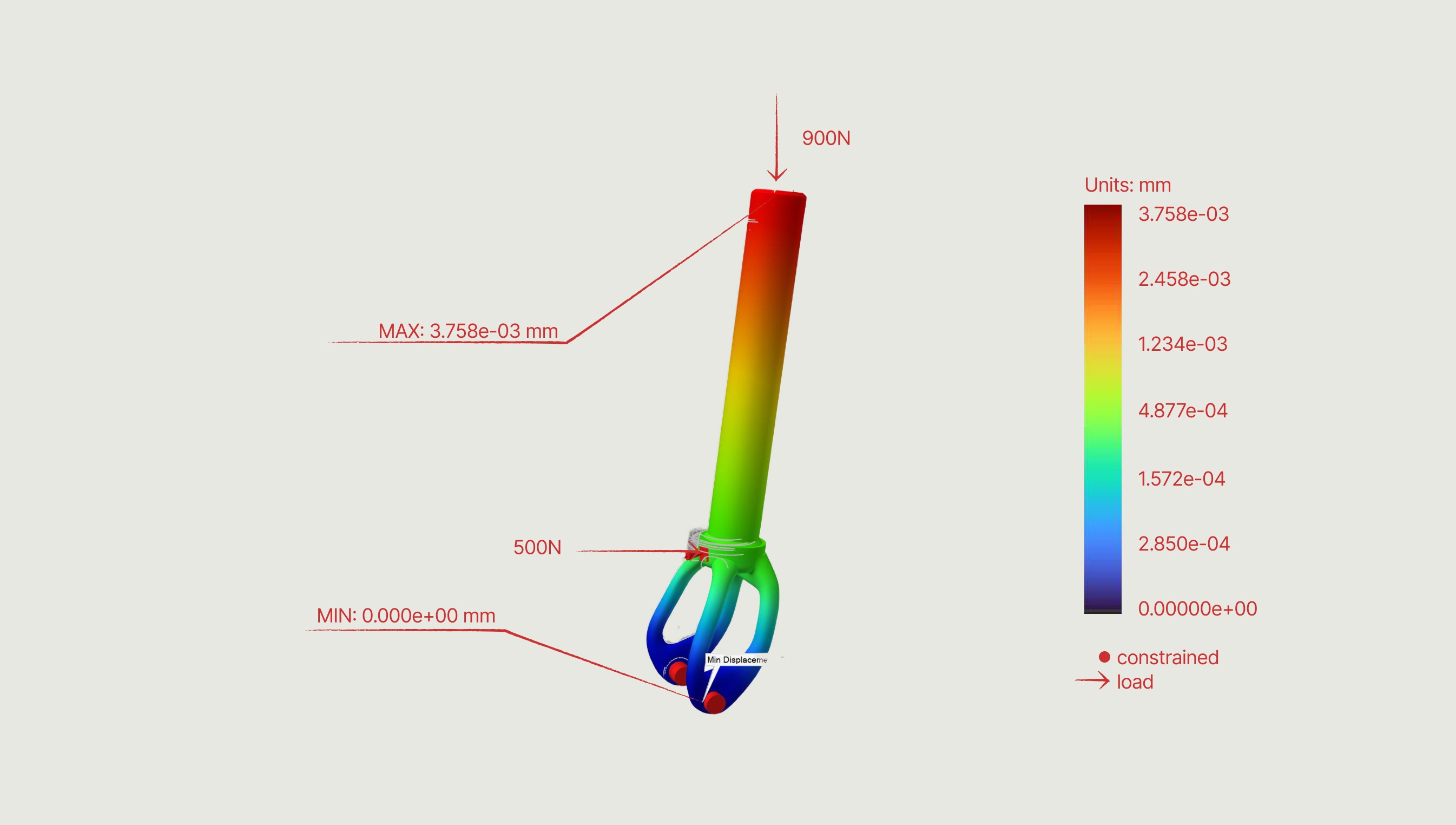
900 N at the handlebar, plus 500 N frontal.

Load conditions
(handlebar)

Methodology step: load conditions, handlebar
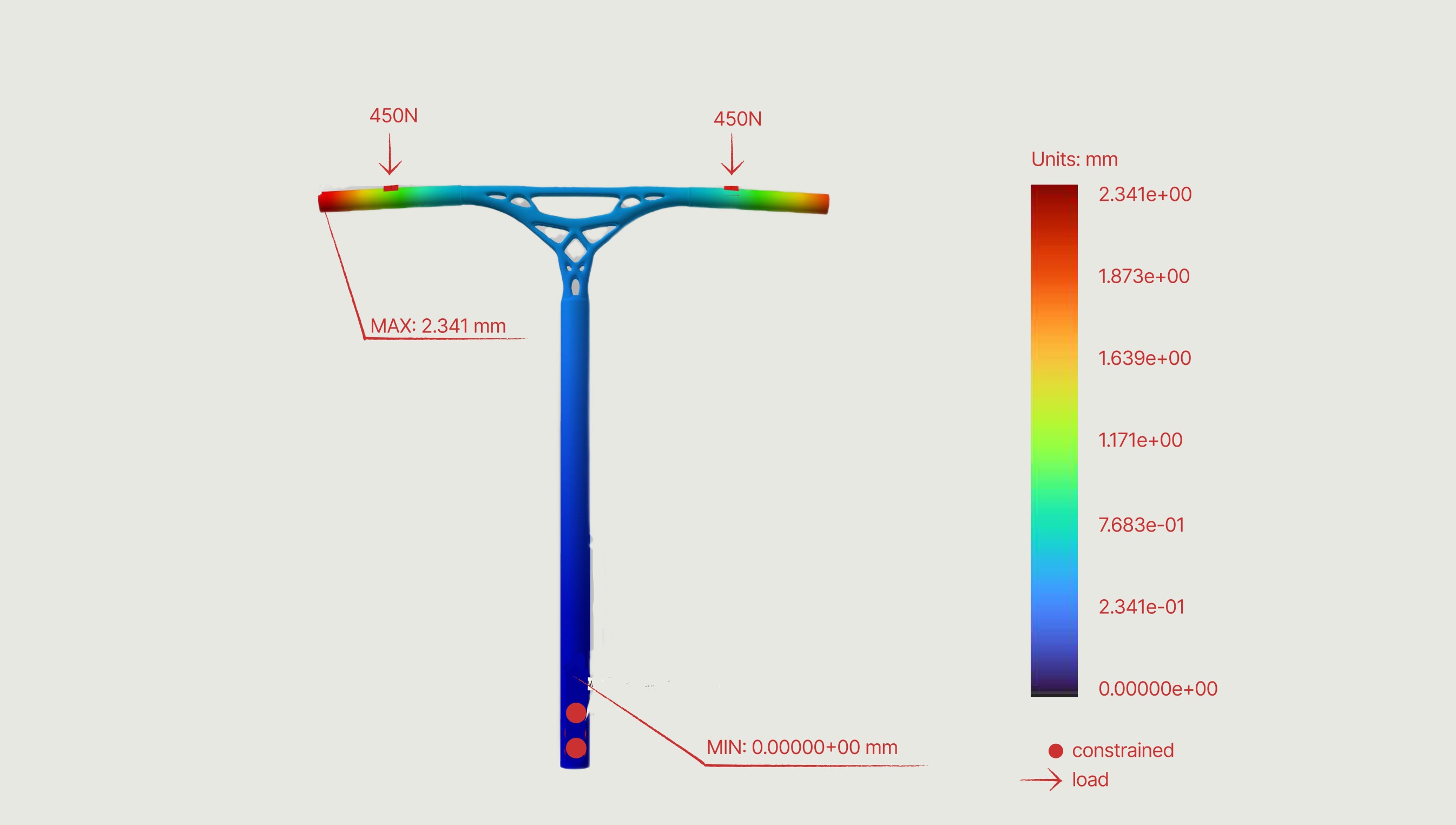
450 N at each end, base fixed.

Simulation

Deck

A 100 kg rider is about 1 kN standing; a dynamic factor of four gives the landing case: 4000 N across the standing surface, wheel mounts fixed. Sizing to the limit case keeps the safety factor intact in normal riding.
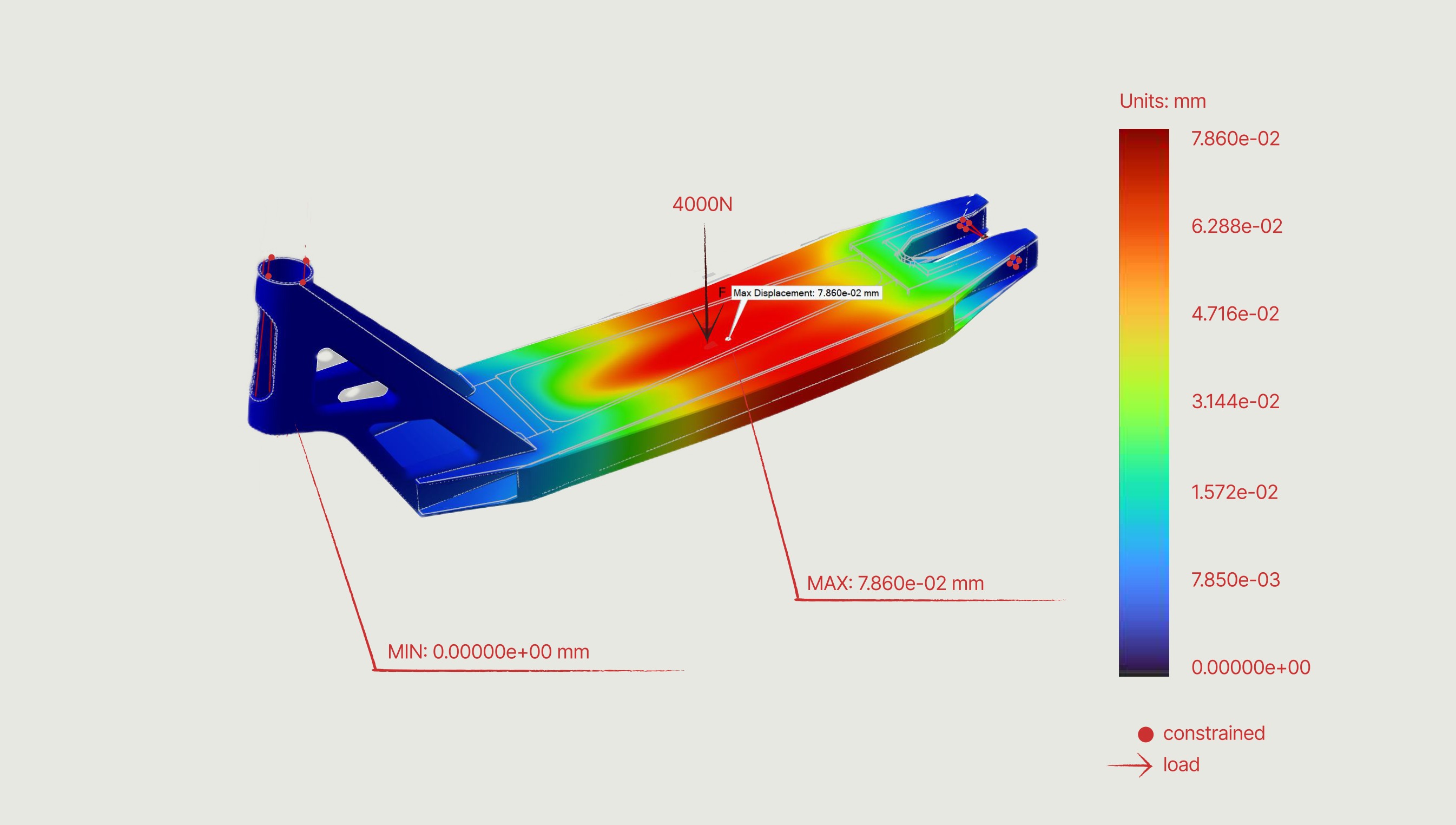
Deck — displacement under a 4000 N centre load
Deck — Von Mises stress under a 4000 N centre load

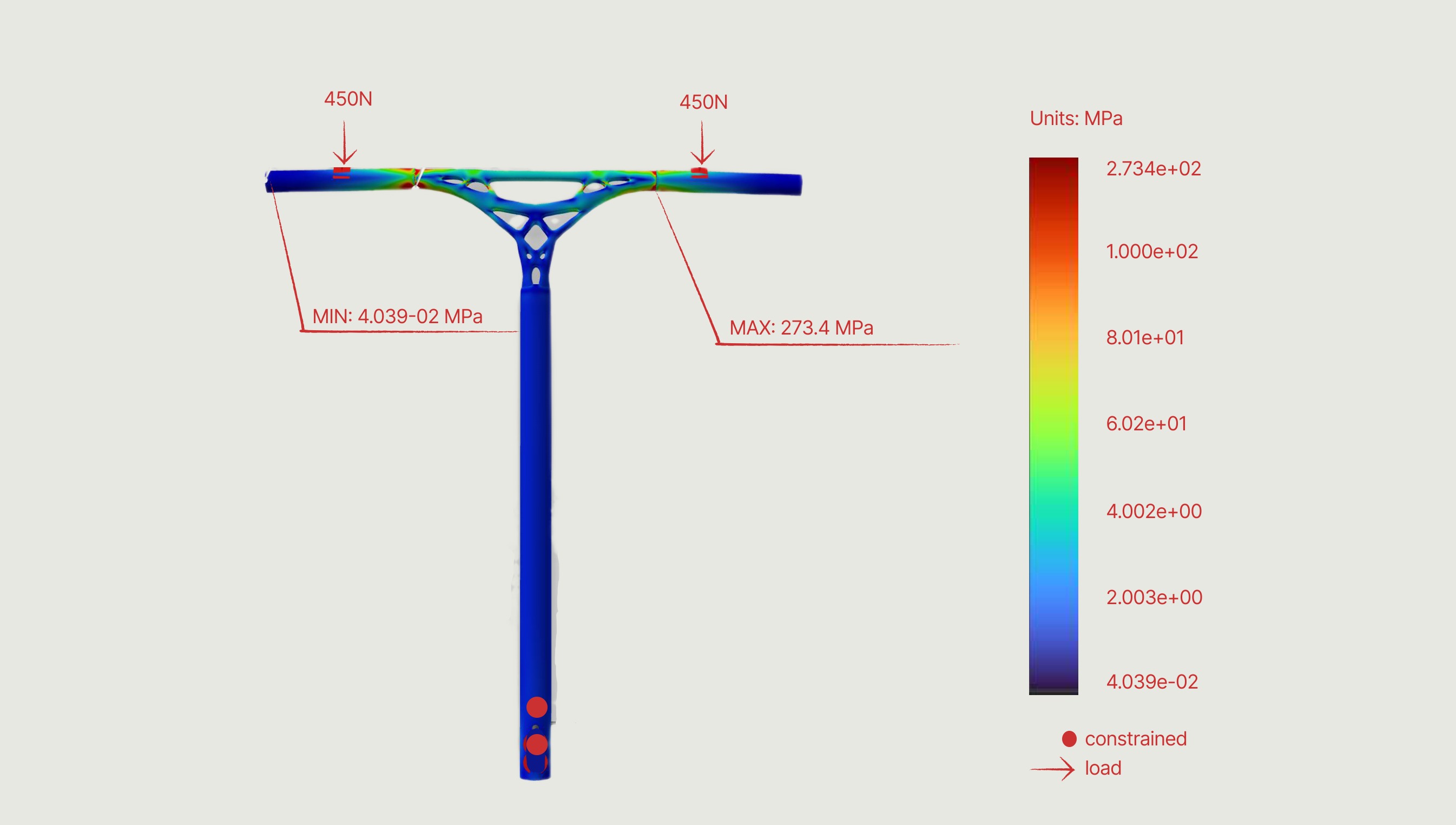
Handlebar

In a bar-spin or pull-up the rider hangs their full weight off the grips: 900 N, 450 N at each end, base clamped to the fork. This is the worst bending case for the tube and clamp.
Handlebar — displacement under 450 N at each end
Handlebar — Von Mises stress under 450 N at each end

Fork

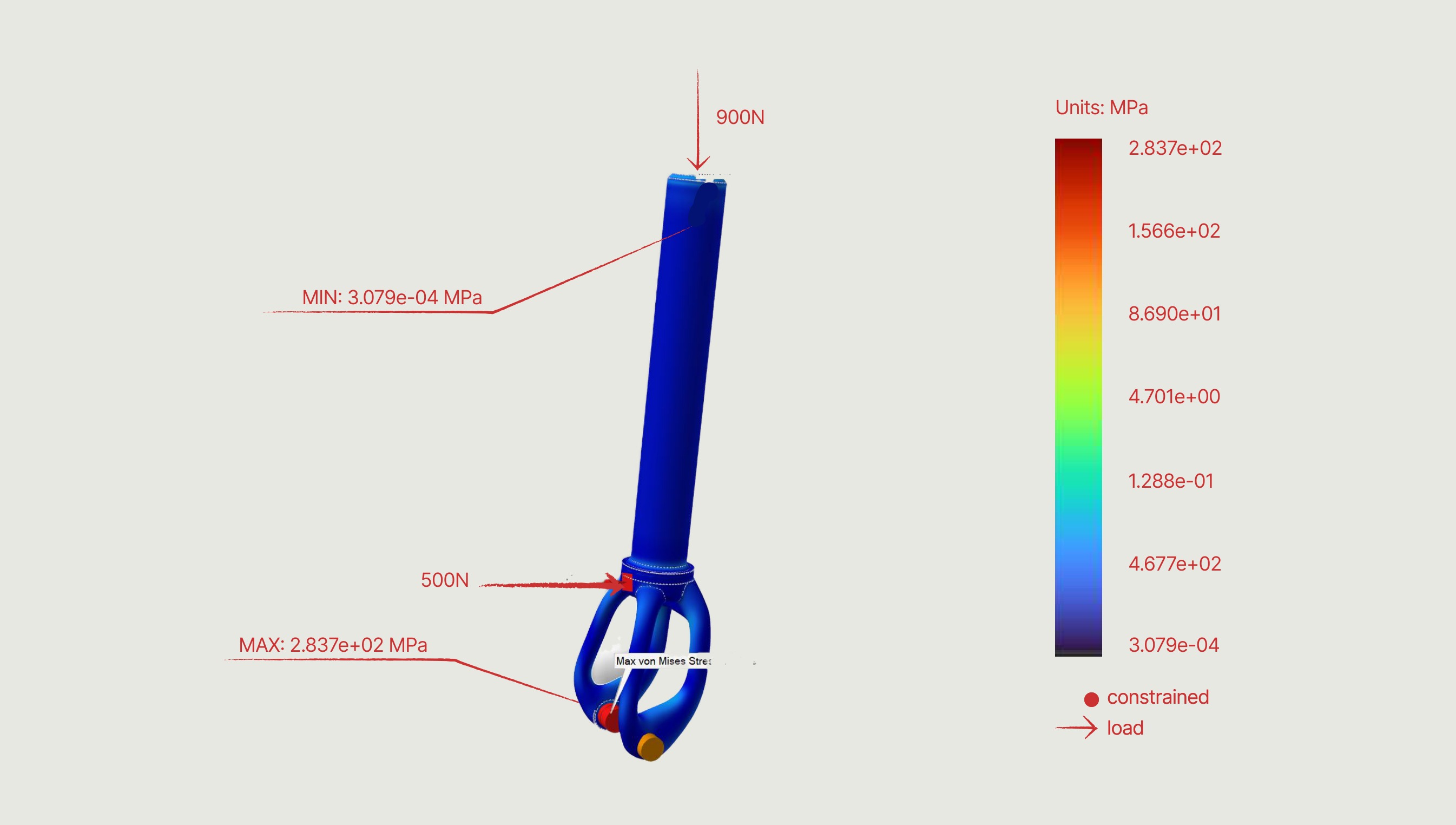
The same 900 N through the steerer, plus 500 N frontal for a direct hit, constrained at the axle where the load reaches the ground.
Fork — displacement under 900 N and a 500 N frontal load
Fork — Von Mises stress under 900 N and a 500 N frontal load

Wheels

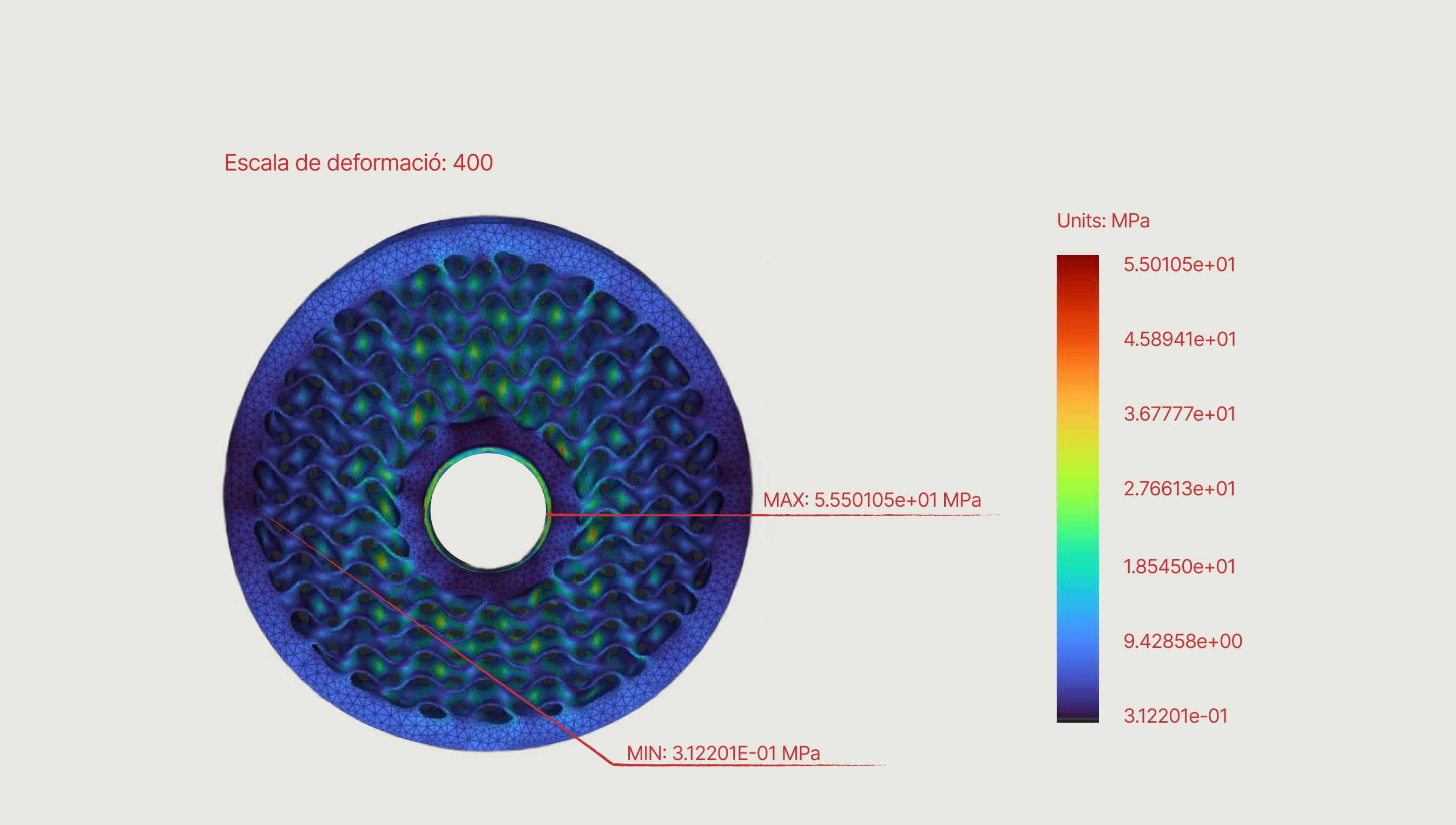
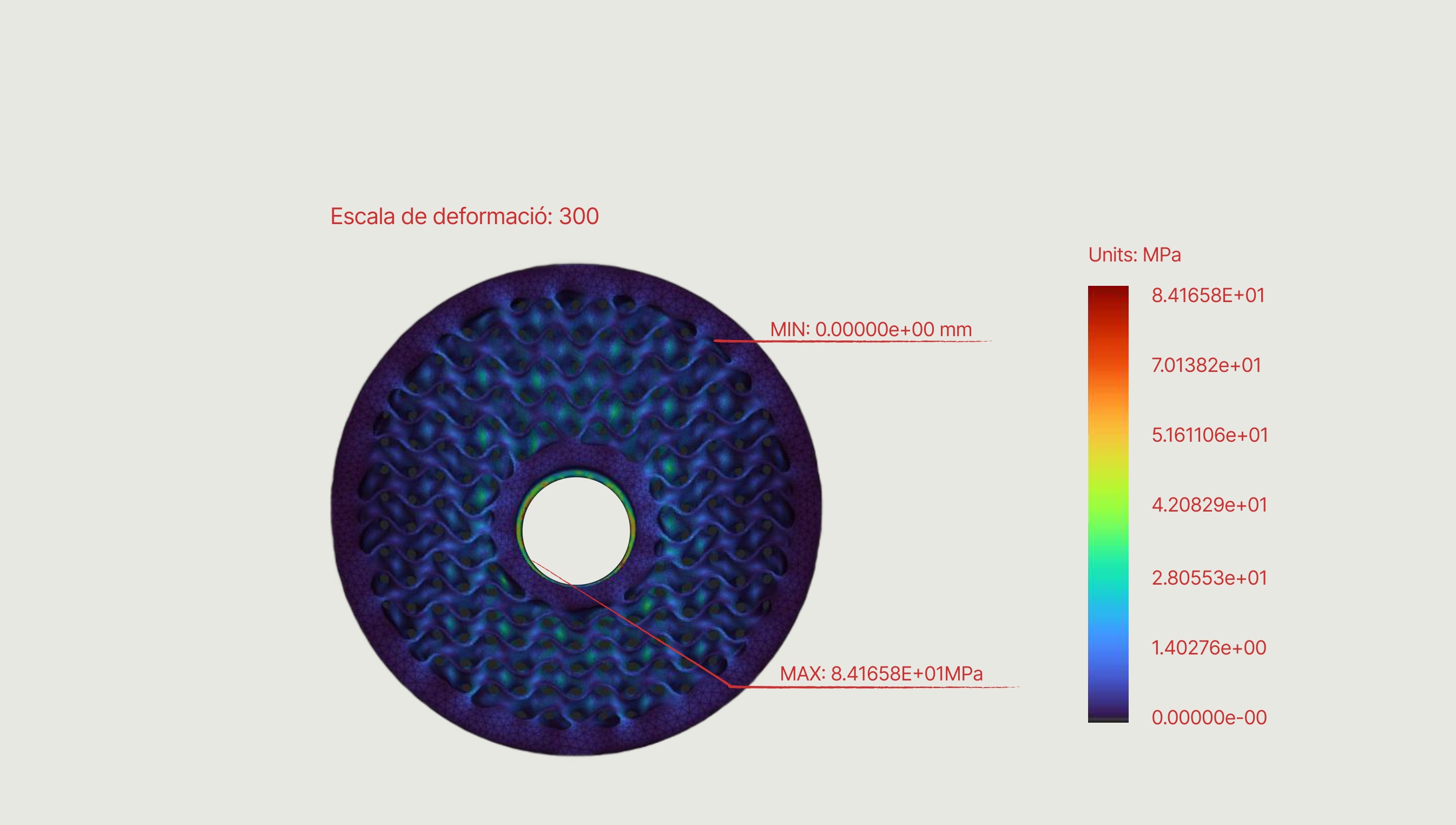
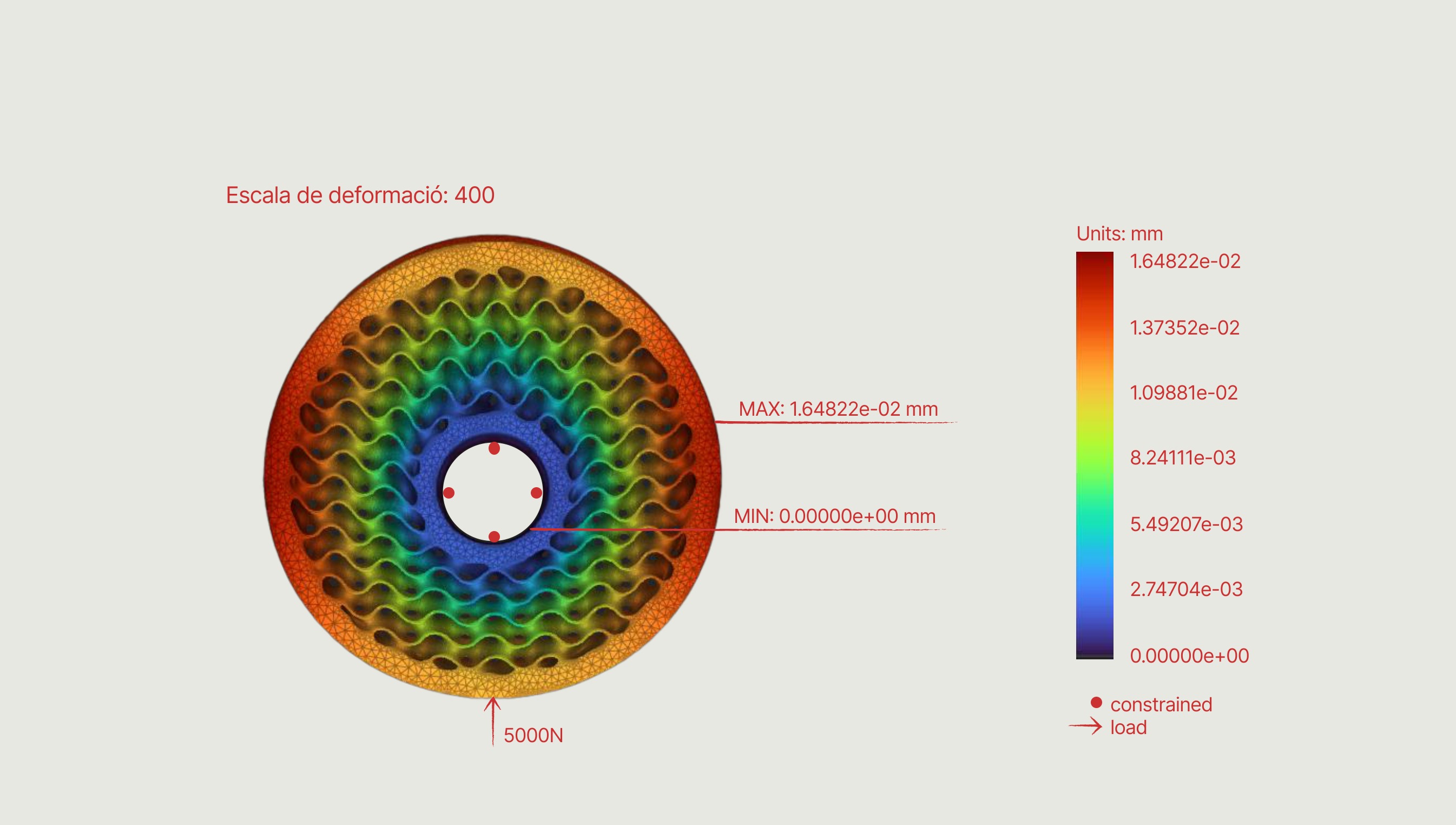
A 5000 N ground reaction at the contact patch, axle fixed: the peak of a ledge landing in extreme use. Shown at two deformation scales.
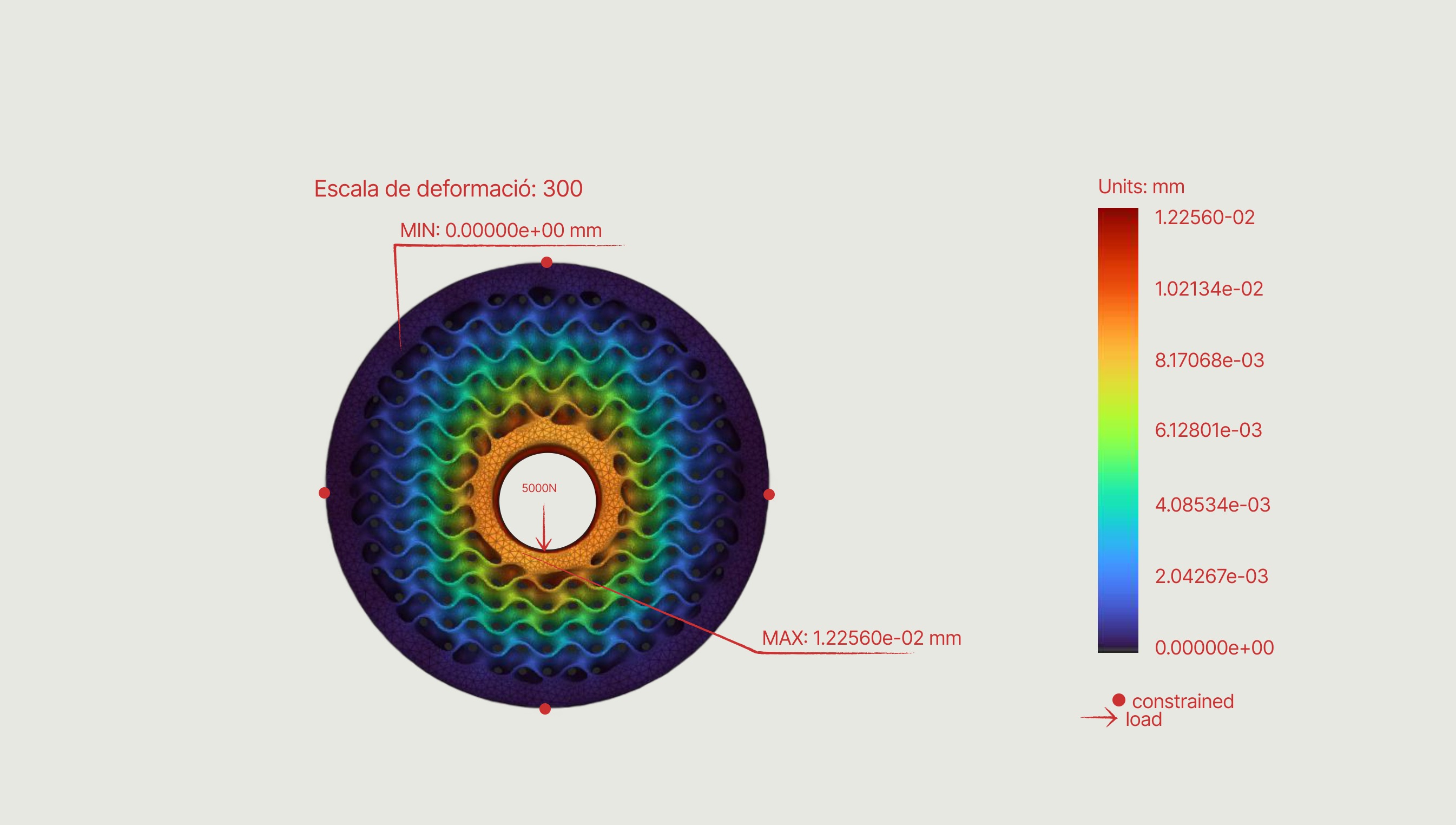
Wheel — displacement under the 5000 N ground reaction, deformation scale 400
Wheel — displacement under the 5000 N ground reaction, deformation scale 300
Wheel — Von Mises stress under the 5000 N ground reaction, deformation scale 400
Wheel — Von Mises stress under the 5000 N ground reaction, deformation scale 300

Assembly test

The complete scooter under the homologation case, with every joint loaded at once. Passing it is what approves the design.
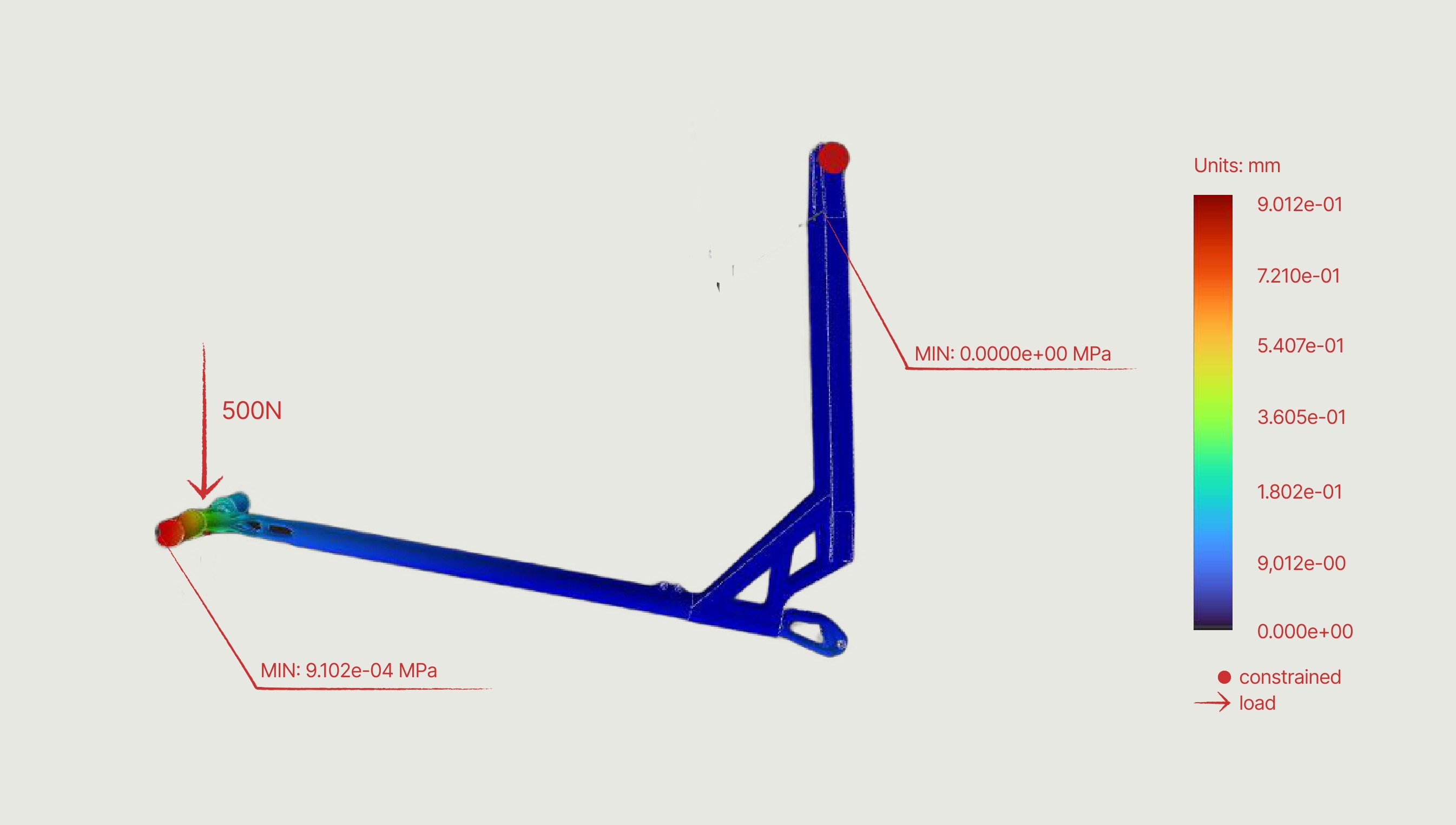
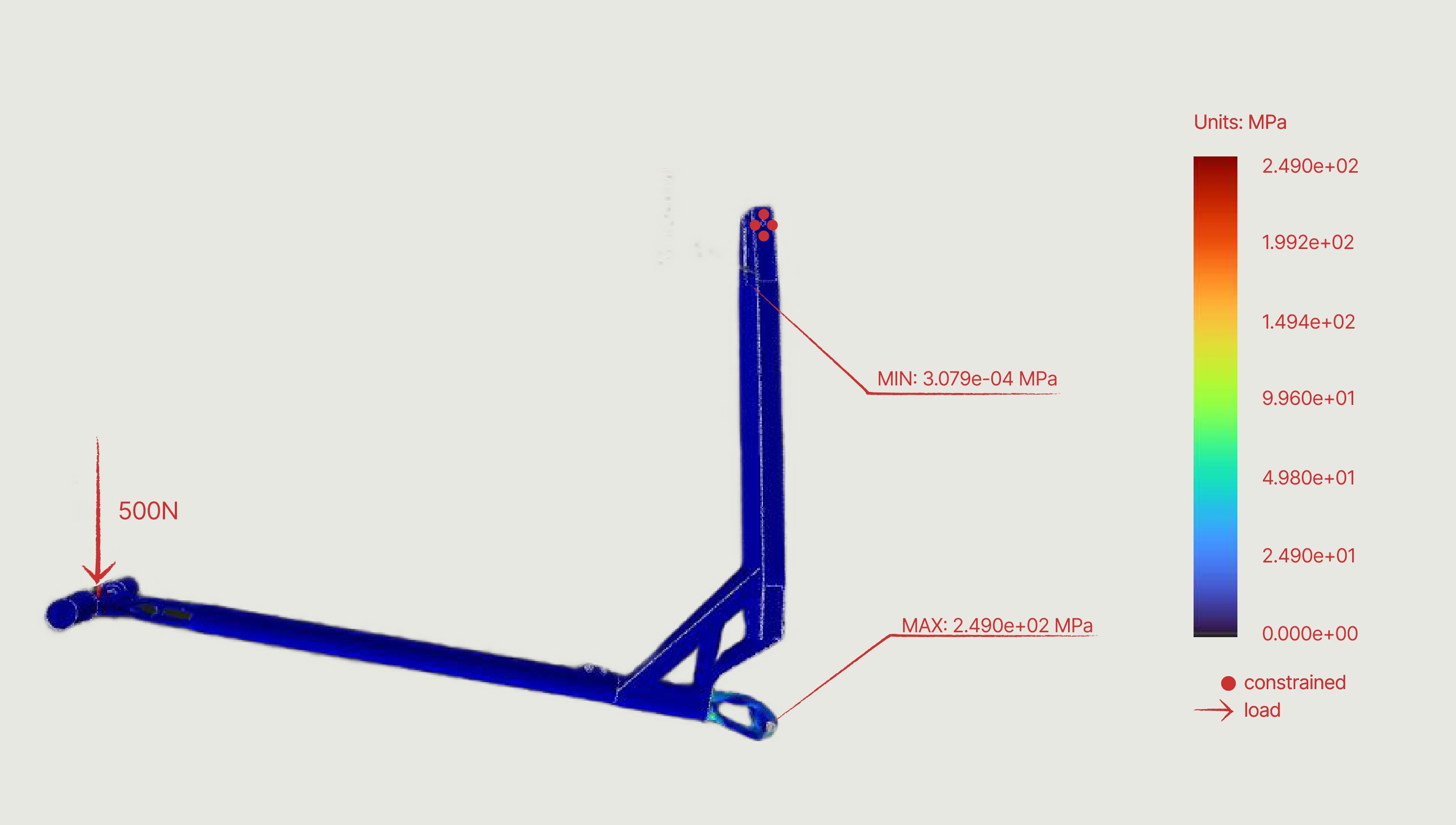
Full assembly — displacement under a 500 N frontal load
Full assembly — Von Mises stress under a 500 N frontal load

Lattices

Deck

Lattice application: DECK
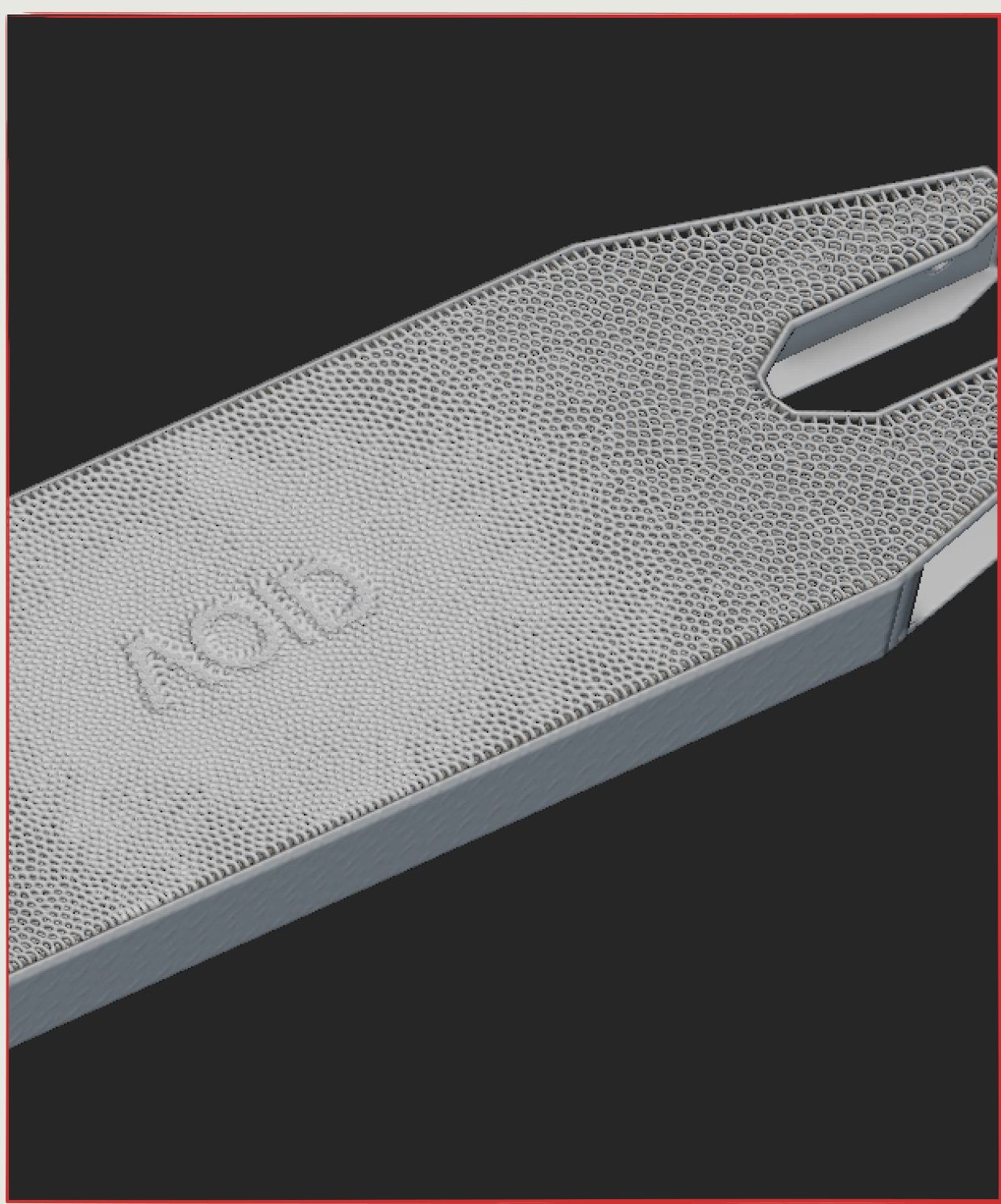
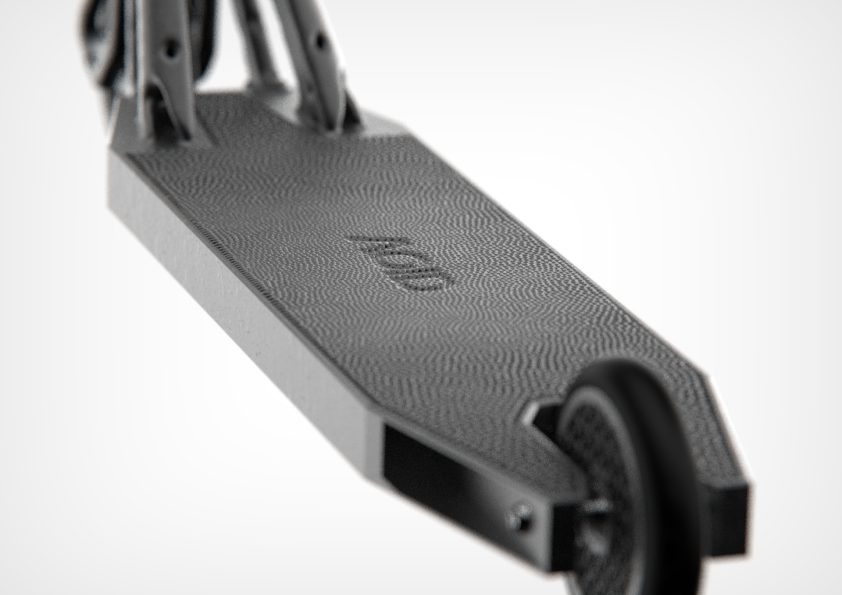
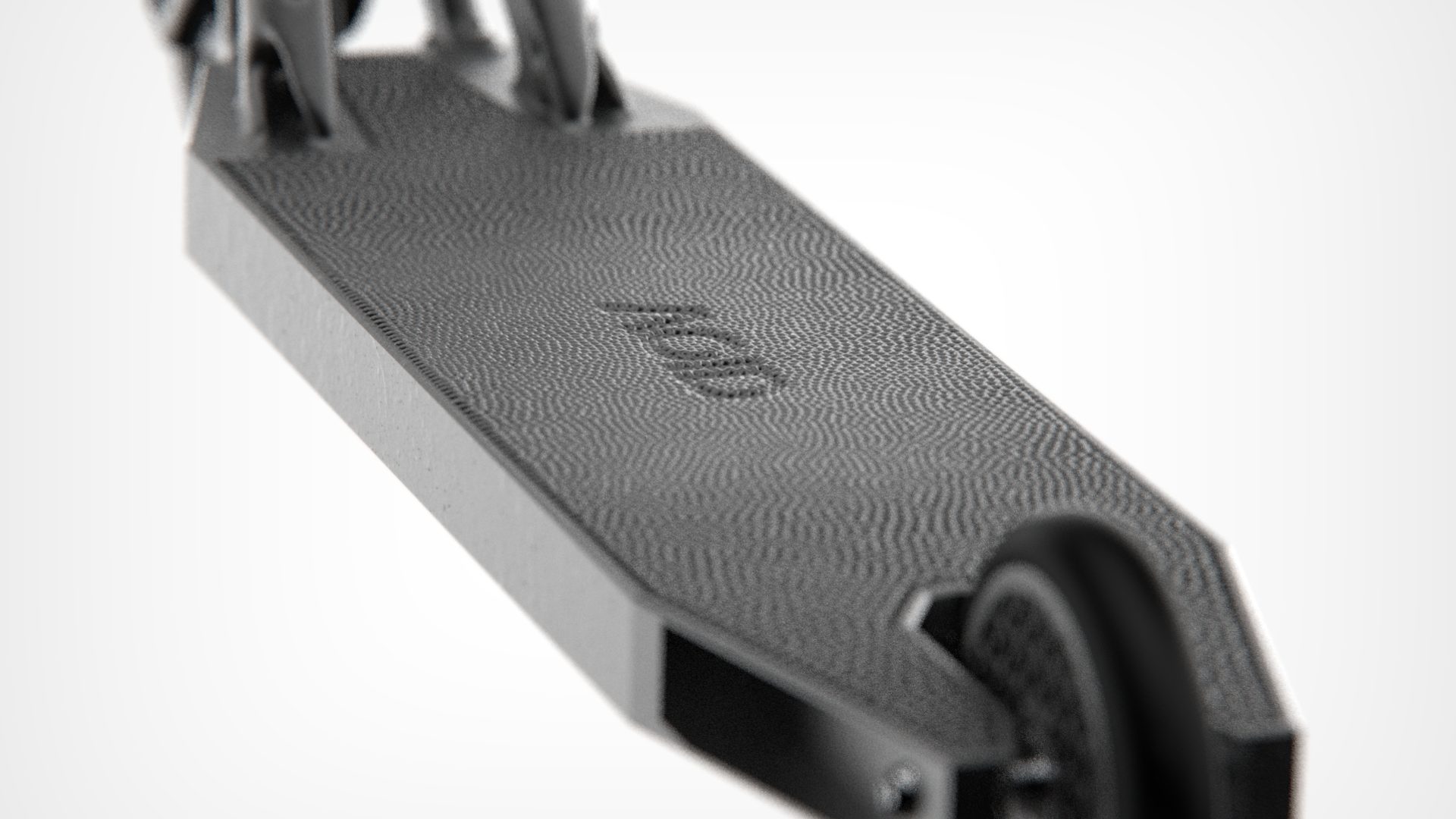
Voronoi pattern on the base deck, derived from the logotype, increasing grip through its irregular texture and helping reduce weight.

Handlebar grips

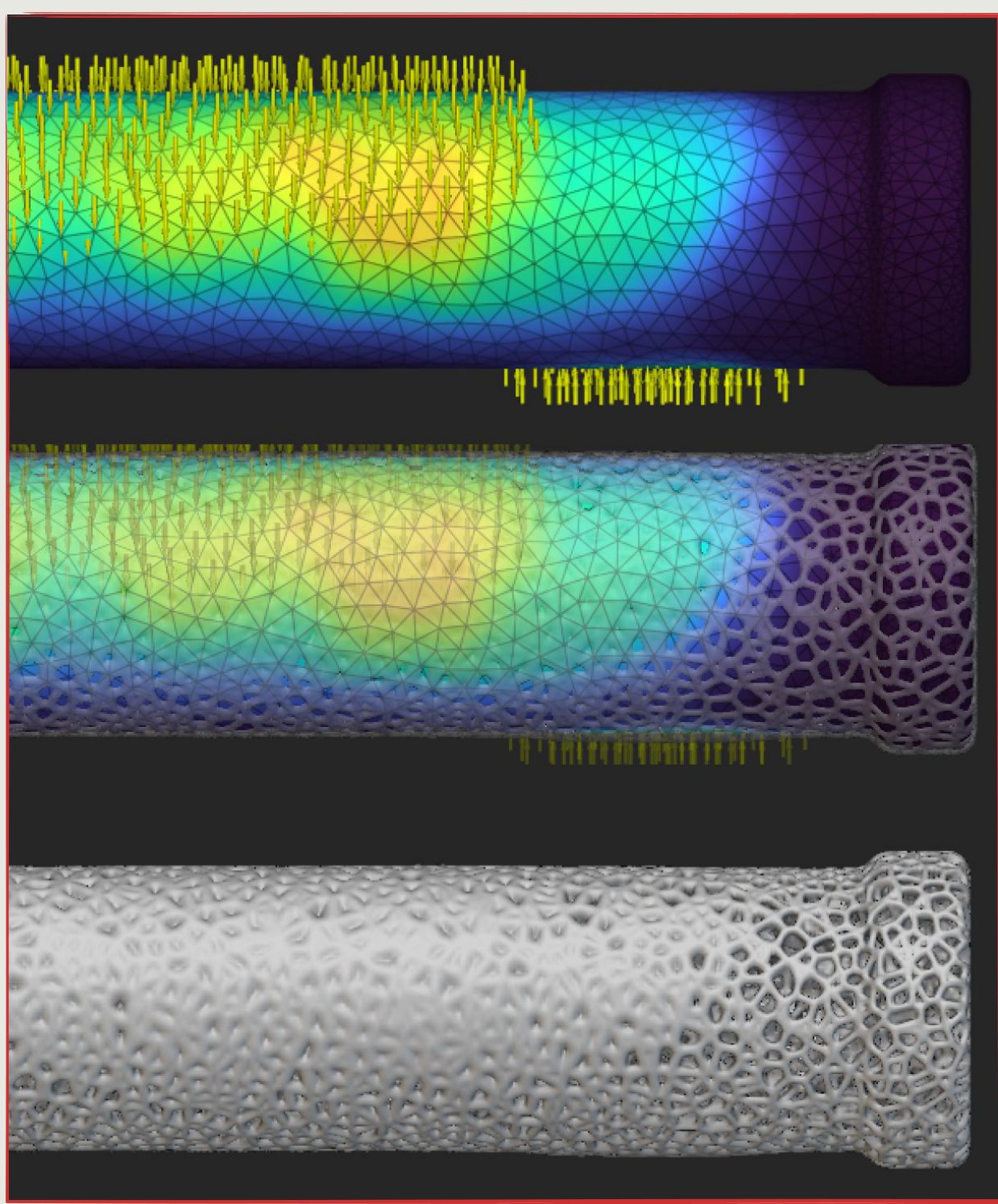
Lattice application: HANDLEBAR GRIPS
Voronoi pattern on the handlebar grip, derived from the simulation of hand forces, improving the tactile feel.

Fork

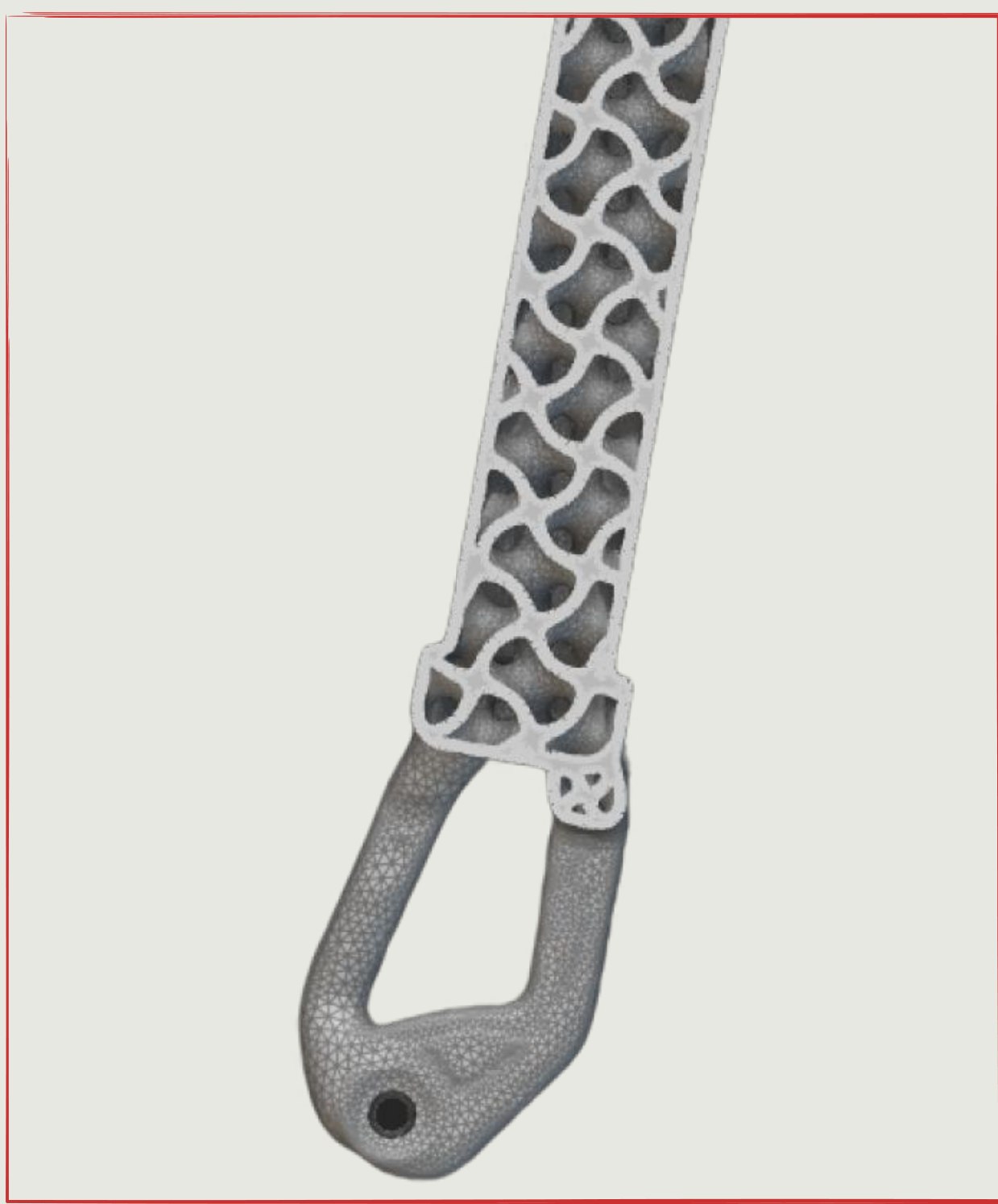
Lattice application: FORK
Gyroid structure inside the fork, cutting weight while increasing multidirectional strength.

Wheel

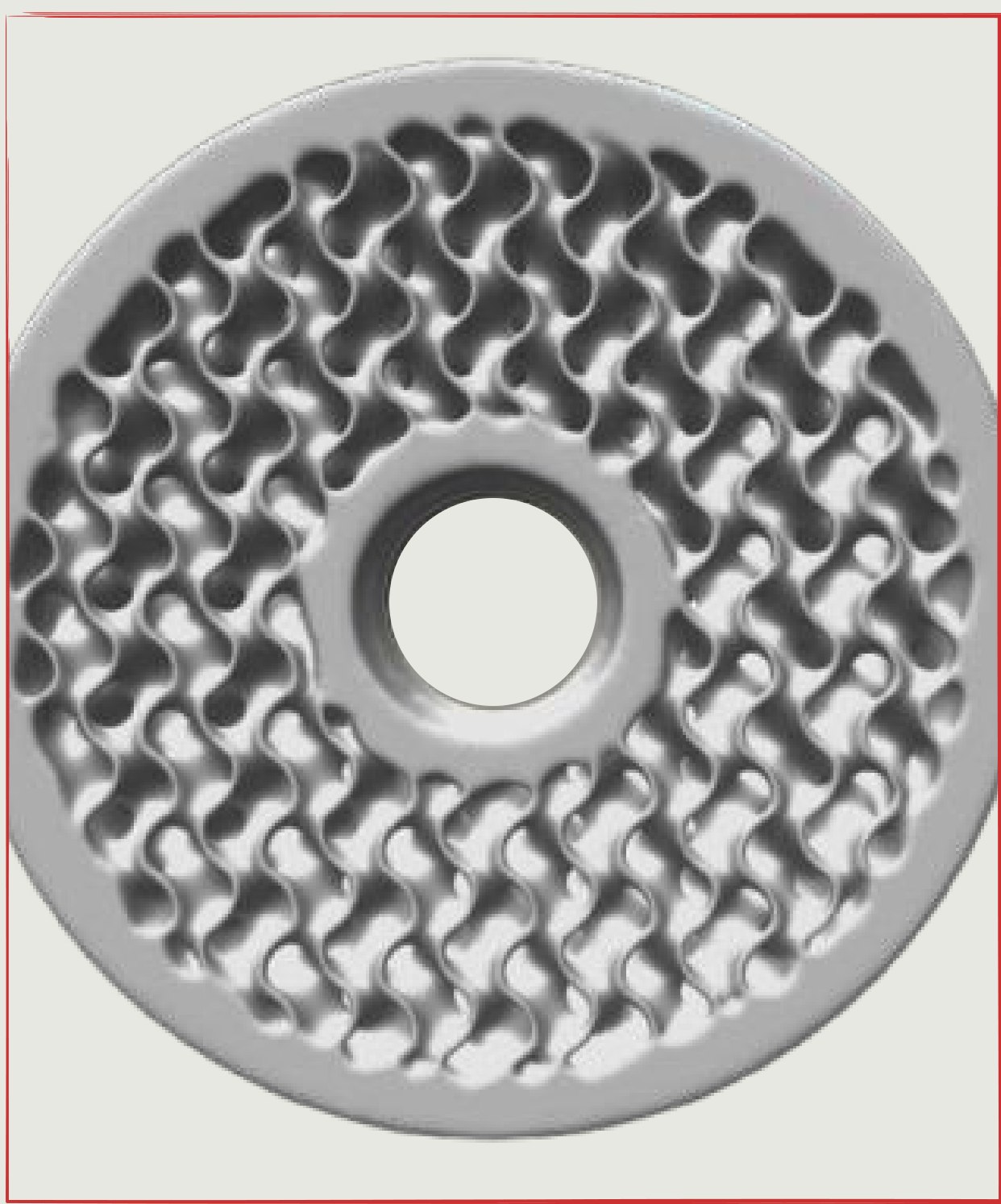
Lattice application: wheel
Gyroid structure in the wheel rim, optimized to maximize compressive strength and minimize weight.

Parts

The Void deck

Deck

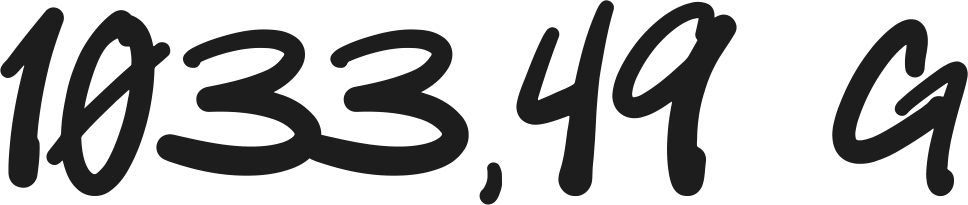
Deck, 1033.49 g
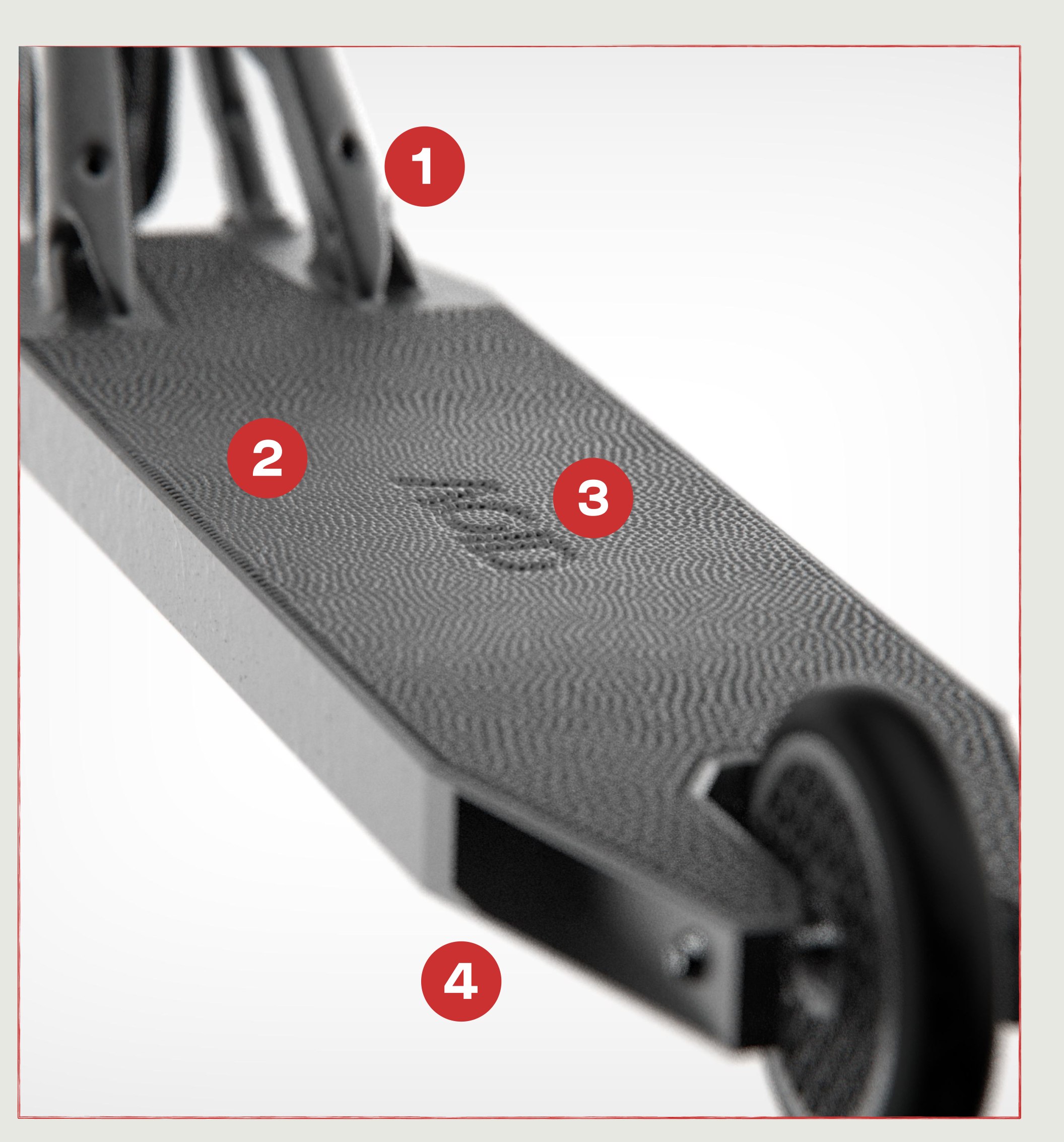
  1. Base-to-handlebar junction: an organic form straight from topology optimization.
  2. Voronoi surface: better grip from the irregular texture, and less weight through the voids.
  3. Logo-driven pattern: the Voronoi is generated from the logotype and spreads across the deck.
  4. Hollow core: the same rigidity at much less weight.
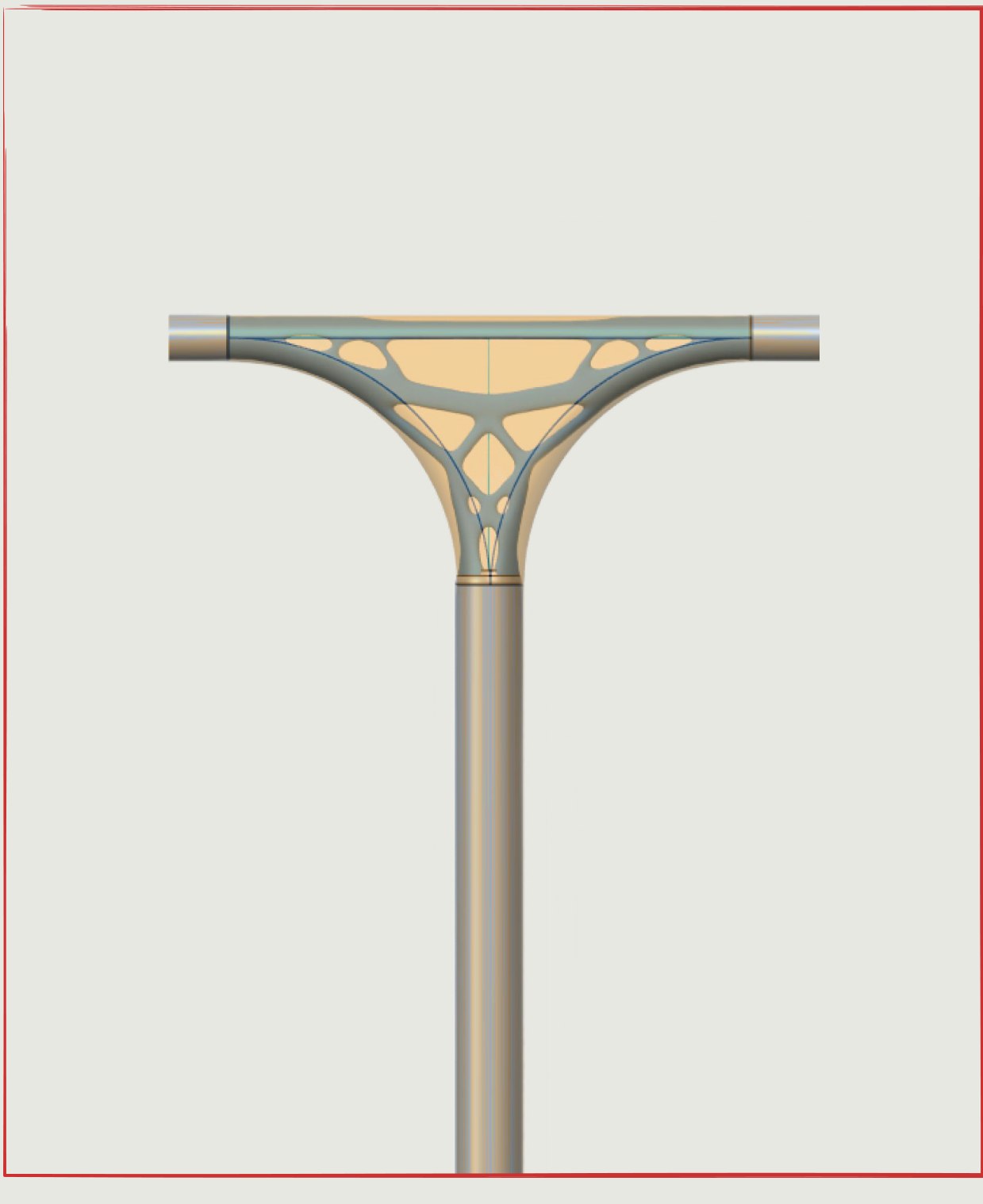
The Void handlebar

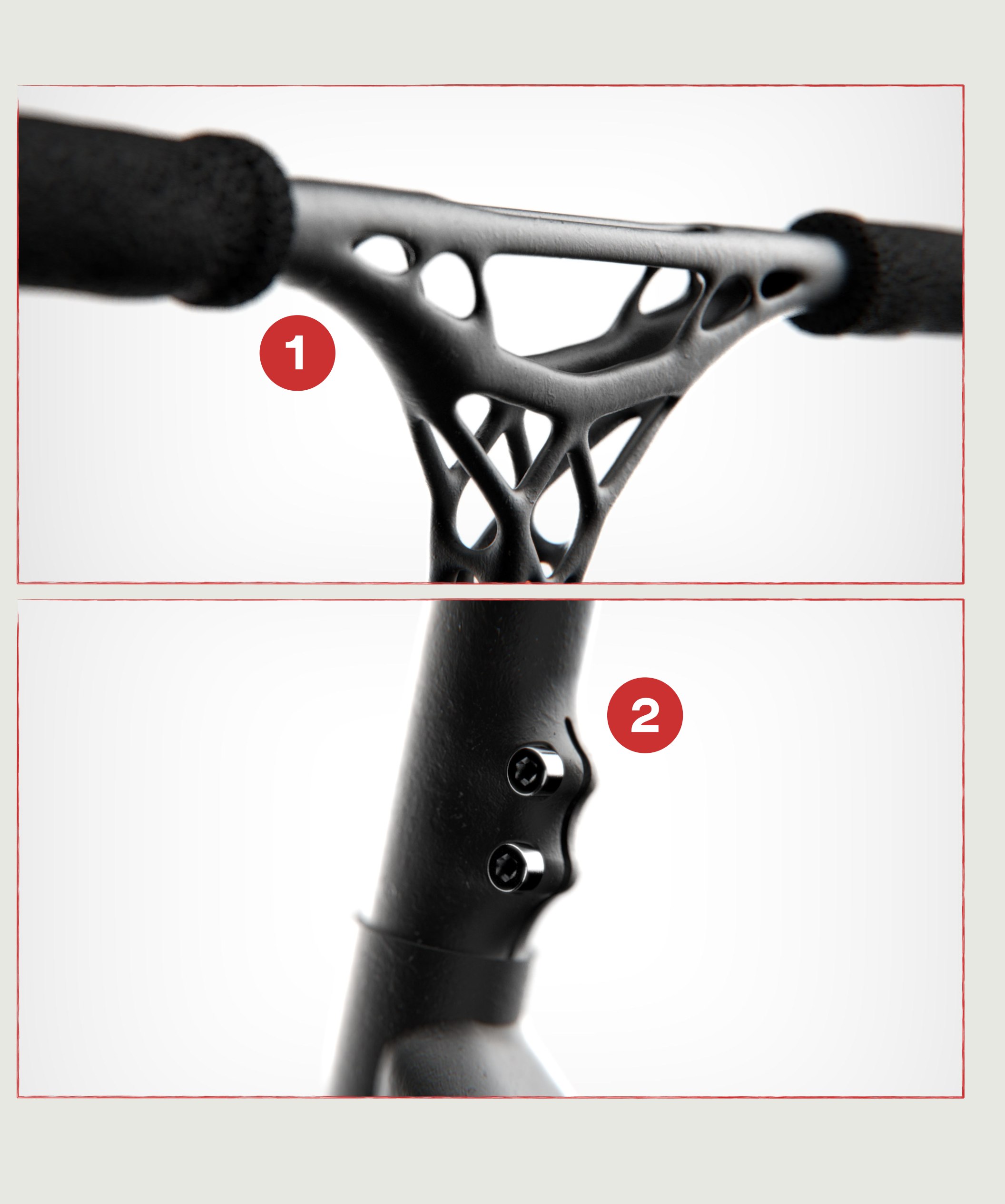
Handlebar

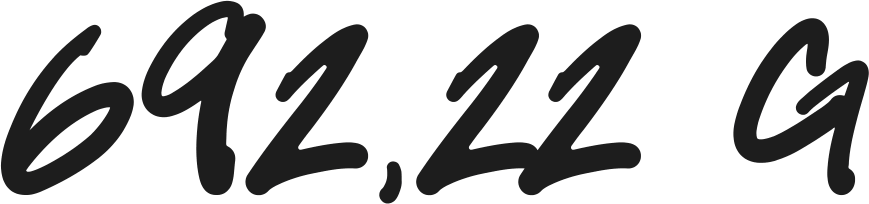
Handlebar, 692.22 g
  1. Grip-to-bar junction: a continuous organic transition from tube to grip, shaped by topology optimization and AM.
  2. Monobloc: clamp and bar in one optimized part, lighter and with fewer components.
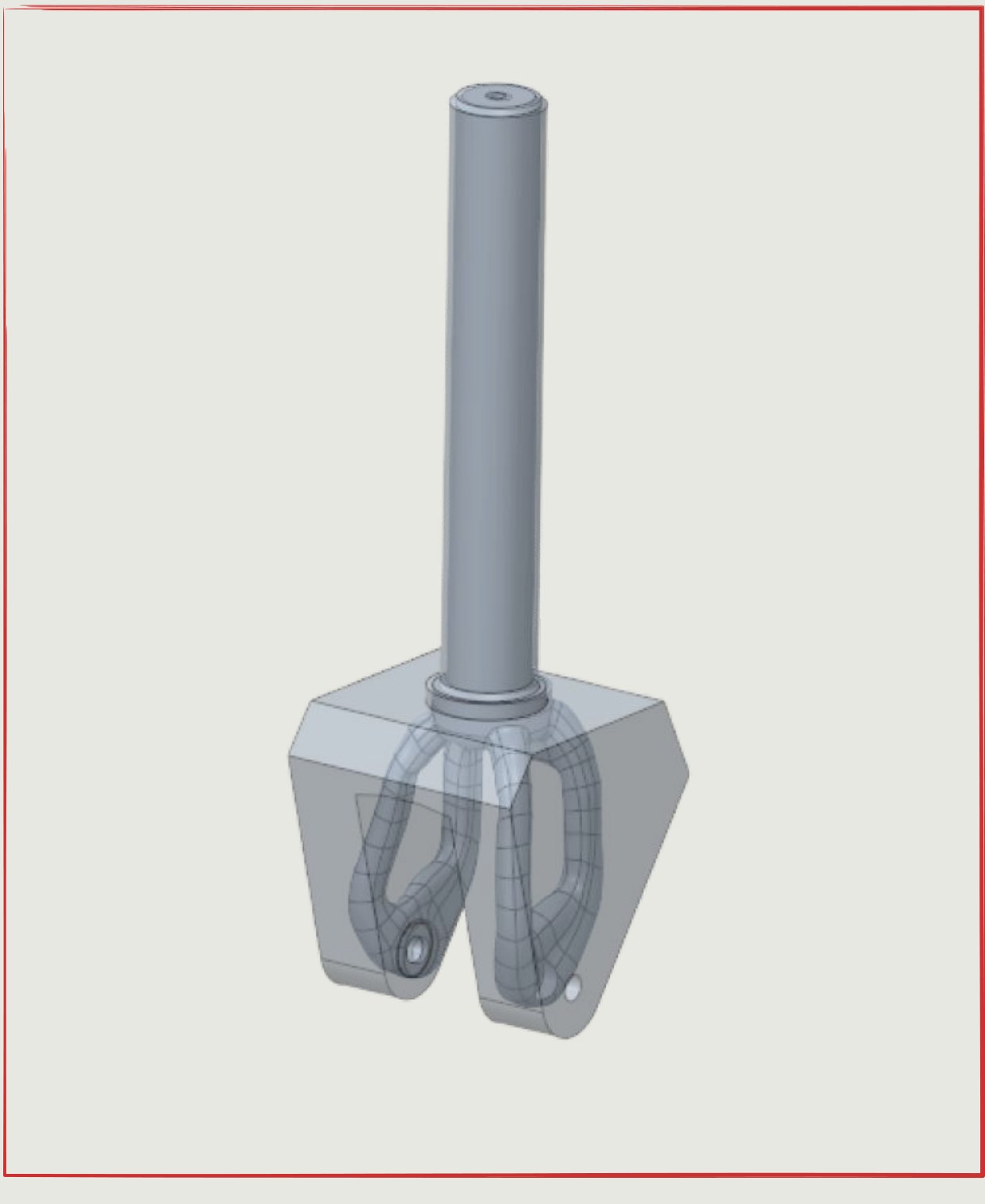
The Void fork

Fork

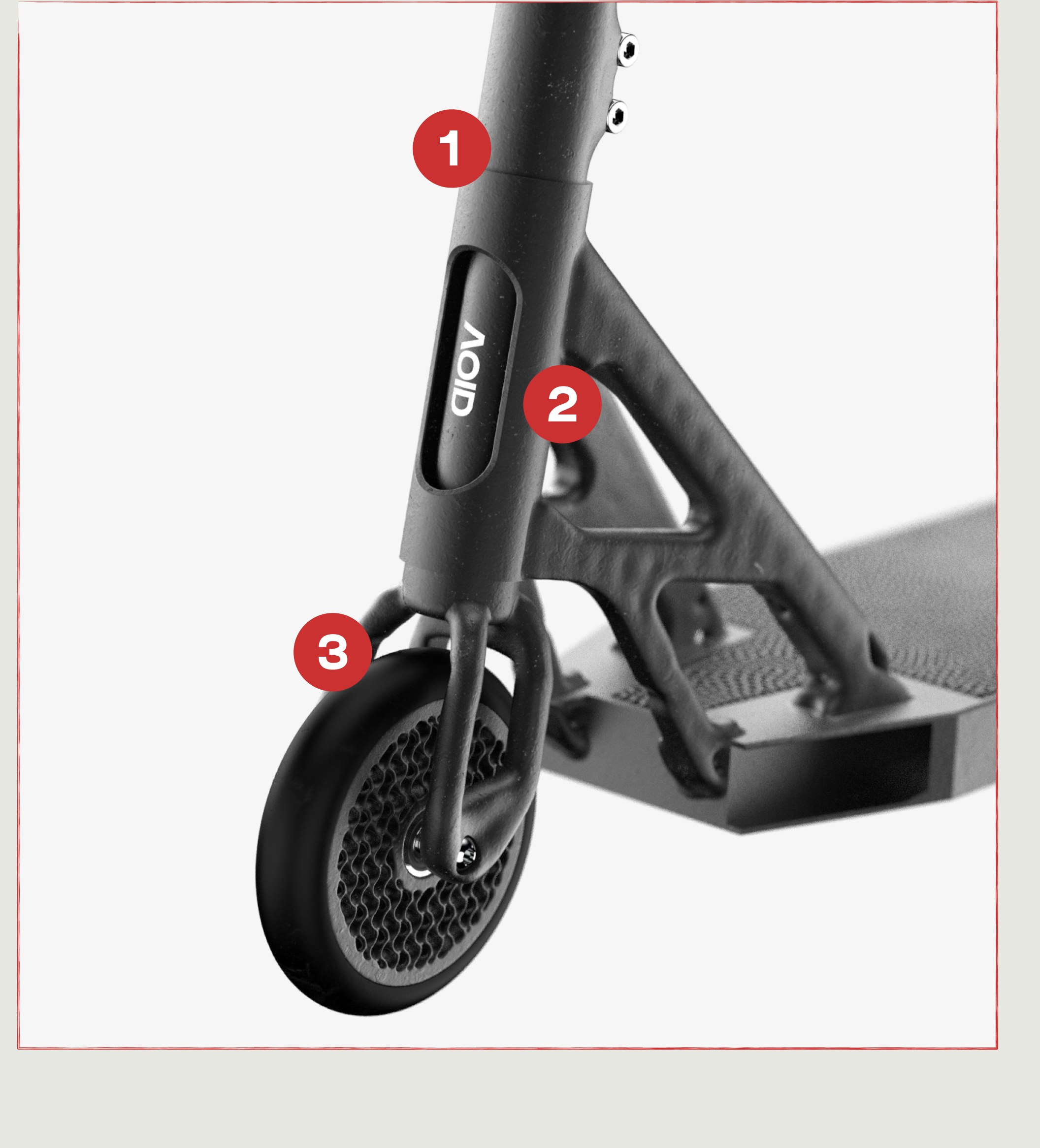
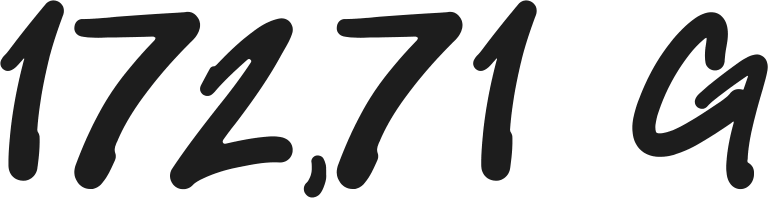
Fork, 172.71 g
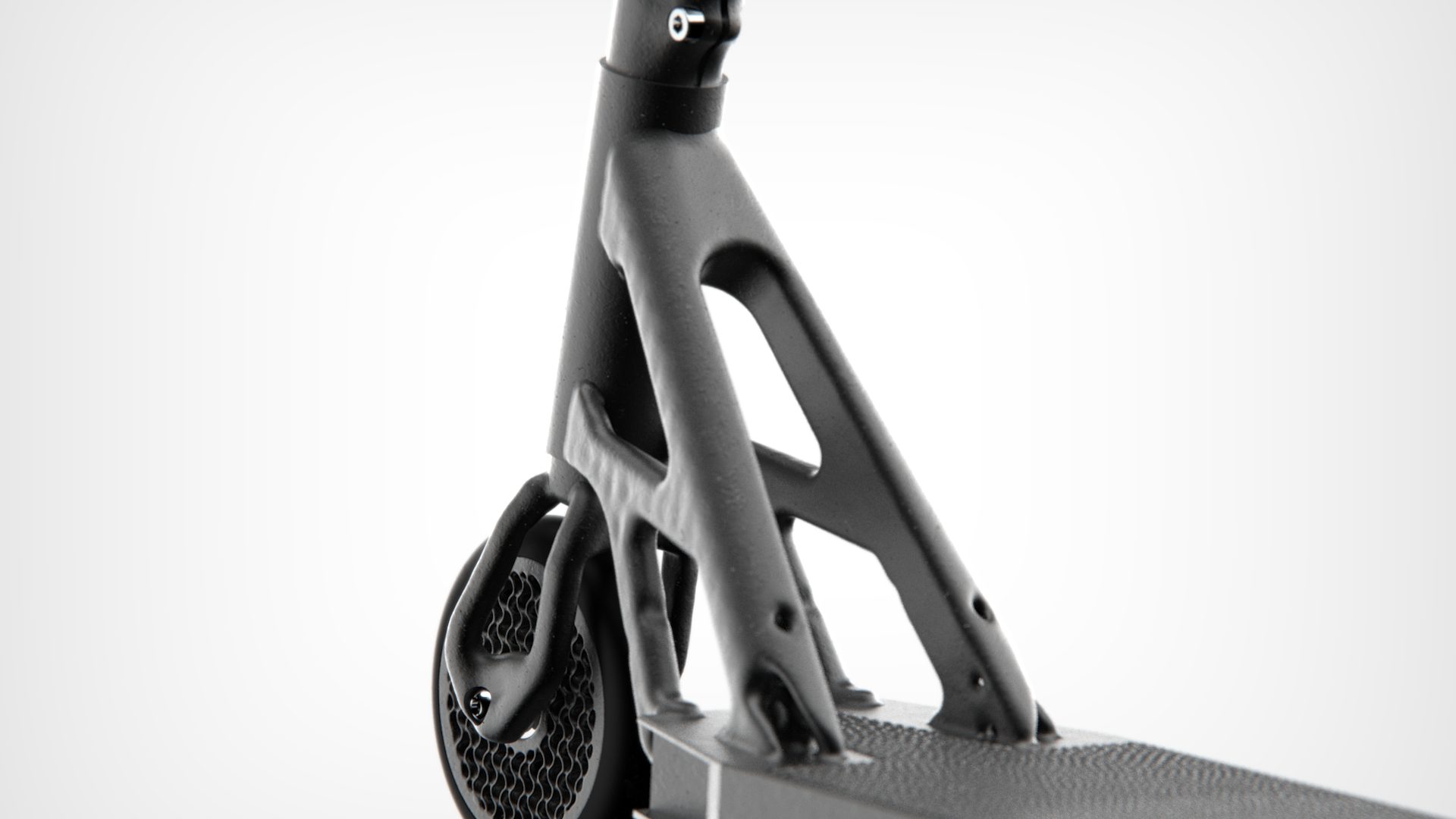
  1. HIC system: an internal junction for rigidity and a clean look.
  2. Gyroid lattice inside: high strength at minimum weight.
  3. Topology-optimized lower fork: 30% lighter, with the same rigidity.
The Void wheels

Wheels

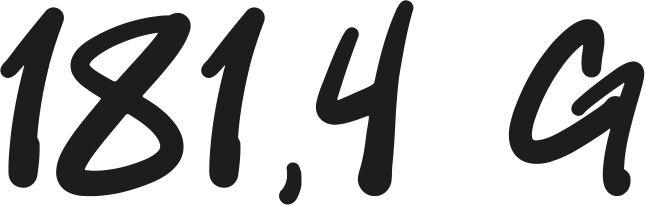
Wheels, 181.4 g
  1. Radial lattice: parametric geometry that follows the load, lighter with the same rigidity.
The Void grips

Grips

Grips, 66.75 g x2
  1. TPU: a rigid outer zone fused to a flexible grip layer, comfortable and durable.
  2. Voronoi lattice designed from the simulated forces of a gripping hand.
Void — ride the void, the closing lockup

Gallery

The finished deck, logotype embossed in the printed surface
Handlebar and grip, printed as one optimized piece
The printed handlebar off the machine
The scooter against black
Three-quarter view of the complete scooter
The handlebar seen head-on
Deck and fork from behind
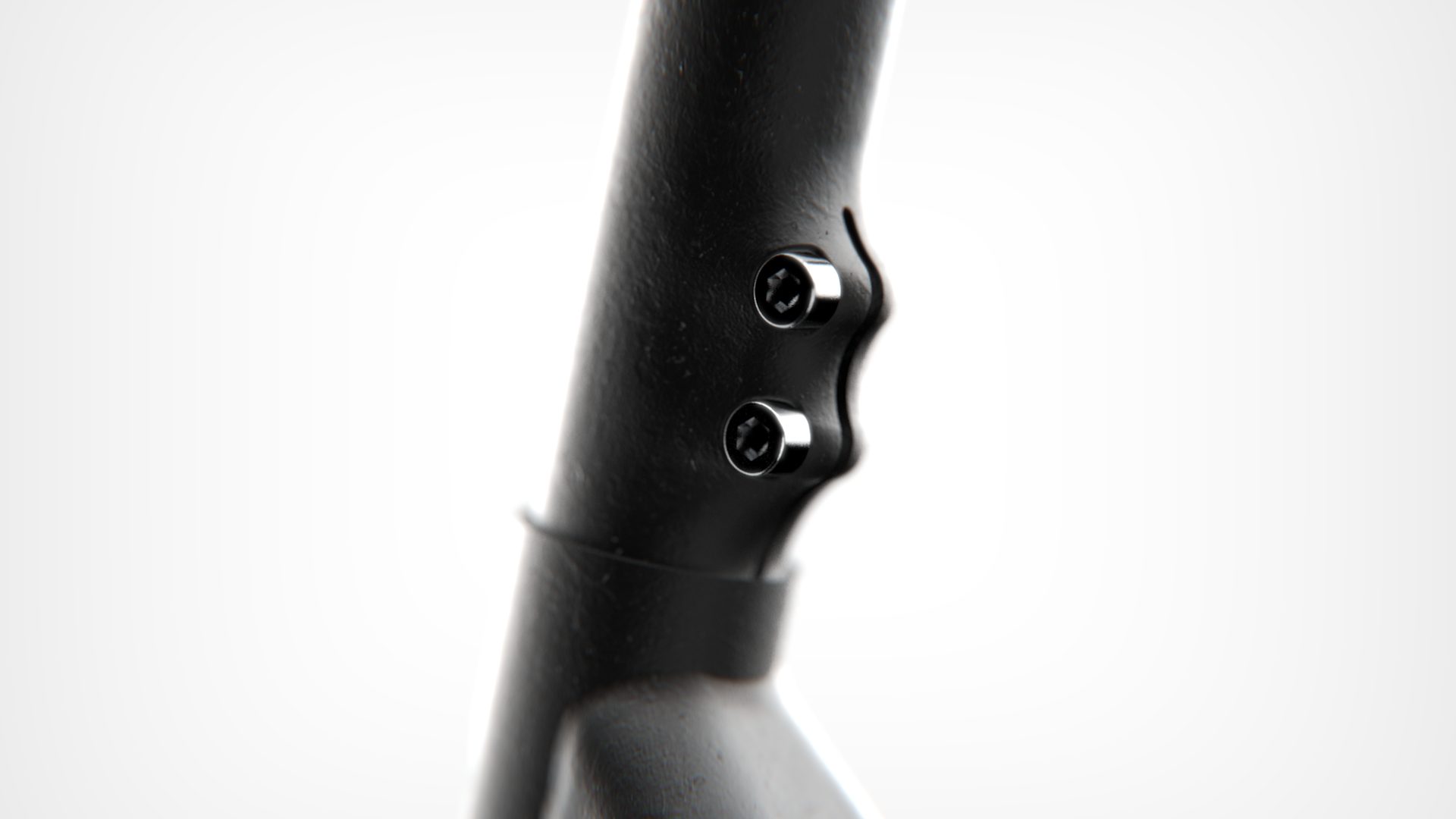
Fork clamp detail, HIC system
Grip end with the Void mark
Deck surface with its Voronoi texture
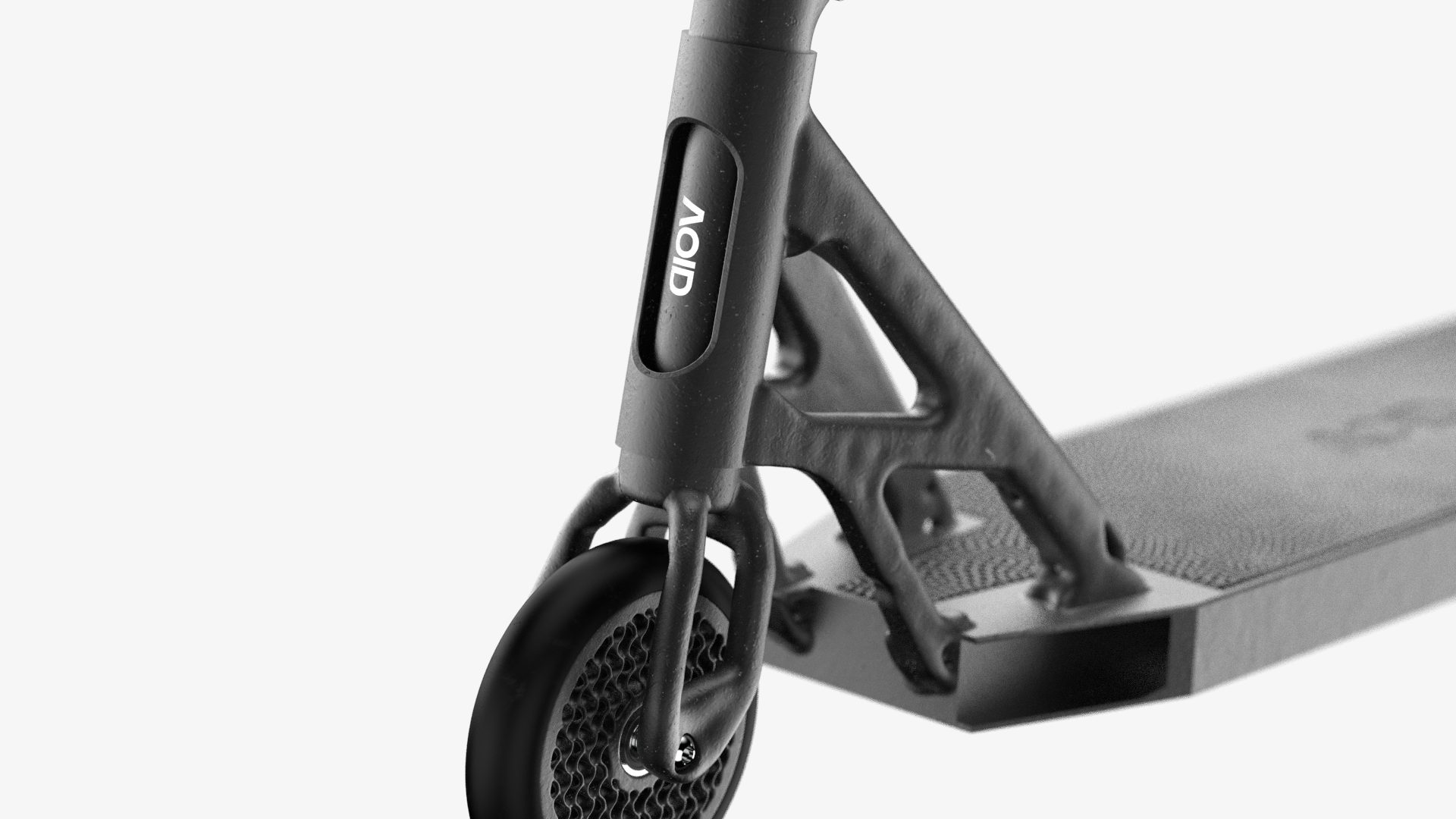
Front end: fork, wheel and deck junction
The lattice wheel
The lattice wheel
The complete scooter