WaveLamp
Every song becomes a one-of-a-kind, 3D-printable lampshade.
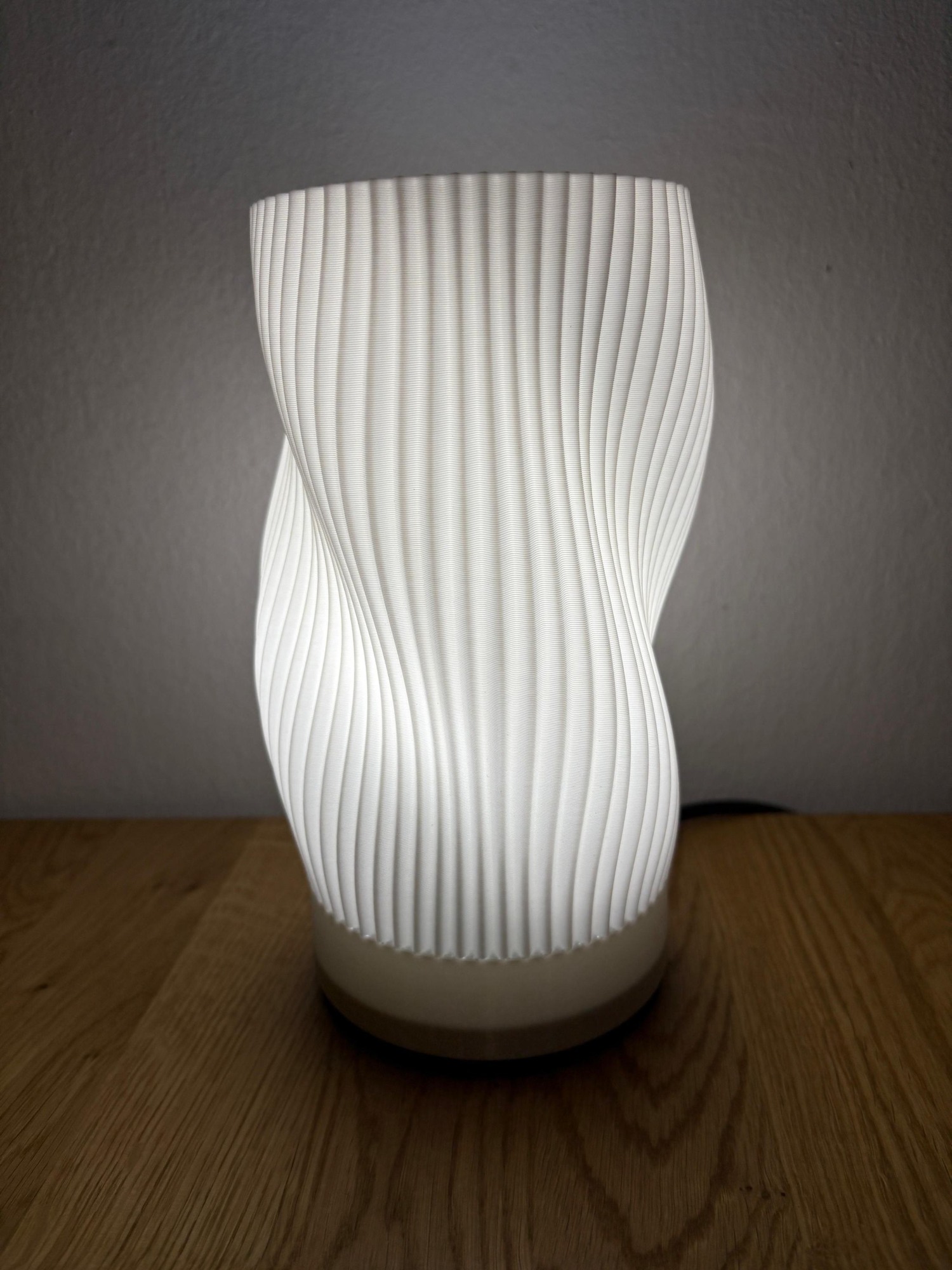
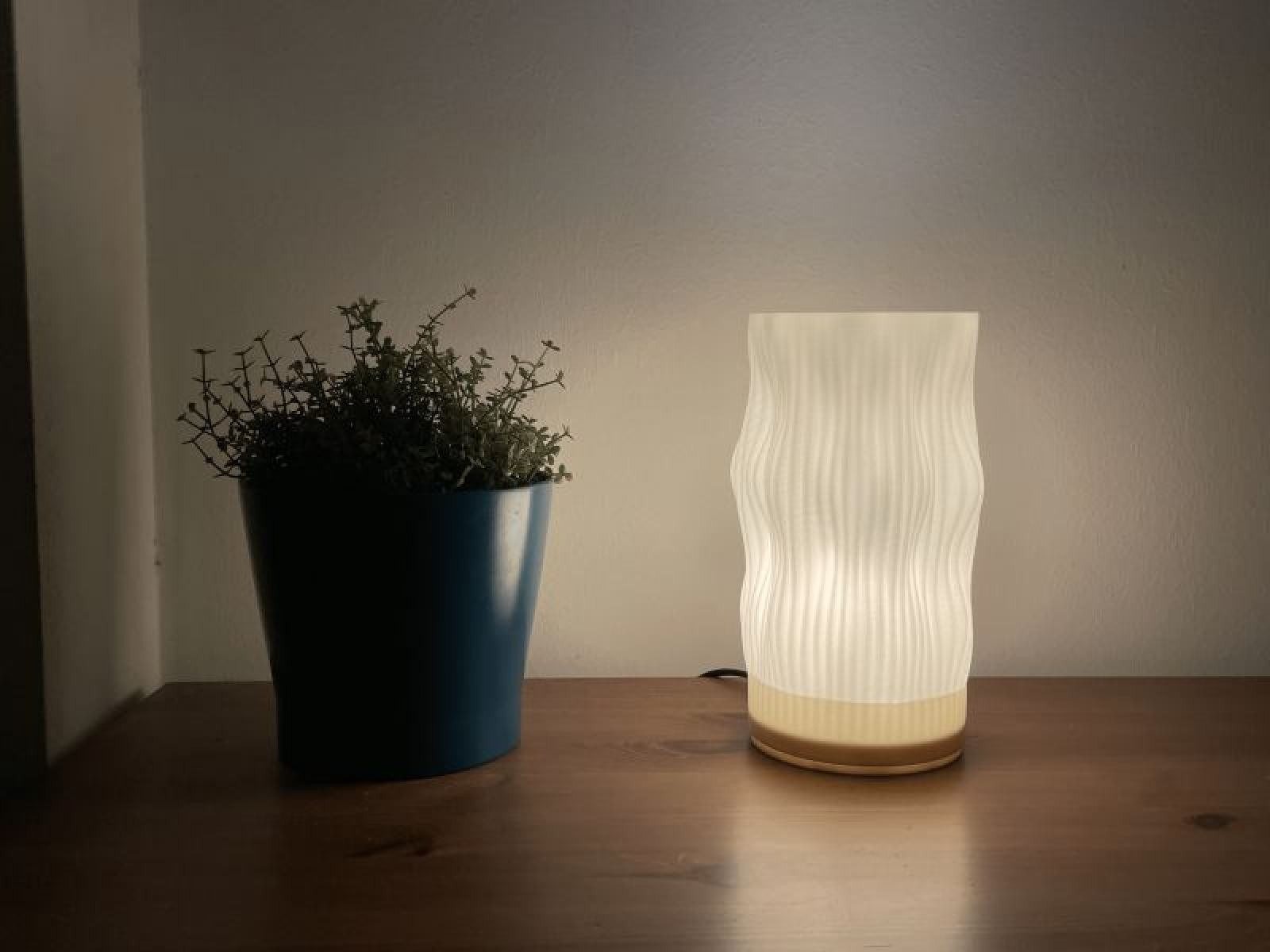
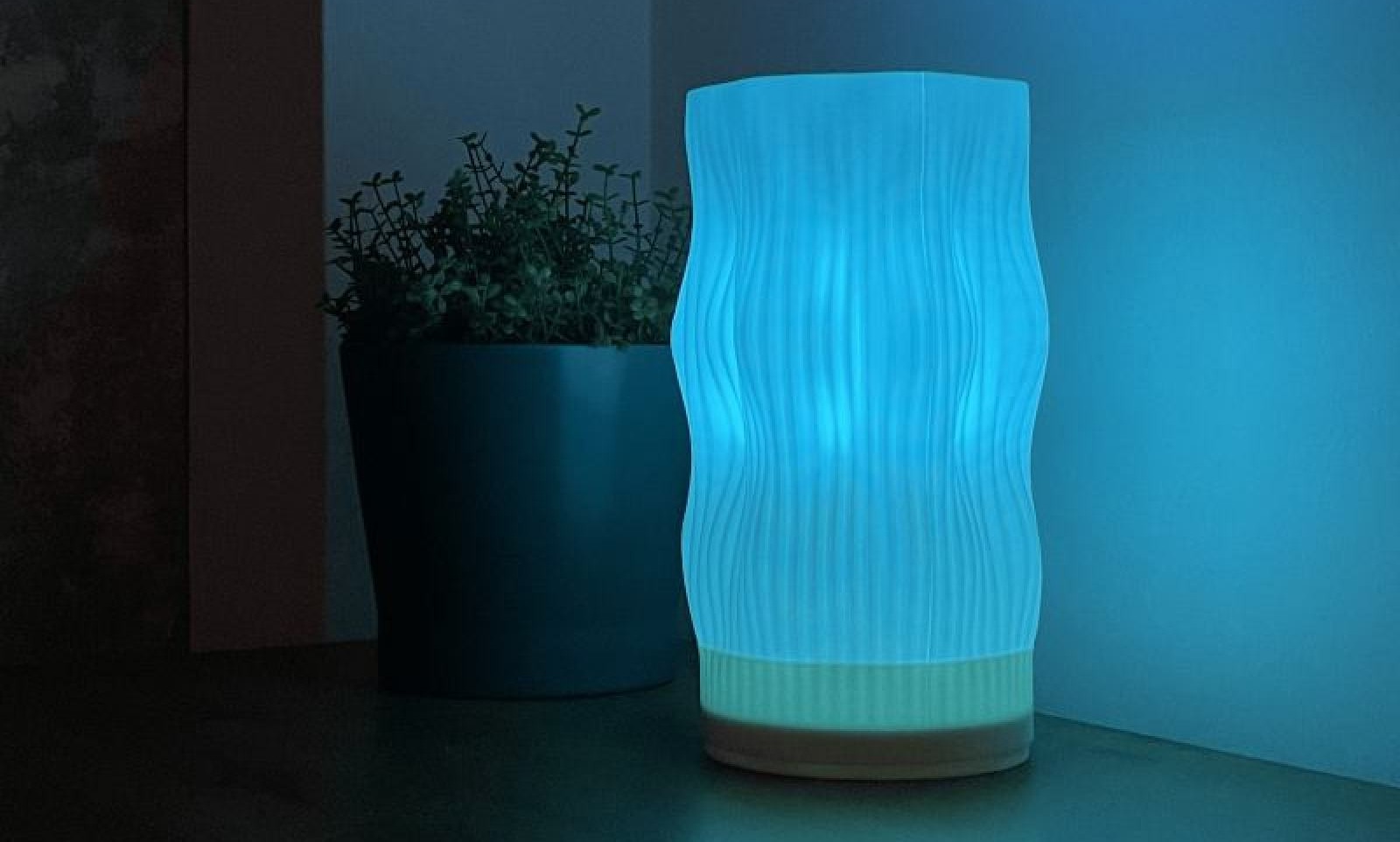
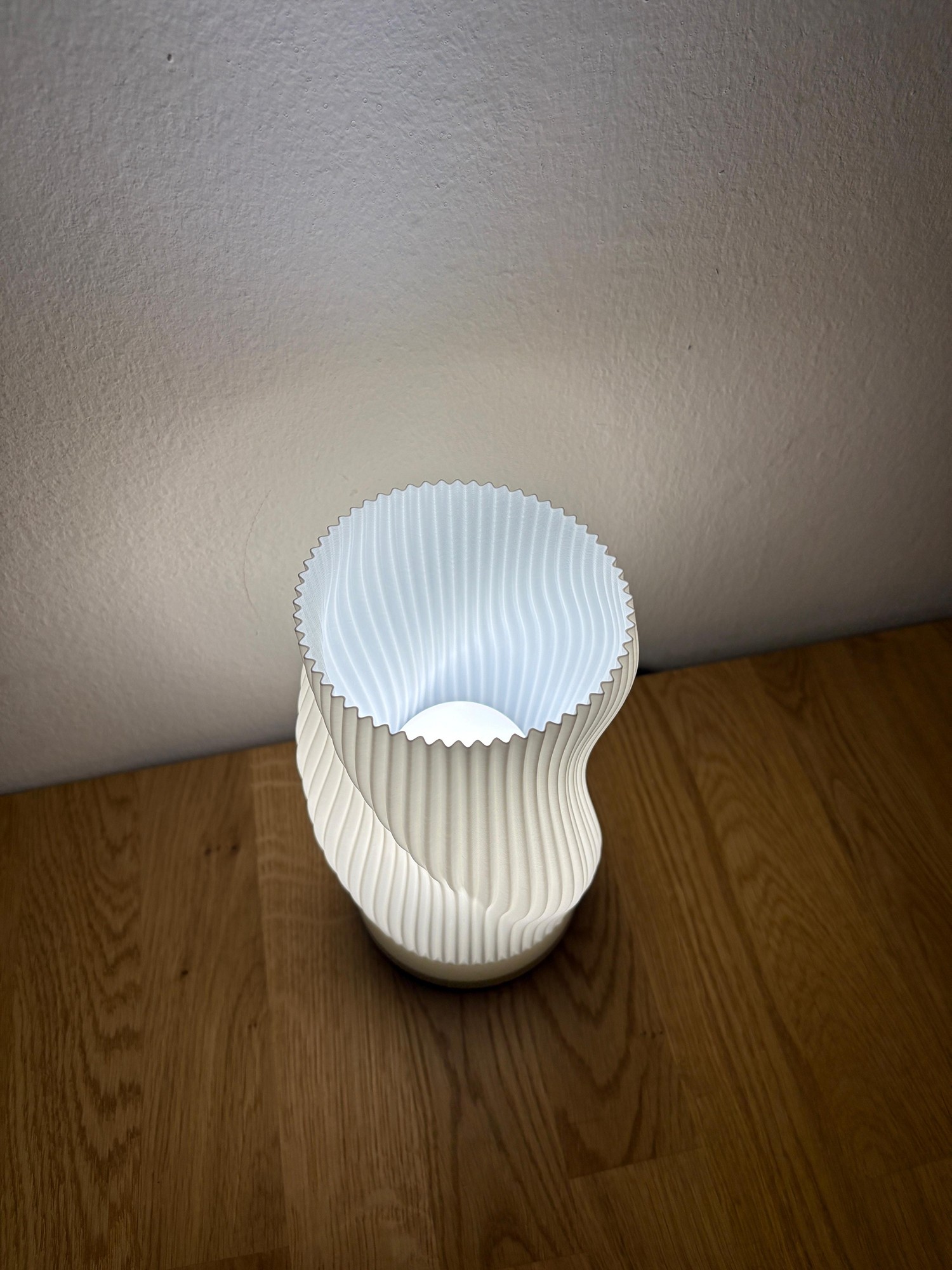
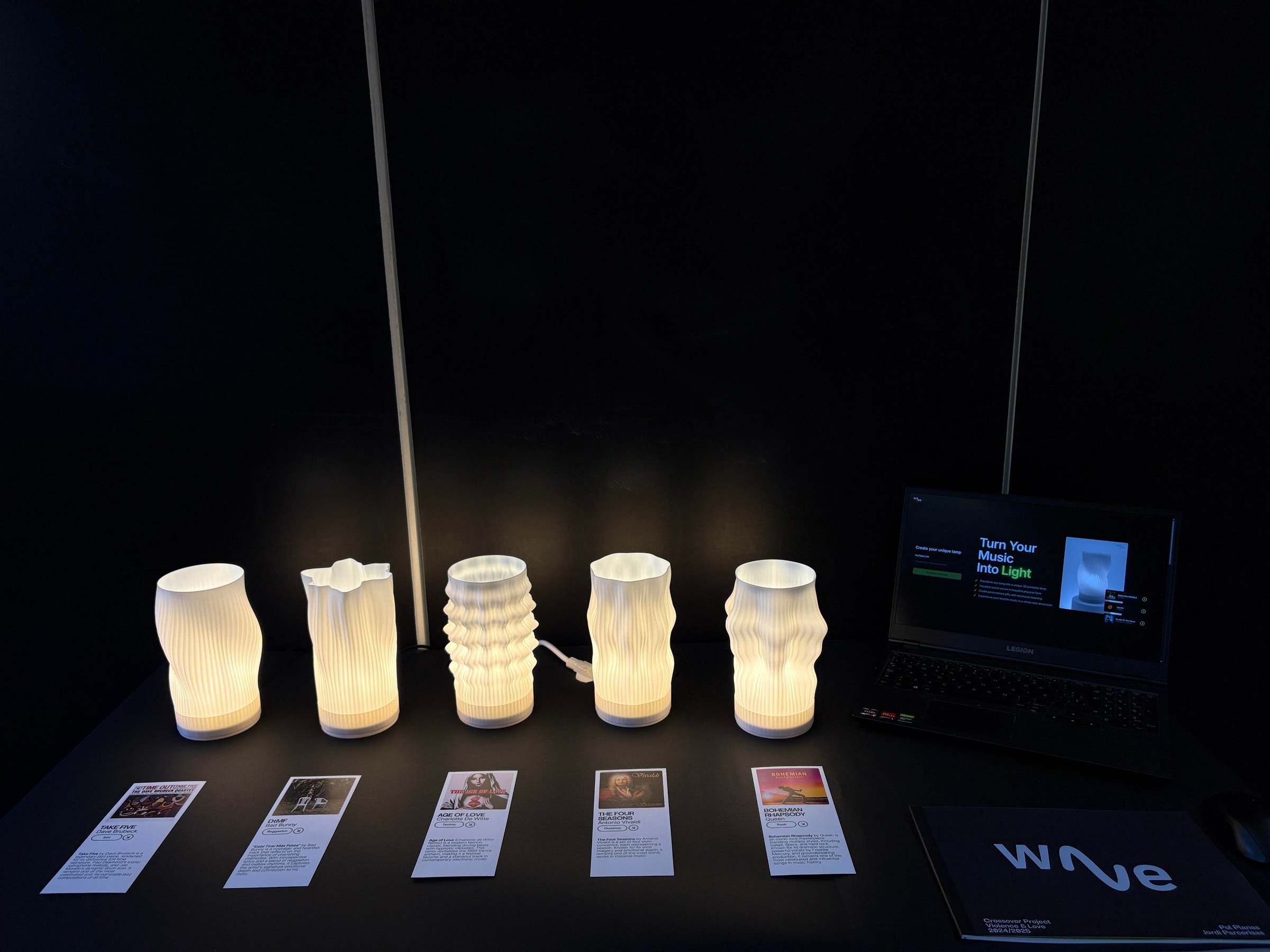
WaveLamp turns any YouTube song into a unique lampshade you can 3D-print and hang.
Paste a track and a generative pipeline analyses its rhythm, tempo and spectral content, feeding a generative algorithm that sculpts a one-of-a-kind shade: the geometry is a direct, physical echo of the music.
It lives in a dark-themed web UI with an interactive 3D viewer, so you can spin the result and export a ready-to-print .stl in a couple of clicks.
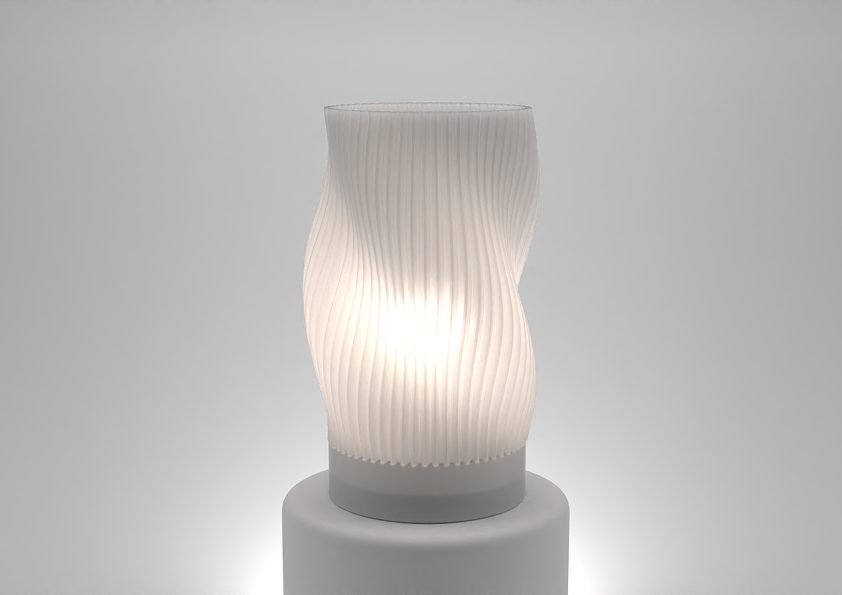
The interface
WaveLamp lives in a clean, dark-themed web app. Paste a YouTube link (or pick a track from the example carousel) and it generates a personalized 3D lamp model in seconds.
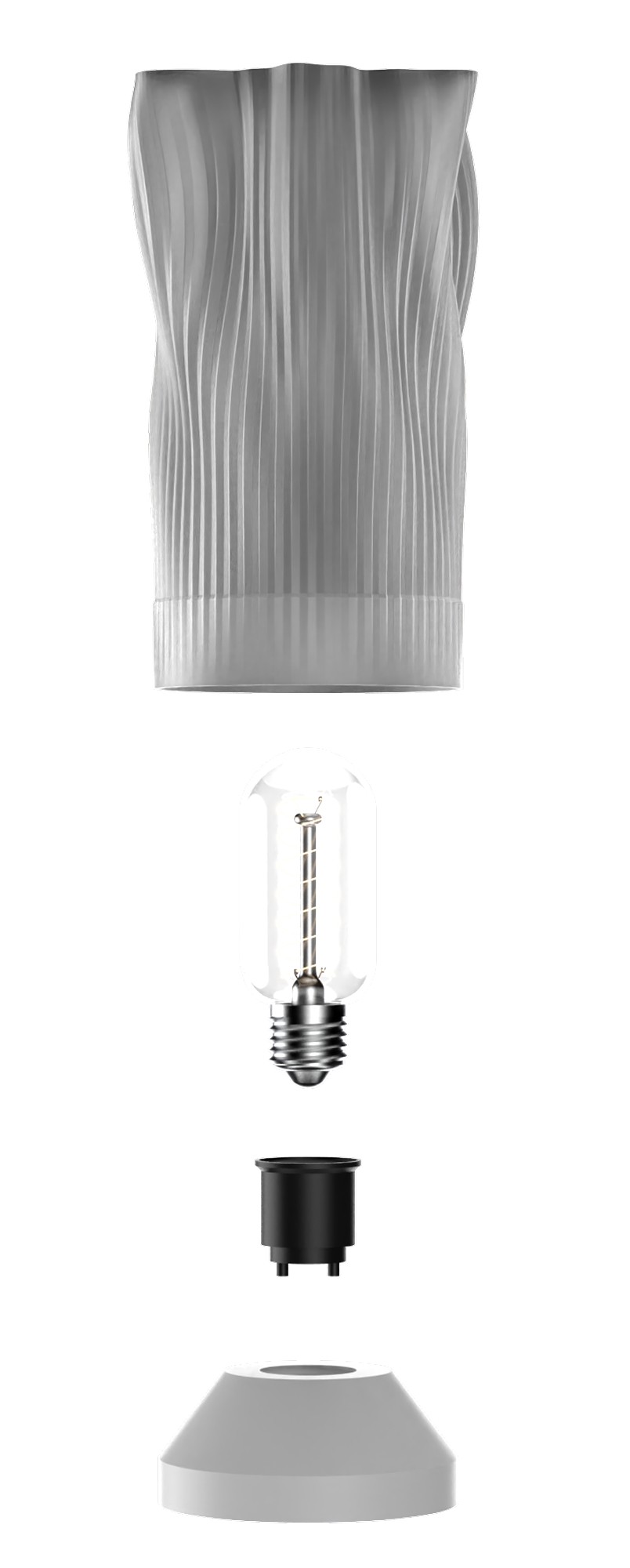
The result is previewed in an interactive 3D viewer you can spin and inspect, with smooth scroll animations and an exploded assembly view, then downloaded as a print-ready .stl. A seamless bridge between sound, design and technology.

Computational geometry
The physical form is built entirely through code, using the Python Trimesh library. Audio data directly manipulates vertex calculations to sculpt organic perturbations onto a base cylinder.
To bridge the gap between generative art and physical manufacturing, a Gaussian filter (scipy.ndimage.gaussian_filter) is applied to the raw data before vertex calculation. That mathematically smooths sharp discontinuities, preventing the extreme overhangs that would cause print failures.
Trimesh processing functions automatically ensure the final geometry is fully manifold — watertight — and that surface normals are correctly oriented for seamless export to standard slicer software.
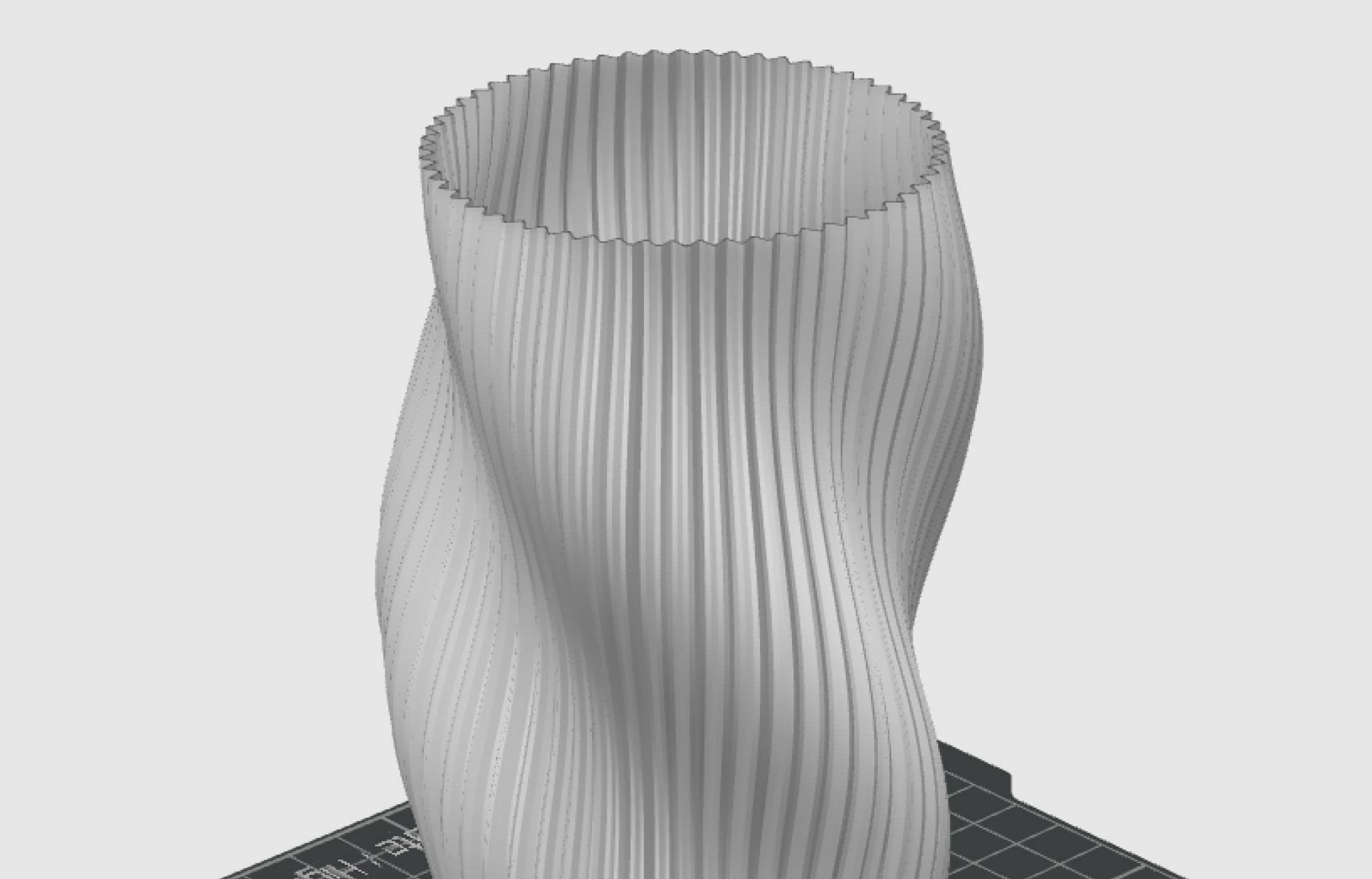
Advanced FDM & quality control
Polycarbonate was tested first for light diffusion, but standard high-speed PLA was ultimately selected: a precisely tuned single-layer wall lets white PLA act as a flawless diffuser.
Because algorithmically generated forms lack standard geometric consistency, ordinary slicing protocols fail. A negative Horizontal Hole Expansion parameter (−0.15 mm) was forced, to mathematically close unintended algorithmic micro-gaps.
Slicing then moved from the classic engine to the Arachne wall generator, which adapts dynamically to the variable wall thicknesses inherent in the generative waveform, eliminating internal voids and giving uniform light diffusion.
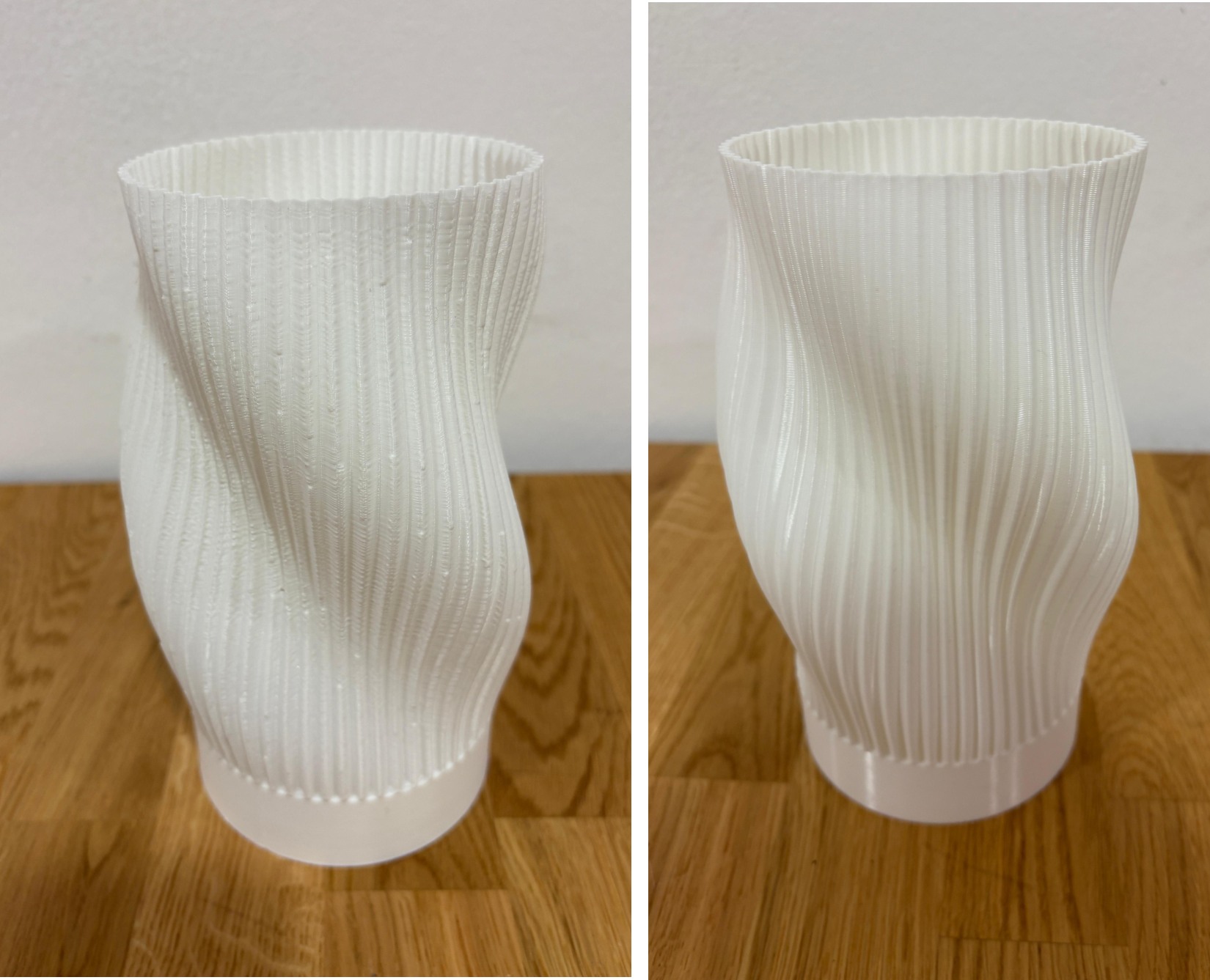
Mechanical design & tolerancing
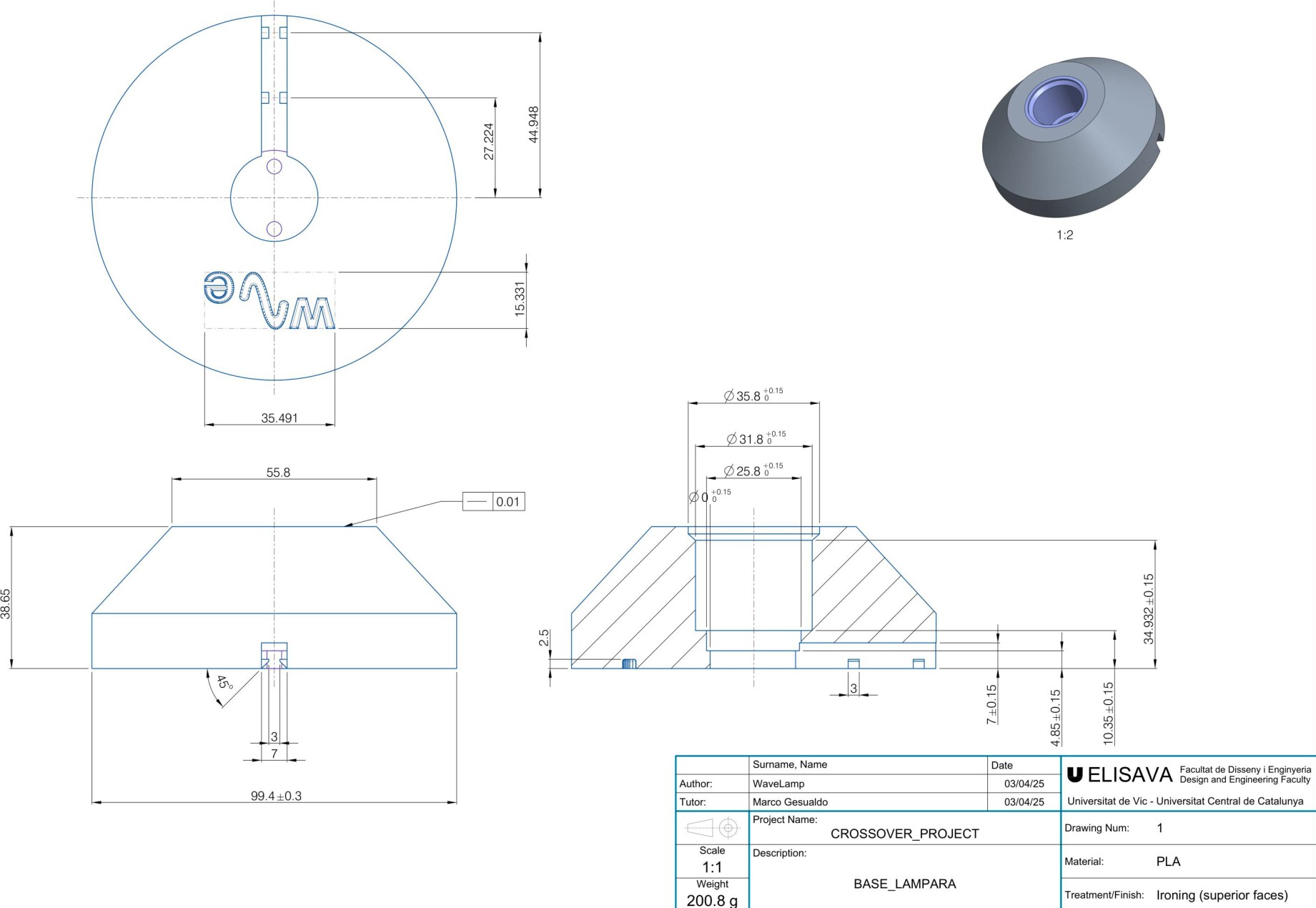
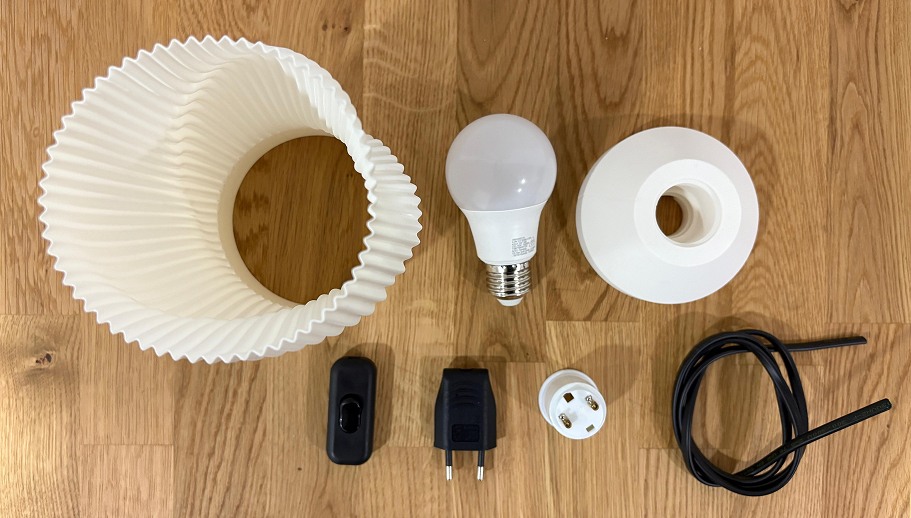
The injection-ready lamp base was engineered with specific tolerance bands, set by the surface finish of each mating part.
A tight 0.15 mm tolerance sits between the smooth bulb holder and the centre hole for a secure friction fit, while a looser 0.3 mm was engineered for the connection with the 3D-printed diffuser, to absorb the rougher layer lines of FDM.
A wire duct is integrated directly into the base geometry so the lamp rests perfectly flat, hiding all the electrical routing.