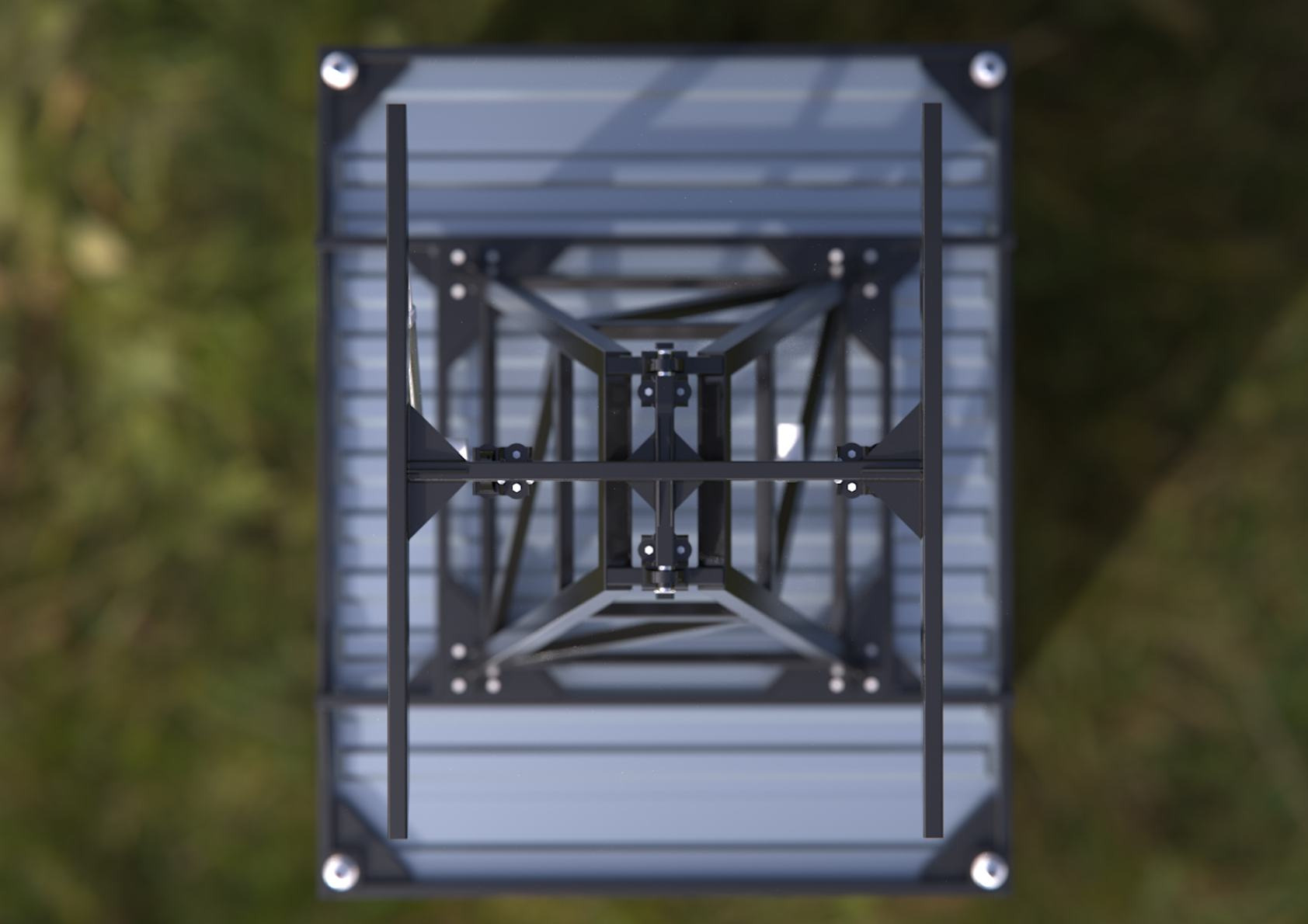
Atom H2
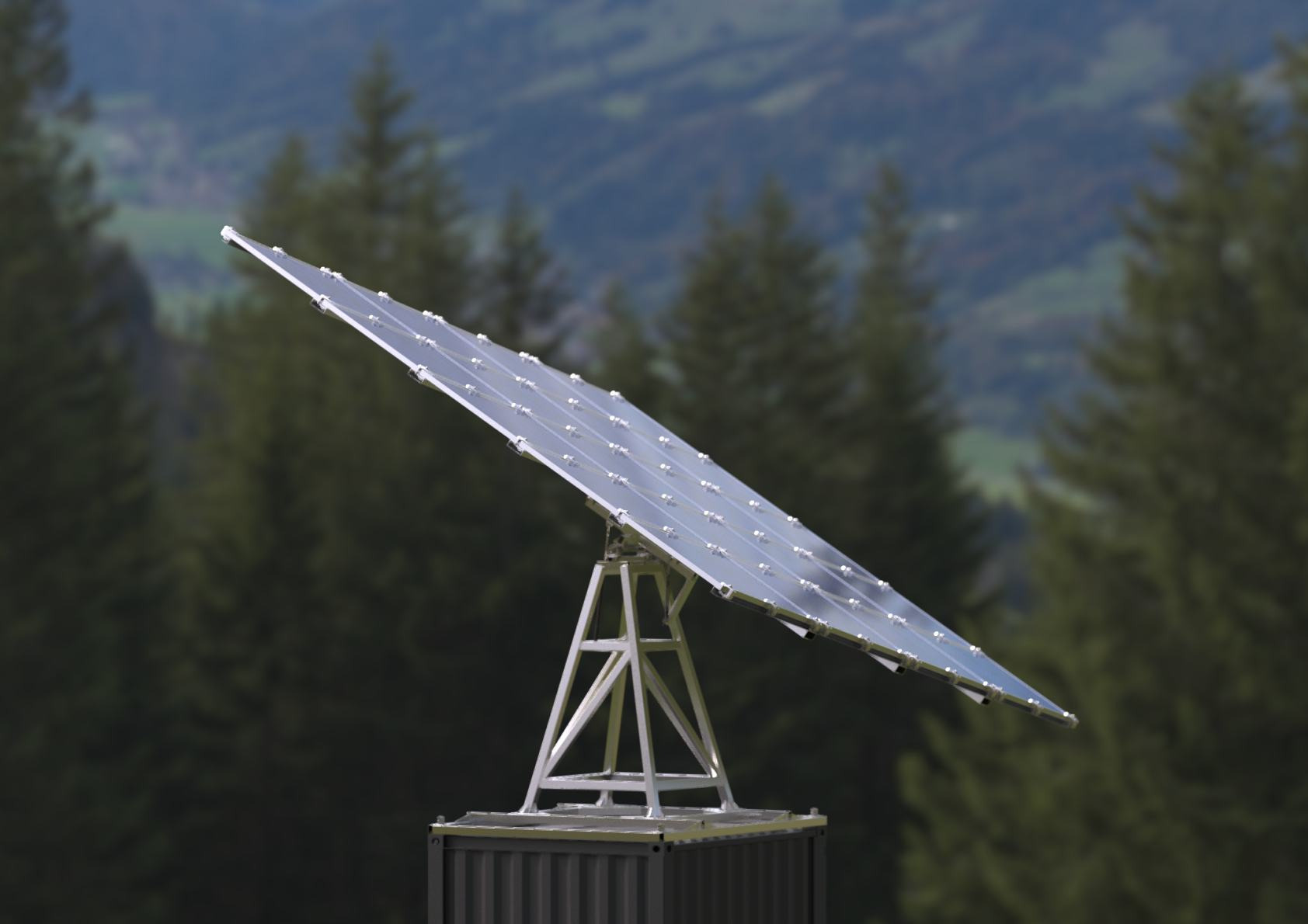
An off-grid solar tracking station, engineered hand-in-hand with Atom H2.
Built in collaboration with Atom H2, this dual-axis solar tracker powers autonomous telecom towers in the Pyrenees, where the grid simply doesn't reach.
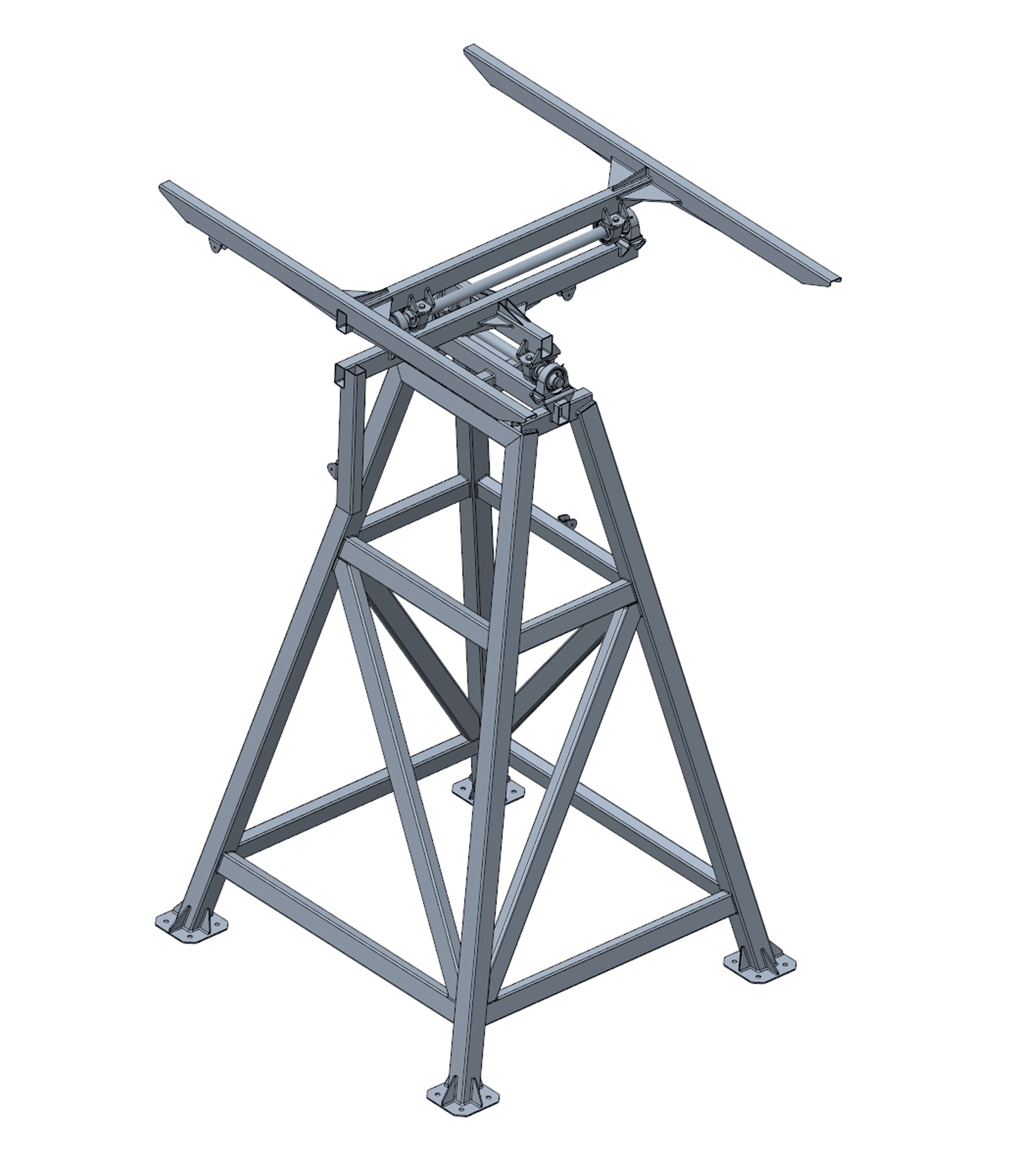
Working alongside the Atom H2 team, I developed the mechanical design and ran the structural and kinematic simulations behind the station. The tracker follows the sun on two axes using GPS and astronomical algorithms, and folds into an automated safe mode to protect itself in extreme weather.
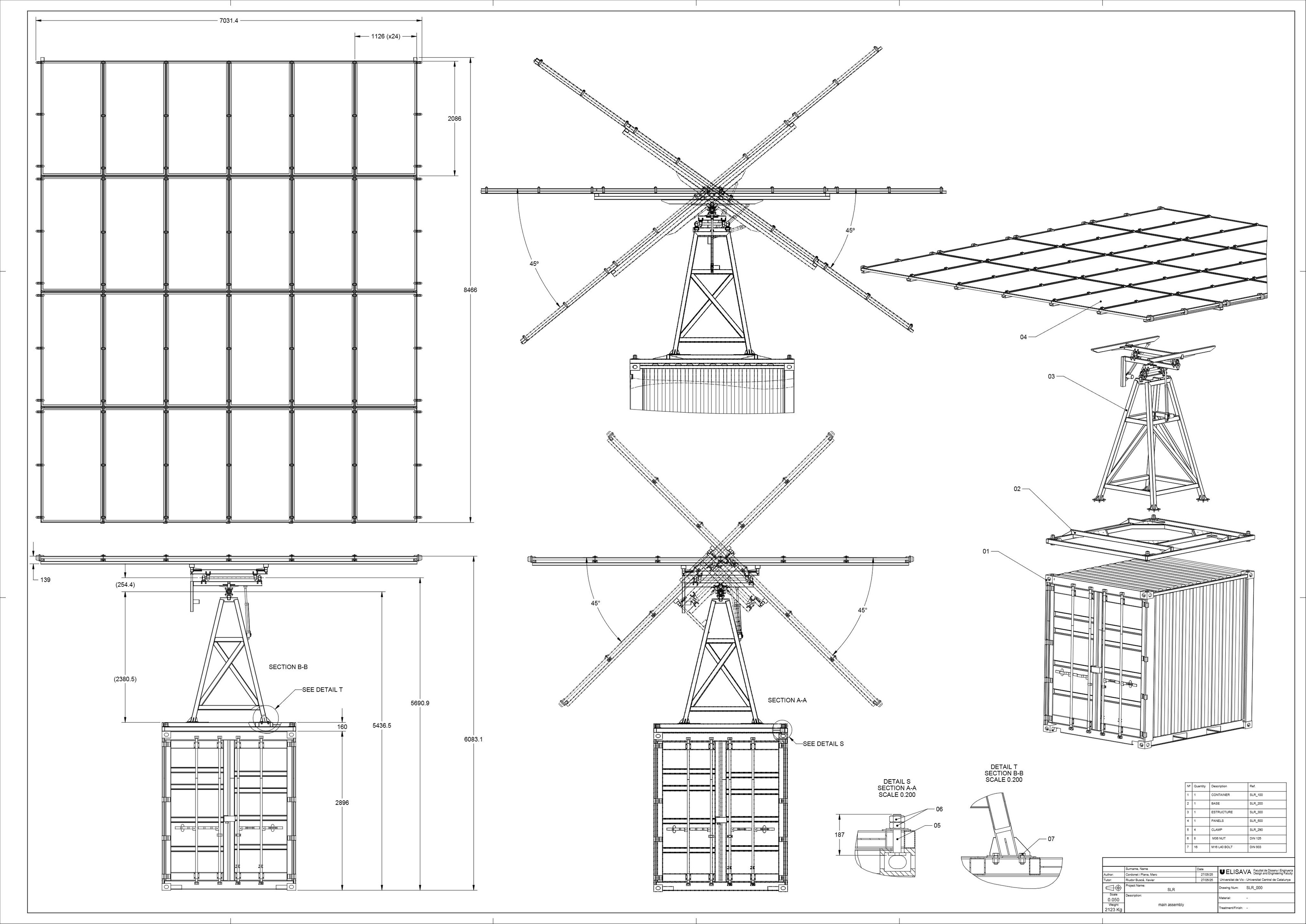
The structure is FEA-validated against 120 km/h winds and engineered for a 25-year service life, packing down to integrate with standard maritime containers for rapid deployment in remote terrain.
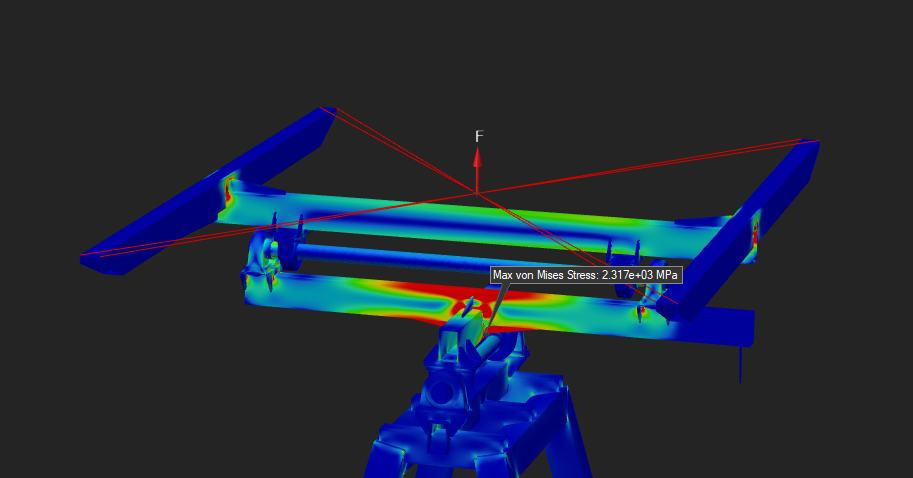
Environmental loads
Calculated aerodynamic wind loads up to 120 km/h, generating a peak critical force of 32,918 N on the 56.99 m² solar panel surface.
FEA simulations on the dual-axis mechanism under a 23,000 N safe-mode load returned a maximum Von Mises stress of 300 MPa and a minimal displacement of 1.3 mm.
The S275 and AISI 1040 steel structural frame, with a 350 MPa yield strength, was validated at a Factor of Safety above 1.17 under extreme Pyrenees conditions.
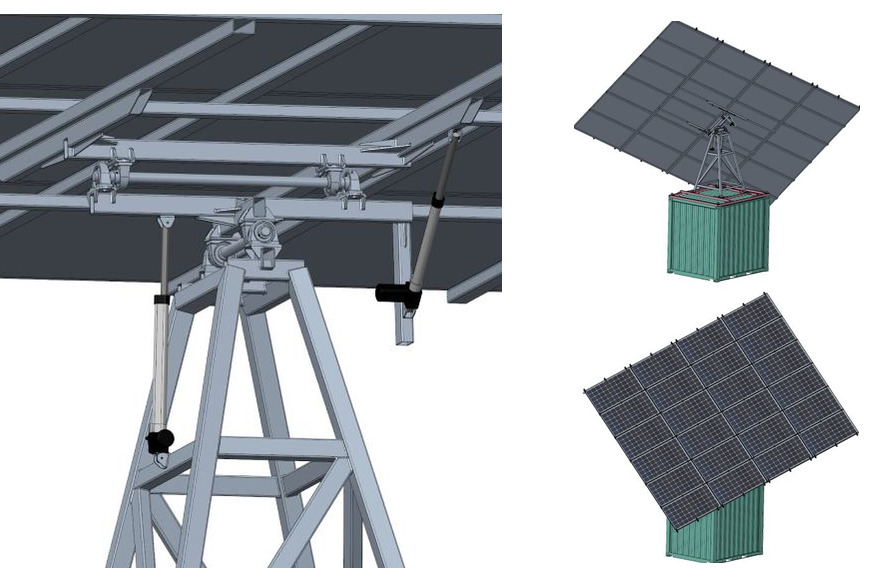
Kinematics & heavy-duty actuation
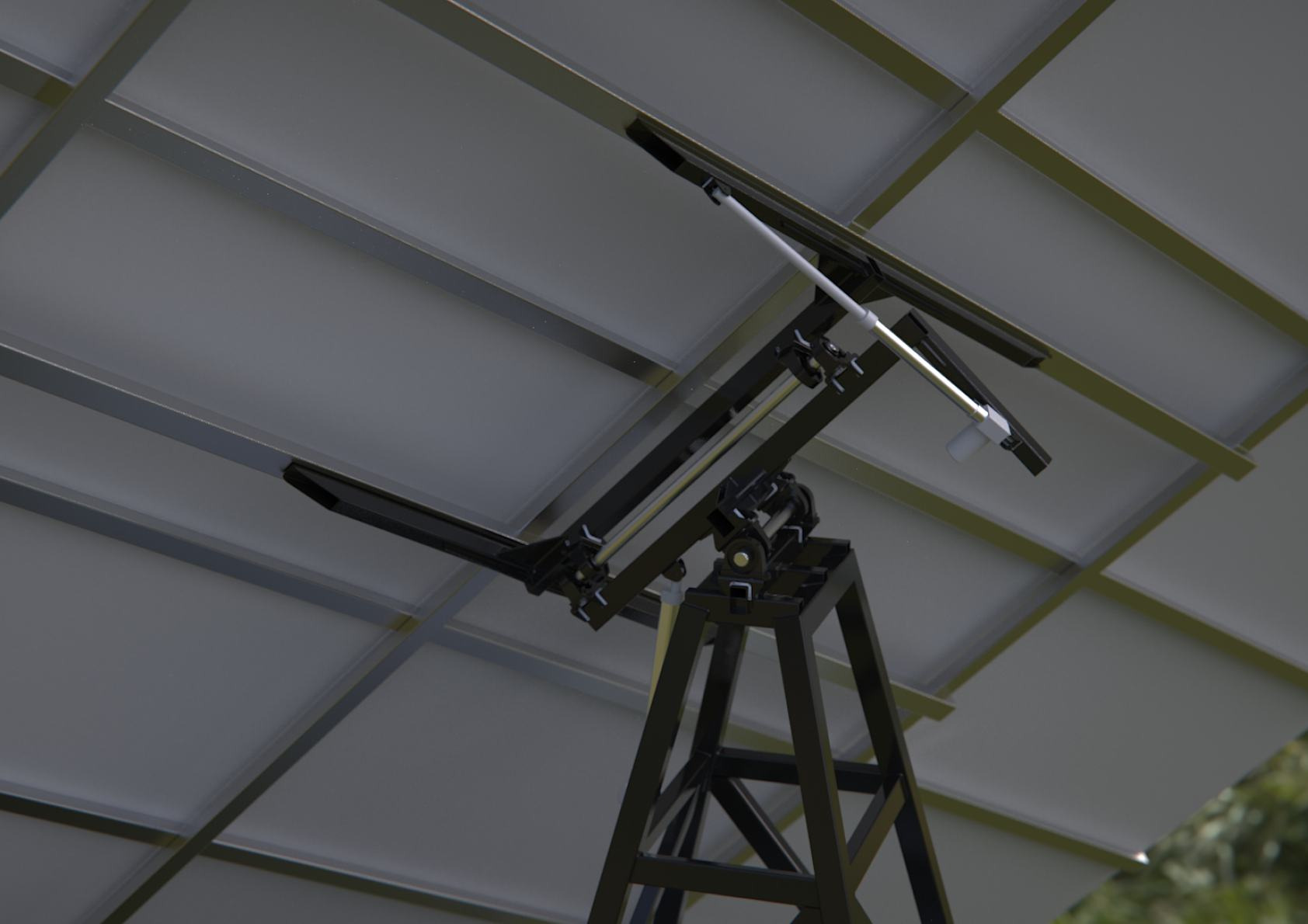
A dual-axis tracking mechanism capable of ±45° azimuth and elevation movement, maximizing solar capture without mechanical interference.
4,000 N, 24 V DC Madler linear actuators dynamically manoeuvre the 850 kg panel array.
The control architecture runs on GPS and astronomical algorithms, moving the structure at 10 mm/s every 15 minutes of daylight to minimize continuous actuator wear.
Integration & DFM
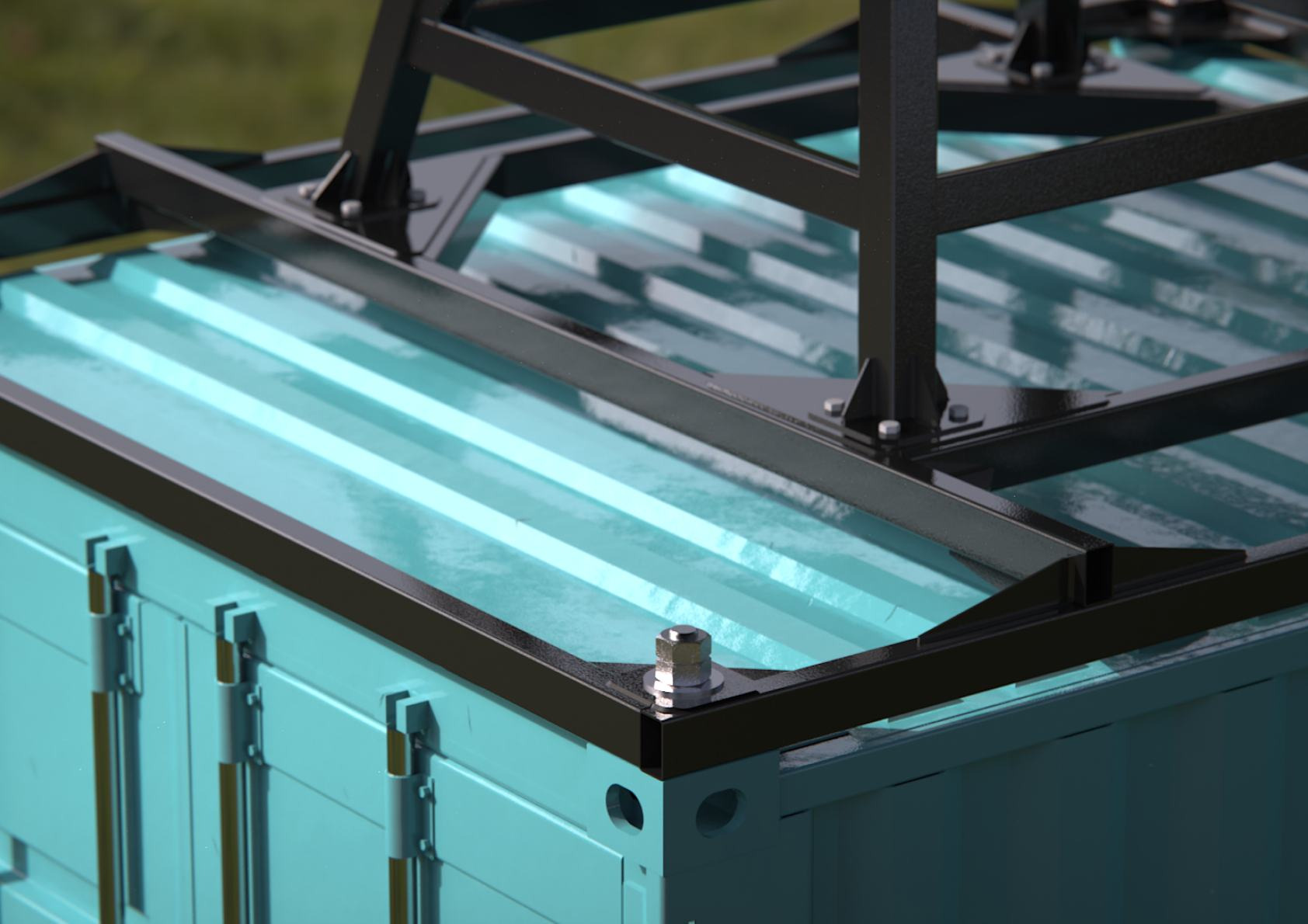
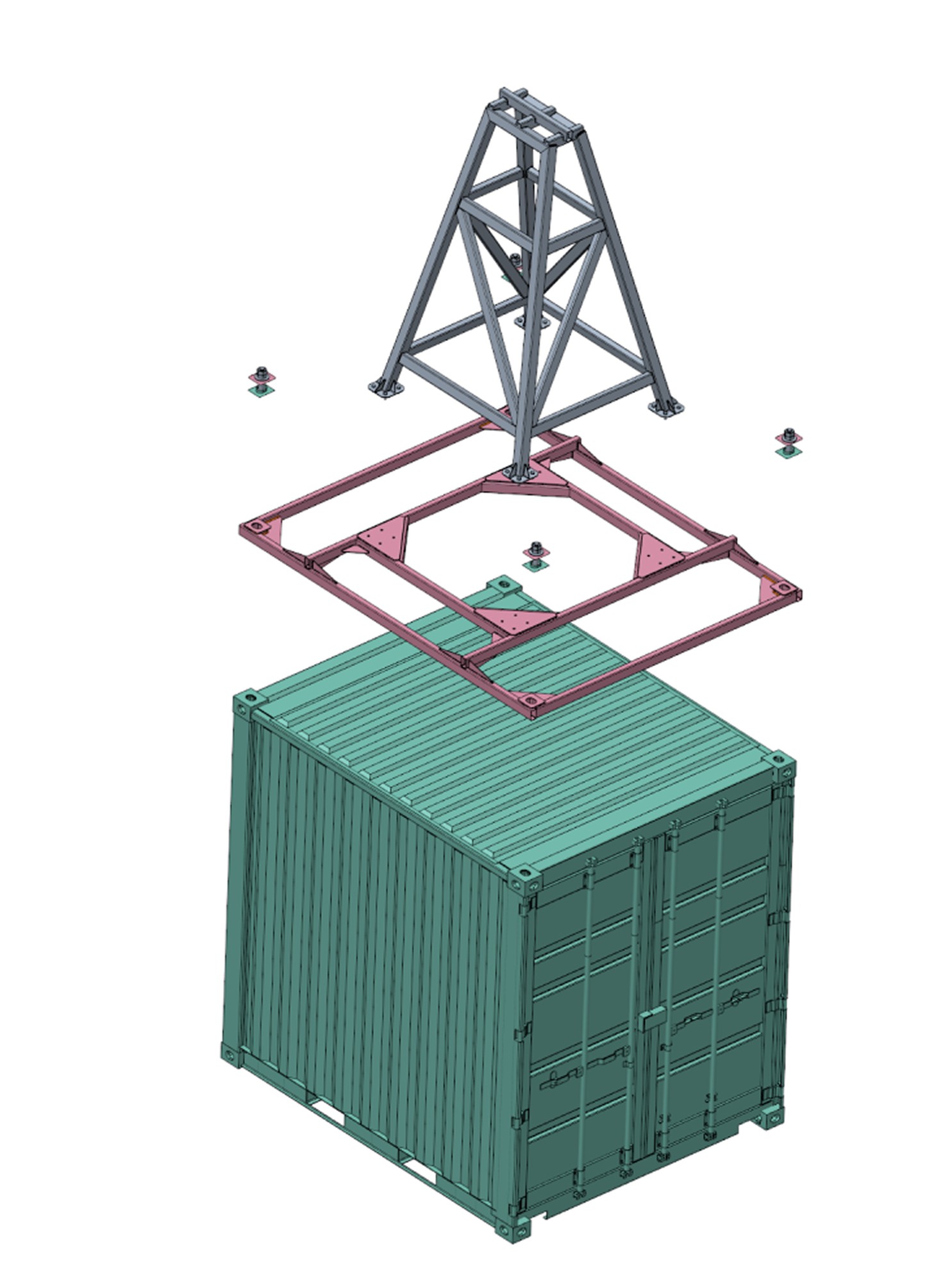
A modular base that interfaces directly with the corner castings of a standard ISO shipping container, for rapid deployment in remote terrain.
A 90° twist-lock mechanical oval pin mechanism deliberately eliminates threaded fasteners, preventing severe corrosion and allowing reversible assembly.
A Cathodic Dip Painting (KTL) treatment provides superior abrasion resistance against the C4-category corrosivity of the mountain environment.
Fatigue & lifecycle analysis
The Palmgren–Miner rule was applied to evaluate cumulative mechanical damage, working out to 17,520 adjustment cycles per year — four an hour across a twelve-hour solar day.
That gives the linear actuators a validated 28.5-year nominal lifespan against their 500,000-cycle rating.
Modelling a 3 µm/year zinc coating degradation projects long-term structural integrity: the frame holds a safe 1.16 Factor of Safety after 25 years of continuous off-grid service.